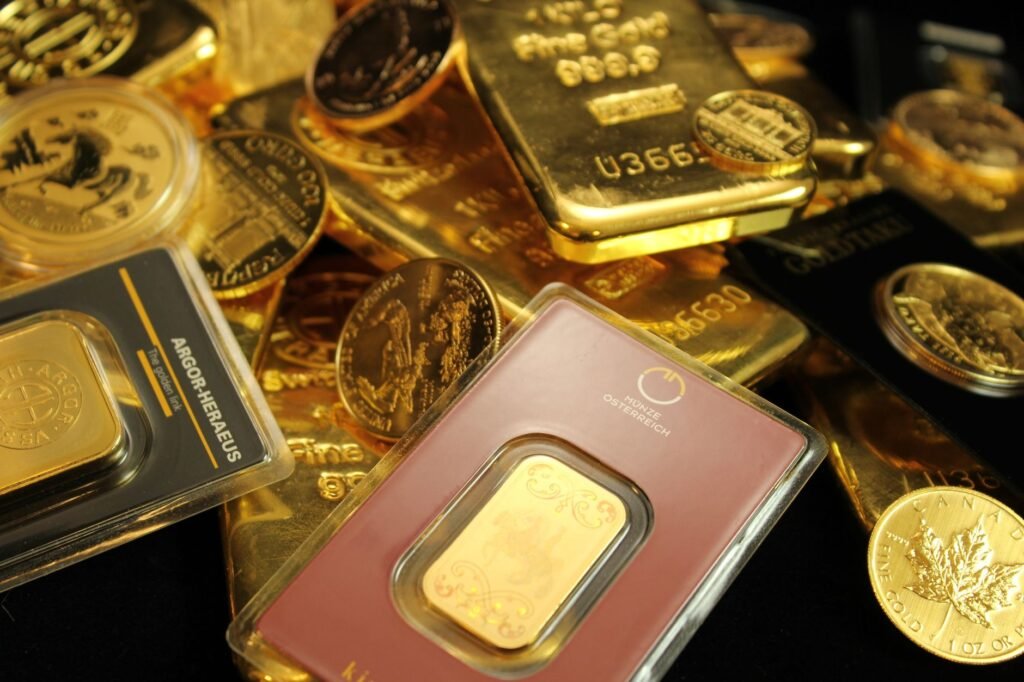

In 2026, the question of why gold continues to serve as a portfolio diversifier remains highly relevant for many investors. Gold’s enduring appeal stems from its historical tendency to exhibit a low correlation with traditional asset classes like stocks and bonds, particularly during periods of market volatility or economic uncertainty. This characteristic allows gold to potentially reduce overall portfolio risk by providing a counterbalance when other assets may be declining, offering a distinct value proposition in a dynamic financial landscape.
Understanding Portfolio Diversification
Diversification is a foundational principle in investment management, aimed at reducing risk by allocating investments among various financial instruments, industries, and other categories. The goal is to minimize exposure to any single asset or risk. A truly diversified portfolio includes assets that do not move in lockstep, meaning when one asset performs poorly, another might perform well, cushioning the portfolio’s overall impact.
For an asset to be an effective diversifier, it ideally needs to have a low or negative correlation with the other assets in a portfolio. This means its price movements are largely independent of, or sometimes even inverse to, the movements of those other assets. Gold has historically demonstrated this trait, especially during specific market conditions, which is central to its role in modern portfolios.
The Concept of Correlation in Investing
Correlation measures the degree to which two assets move in relation to each other. A correlation of +1 indicates that two assets move perfectly in the same direction, while -1 means they move in perfectly opposite directions. A correlation near 0 suggests little to no linear relationship. Gold’s correlation with equities and bonds often hovers around zero or even slightly negative, particularly during stress events, making it a valuable tool for risk management.
The Mechanics of Gold’s Diversifying Power
Gold’s ability to diversify a portfolio is rooted in several fundamental characteristics that distinguish it from paper assets.
Safe-Haven Asset Status
One of gold’s most well-known attributes is its status as a safe-haven asset. During times of economic turmoil, geopolitical instability, or heightened market uncertainty, investors often flock to gold. This flight to safety tends to increase demand for gold, potentially causing its price to rise even as stock markets fall. This counter-cyclical behavior is crucial for diversification.
Hedge Against Inflation and Currency Debasement
Gold is also frequently considered a hedge against inflation. When the purchasing power of fiat currencies erodes due to inflation, the real value of assets denominated in those currencies can decline. Gold, as a tangible asset with intrinsic value not tied to any single government or central bank, can maintain or even increase its purchasing power during inflationary periods. In 2026, with ongoing discussions around central bank policies and potential inflationary pressures in various economies, gold’s hedging properties remain a key consideration for investors seeking to protect their wealth.
Limited Supply and Intrinsic Value
Unlike fiat currencies, gold’s supply is finite and cannot be arbitrarily increased. This scarcity, combined with its long history as a store of value and its industrial and jewelry applications, provides it with an intrinsic value that is less susceptible to the same forces that impact paper assets. This fundamental difference helps to explain its low correlation with other financial instruments.
Gold in the 2026 Economic Landscape
The economic environment of 2026 presents a compelling case for gold’s continued role as a diversifier. Several widely reported trends contribute to its relevance:
- Inflationary Concerns: While inflation rates may fluctuate, the lingering effects of recent global fiscal and monetary policies could sustain underlying inflationary pressures. Investors may seek gold to safeguard their portfolios against potential currency devaluation.
- Geopolitical Instability: Ongoing geopolitical tensions in various regions around the globe tend to increase uncertainty, prompting investors to seek out assets perceived as safe and uncorrelated with regional conflicts.
- Interest Rate Environment: Central bank interest rate policies are a significant factor. Historically, rising real interest rates can sometimes make non-yielding assets like gold less attractive. However, the interplay between inflation, real rates, and overall market sentiment is complex. In an environment where real rates remain low or negative, or where there is significant uncertainty about future rate paths, gold’s appeal can be enhanced.
- Market Volatility: Global markets in 2026 continue to experience periods of heightened volatility driven by technological shifts, supply chain dynamics, and evolving economic models. Gold’s ability to act as a ballast during these turbulent times remains a core part of its diversifying function.
These factors collectively reinforce gold’s utility in a diversified portfolio, demonstrating how its historical characteristics align with current and anticipated market conditions.
Integrating Gold into a Portfolio
For investors considering gold’s role as a diversifier, there are several ways to gain exposure, each with its own set of considerations. These generally include:
- Physical Gold: Holding physical gold, such as bullion coins or bars, offers direct ownership and removes counterparty risk.
- Gold Exchange-Traded Funds (ETFs): These funds track the price of gold and offer an accessible way to invest in gold without the complexities of storing physical metal.
- Gold Mining Stocks: Investing in companies that mine gold can provide exposure, though these investments carry additional risks related to company-specific factors and operational challenges, and may correlate more with equity markets than physical gold.
The appropriate allocation to gold within a portfolio can vary widely depending on an individual’s risk tolerance, investment objectives, and overall financial strategy. Some investors might consider a modest allocation to gold as part of a long-term strategy to mitigate risk and enhance portfolio resilience, particularly given the ongoing market dynamics observed in 2026.
Conclusion
In 2026, gold’s role as a portfolio diversifier remains robust, underpinned by its distinct characteristics. Its low correlation with traditional asset classes, its status as a safe haven during periods of uncertainty, and its potential to act as a hedge against inflation continue to make it a valuable component for many looking to reduce overall portfolio risk. By offering a counterweight to other assets, gold can contribute to a more resilient and stable portfolio structure, helping investors navigate the complex financial landscape.
Disclaimer: This article is provided for general informational and educational purposes only and does not constitute financial, investment, trading, or legal advice. Gainsium is not a registered investment advisor. Markets are volatile and past performance does not guarantee future results. Readers should conduct their own research and consult a licensed financial advisor before making any investment decisions.