
In the dynamic world of financial markets, various trading strategies emerge, each with its unique philosophy and risk profile. Among these, scalping stands out as a high-volume, short-term approach designed to capitalize on minimal price fluctuations. This article will define scalping as a trading strategy, explain its mechanics, and discuss how traders attempt to profit from small price movements in the market.
What is Scalping in Trading?
Scalping is a trading strategy that involves executing numerous trades over extremely short periods, often seconds or minutes, to capture small profits from minute price changes. A scalper’s goal is not to predict major market shifts but rather to accumulate many small gains throughout a trading session, hoping these add up to a significant profit by the end of the day. This contrasts sharply with longer-term strategies that seek to profit from larger price swings over hours, days, or even weeks.
The underlying principle of scalping is that smaller price movements are more frequent and potentially easier to capture than larger ones. For instance, a stock might move up or down by a few cents many times within an hour, whereas a dollar-long move might only happen once or twice a day. By taking many small profits, scalpers aim to exploit the high frequency of these micro-movements.
Scalping vs. Other Trading Styles
While often conflated with day trading, scalping is a distinct sub-strategy. Day trading typically involves holding positions for minutes to hours, often aiming for larger price moves within a single trading day. Scalping, however, focuses on an even shorter timeframe, with positions rarely held for more than a few minutes and often closed within seconds. Swing trading involves holding positions for days or weeks to capture medium-term trends, and position trading extends to weeks, months, or even years, focusing on long-term market movements. Scalping’s unique characteristic is its relentless pursuit of very small, frequent gains, demanding intense focus and rapid decision-making.
The Mechanics of Scalping
Executing a scalping strategy requires precise timing, a deep understanding of market microstructure, and robust tools. Traders engaging in scalping often rely heavily on real-time data and fast execution speeds to gain an edge.
Essential Tools and Indicators
- High-Speed Data Feeds: Access to real-time market data, including Level 2 quotes (which show bid/ask depth), is crucial for identifying immediate supply and demand imbalances.
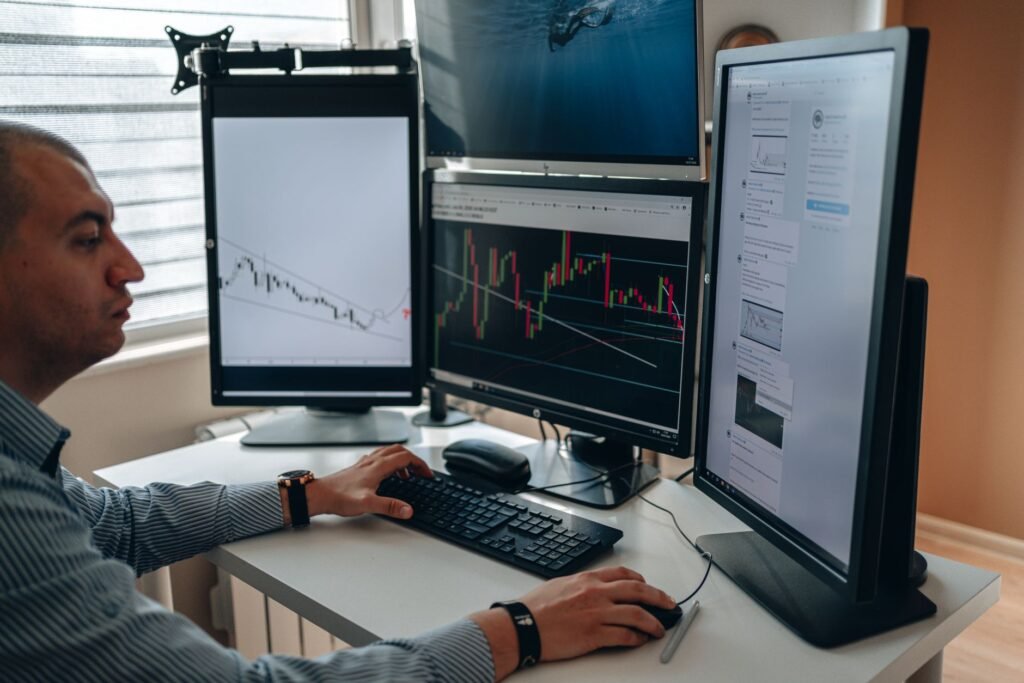
- Advanced Charting: Scalpers frequently use very short-term charts, such as tick charts or one-minute candlesticks, to spot immediate price action and trend reversals.
- Technical Indicators: While some pure price action scalpers avoid indicators, others may use simple moving averages, Bollinger Bands, or Volume Weighted Average Price (VWAP) as dynamic support and resistance levels for quick entry and exit signals.
- Direct Market Access (DMA): Fast order routing capabilities are essential to minimize slippage, which is the difference between the expected price of a trade and the price at which the trade is actually executed.
Market Conditions and Instruments
Scalpers thrive in markets characterized by high liquidity and volatility. High liquidity ensures that orders can be filled quickly and at desired prices, preventing significant slippage that could erode thin profit margins. Volatility, even if short-lived, creates the necessary price fluctuations for scalpers to exploit. Common instruments for scalping include:
- Highly Liquid Stocks: Large-cap stocks with significant daily trading volume.
- Major Forex Pairs: Currency pairs like EUR/USD or GBP/USD, known for their deep liquidity and frequent small price movements.
- Futures Contracts: Especially those on major indices or commodities, which offer high liquidity and often tighter spreads.
By 2026, the continued advancement of trading technology, including AI-driven analytics and even faster execution platforms, has further refined the landscape for scalpers, offering more sophisticated tools for rapid analysis and order placement. Retail access to these previously institutional-grade tools has also expanded.
Strategies and Risk Management in Scalping
Successful scalping requires not just technical prowess but also stringent risk management and psychological discipline. Given the high volume of trades and small profit targets, a few losing trades can quickly erase gains if not managed effectively.
Discipline and Execution Speed
The core of scalping discipline lies in adhering strictly to pre-defined entry and exit rules. There is little room for hesitation or emotional decision-making. Traders must be prepared to execute trades instantly when signals appear and exit just as quickly when targets are hit or stop-loss levels are breached. Automated or semi-automated trading systems are sometimes employed to achieve the necessary speed and consistency, especially in today’s highly computerized markets where algorithmic trading by institutional players significantly influences short-term price action.
Managing Risk: Stop-Losses and Position Sizing
For scalpers, stop-loss orders are non-negotiable. Due to the small profit targets per trade, even a minor adverse price movement can turn a potential gain into a significant loss relative to the intended profit. Scalpers typically place very tight stop-losses, often just a few ticks or pips away from their entry price. Effective position sizing is also critical; while scalpers often use leverage to amplify small movements, they must ensure that the loss on any single trade, if the stop-loss is hit, does not significantly impair their overall trading capital. A common approach involves risking a very small percentage of the total trading capital on each individual trade.
Modern Scalping in 2026
The financial markets of 2026 are heavily influenced by technology, which has both simplified and complicated the art of scalping. Retail traders now have access to faster internet, sophisticated charting software, and more competitive brokerage fees than ever before, democratizing access to strategies once reserved for institutional desks.
Algorithmic Influence and Market Microstructure
The prevalence of high-frequency trading (HFT) firms, which employ algorithms to execute millions of trades in milliseconds, means that human scalpers are operating in a highly competitive environment. HFTs often act as market makers, providing liquidity but also potentially front-running slower human orders. Successful human scalpers in 2026 often focus on less liquid assets or specific market anomalies that HFT algorithms may not immediately capture, or they leverage their unique understanding of order flow and market psychology. The increased sophistication of retail trading platforms means that some retail traders are now also integrating their own algorithmic approaches for scalping.
Challenges and Psychological Demands
Despite technological advancements, scalping remains intensely challenging. The constant need for rapid decision-making can lead to high levels of stress and burnout. Commission costs and spread expenses, even if small per trade, can accumulate quickly over hundreds of trades, eating into thin profit margins. Furthermore, the psychological fortitude required to accept many small losses while maintaining discipline for gains is considerable. Not every trade will be profitable, and the ability to absorb these frequent small losses without deviating from the strategy is paramount.
Ultimately, scalping is a high-skill, high-intensity trading strategy that demands unwavering discipline, advanced technical understanding, and robust risk management. While it offers the potential to accumulate profits from numerous small market movements, it also comes with significant challenges that require careful consideration by any trader exploring this approach.
Disclaimer: This article is provided for general informational and educational purposes only and does not constitute financial, investment, trading, or legal advice. Gainsium is not a registered investment advisor. Markets are volatile and past performance does not guarantee future results. Readers should conduct their own research and consult a licensed financial advisor before making any investment decisions.