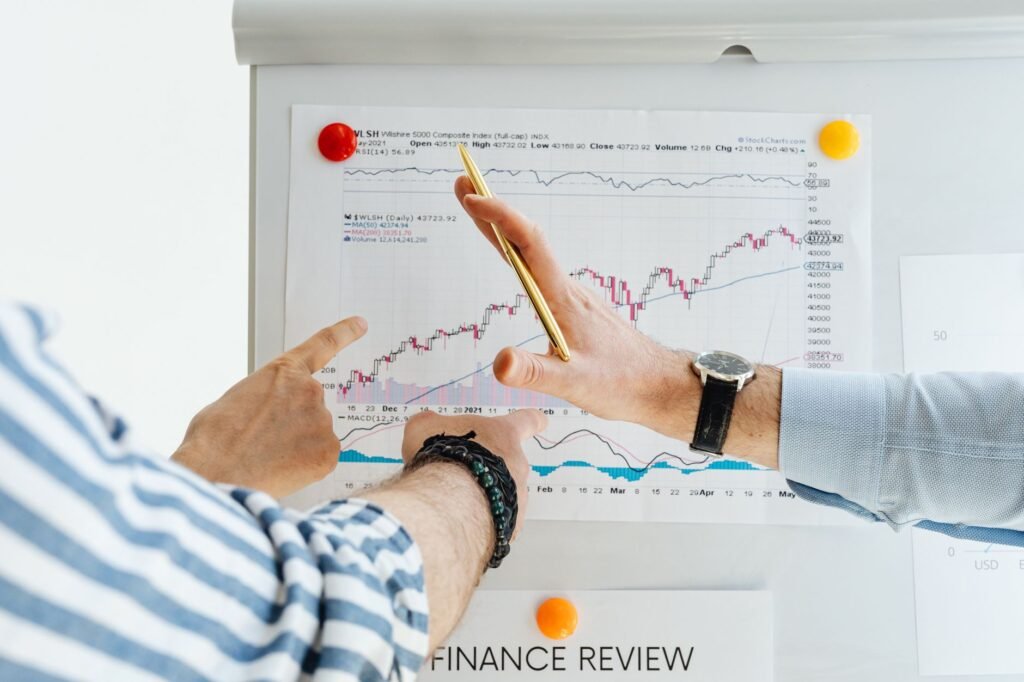

Understanding how trading psychology impacts decision-making is crucial for anyone venturing into the financial markets. For beginners, the journey often involves navigating not just complex charts and economic data, but also the powerful influence of emotions and cognitive biases. This guide will explore the fundamental role psychological factors play in trading, outlining how internal states can significantly sway trading decisions and ultimately affect outcomes. As of 2026, with markets exhibiting continued dynamism driven by technological advancements like AI and evolving global economic landscapes, recognizing these psychological aspects has become more important than ever for maintaining discipline and making sound choices.
The Fundamental Role of Psychology in Trading
Trading is often perceived as a purely analytical endeavor, a game of numbers, charts, and logical deductions. While these elements are undeniably central, a successful trader understands that the human mind is arguably the most critical variable in the equation. Psychology forms the bedrock of trading success or failure, influencing everything from the interpretation of market signals to the execution of trades. In today’s fast-paced markets, where information flows almost instantaneously and algorithmic trading often dictates immediate price movements, human reactions to volatility can be magnified, making emotional control paramount.
Ignoring the psychological dimension means overlooking a significant factor that differentiates consistent traders from those who struggle. It’s not uncommon for individuals with solid analytical skills to underperform due to emotional lapses. The interplay between market events and personal reactions creates a complex feedback loop, where fear can lead to panic selling and greed can encourage overleveraging, irrespective of objective market conditions.
Common Emotional Pitfalls for Traders
Emotions are a natural part of the human experience, but in trading, they can be detrimental if not managed effectively. Several common emotional pitfalls frequently trip up novice and even experienced traders:
Fear
- Fear of Losing (Loss Aversion): This powerful emotion can cause traders to close profitable positions too early, preventing them from capturing larger gains, or to hold onto losing trades for too long, hoping for a recovery that may never come.
- Fear of Missing Out (FOMO): The impulse to jump into a rapidly moving market or asset without proper analysis, simply because others appear to be profiting. This often leads to buying at peaks or selling at troughs.
Greed
The antithesis of fear, greed drives traders to seek excessive profits. It can manifest as taking on larger position sizes than prudent, overtrading, or refusing to take profits on a winning trade, always believing the market will go higher, only to see gains erode.
Hope
While often a positive emotion in life, in trading, ‘hope’ can be dangerous. It typically appears when a trade goes against the trader, leading them to hold a losing position beyond their predefined stop-loss level, hoping for a turnaround that contradicts market signals.
Overconfidence
A string of successful trades can inflate a trader’s ego, leading to overconfidence. This can result in neglecting risk management protocols, increasing position sizes inappropriately, or taking trades based on insufficient research, assuming continued success.
Frustration and Anger
After experiencing losses, traders might become frustrated or angry, leading to ‘revenge trading.’ This involves impulsively entering new trades, often with larger sizes, in an attempt to quickly recoup losses, usually without a clear strategy, leading to further losses.
Cognitive Biases Influencing Trading Decisions
Beyond raw emotions, cognitive biases – systematic patterns of deviation from norm or rationality in judgment – also significantly impact trading decisions. These mental shortcuts, while useful in everyday life, can lead to costly errors in the markets.
Confirmation Bias
This bias involves seeking out or interpreting information in a way that confirms one’s existing beliefs or hypotheses. A trader might selectively read news articles or analyze charts that support their bullish outlook on a stock, while ignoring any contradictory evidence.
Anchoring Bias
Traders with anchoring bias tend to rely too heavily on the first piece of information encountered (the ‘anchor’) when making decisions. For example, anchoring on a past all-time high price for an asset, even if market fundamentals have drastically changed, can lead to unrealistic expectations in 2026, especially in rapidly evolving sectors like AI or renewable energy.
Hindsight Bias
This is the tendency to see past events as more predictable than they actually were. After a market event, traders might say,
Disclaimer: This article is provided for general informational and educational purposes only and does not constitute financial, investment, trading, or legal advice. Gainsium is not a registered investment advisor. Markets are volatile and past performance does not guarantee future results. Readers should conduct their own research and consult a licensed financial advisor before making any investment decisions.