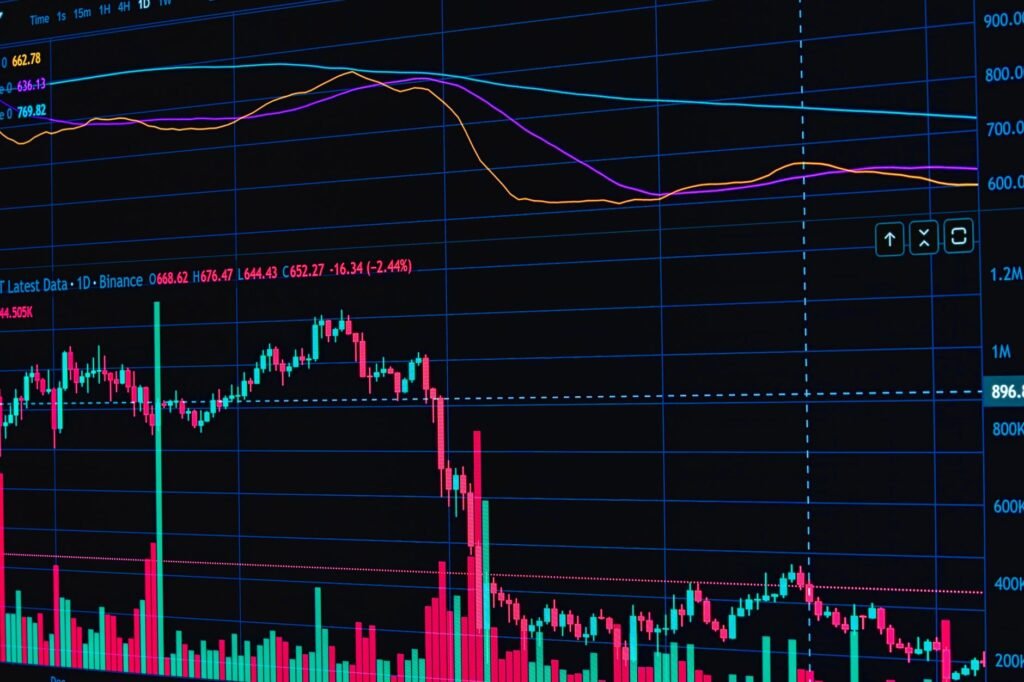

Contrarian investing is an approach where investors intentionally go against prevailing market sentiment, often buying assets when others are selling in panic and selling when others are buying in euphoria. This strategy operates on the belief that markets frequently overreact, creating opportunities for those willing to take an opposing view. In periods of market volatility, understanding how contrarian investing works can be particularly insightful for those seeking to navigate the ups and downs.
The Philosophy Behind Contrarian Investing
At its core, contrarian investing challenges the notion that the crowd is always right. It’s rooted in the idea that investor psychology – particularly fear and greed – can lead to irrational decision-making, causing assets to be mispriced. When markets are gripped by fear, assets might be sold off indiscriminately, pushing their prices below their intrinsic value. Conversely, during periods of irrational exuberance, asset prices can be driven far above what their fundamentals would suggest.
Riding Against the Tide
Contrarian investors observe these patterns and aim to capitalize on them. Instead of following the herd, which often buys high and sells low, contrarians seek to do the opposite. They are comfortable being an outlier, recognizing that popular opinion can sometimes be a lagging indicator rather than a reliable predictor of future performance. This requires a strong degree of independent thought and the courage to act against consensus, often when it feels most uncomfortable.
Valuing the Undervalued
A fundamental pillar of contrarian investing is rigorous fundamental analysis. The goal is not merely to buy assets that have fallen in price, but to identify those that are genuinely undervalued relative to their long-term potential. This involves delving into a company’s financial health, management quality, competitive landscape, and future prospects, or assessing the underlying economic conditions and utility of a broader asset class. Patience is key, as it can take time for the market to recognize the true value of an out-of-favor asset.
Applying Contrarian Strategies in Volatile Markets
Periods of market volatility, such as those witnessed in the mid-2020s with fluctuating interest rates, inflation debates, and evolving geopolitical landscapes, often present fertile ground for contrarian strategies. These times are characterized by heightened uncertainty, rapid price swings, and often, emotional selling.
Identifying Opportunities Amidst Panic
When panic selling grips the market, entire sectors or asset classes can experience significant downturns. For instance, a perceived economic slowdown might lead to broad selling across various industrial or consumer discretionary stocks, even if some individual companies within those sectors possess strong balance sheets and resilient business models. A contrarian investor would look beyond the headlines and general pessimism to identify these specific opportunities.
Similarly, certain commodity markets might experience sharp corrections due to temporary supply gluts or demand concerns. While the immediate outlook may seem bleak, a contrarian might assess the long-term supply-demand dynamics and strategic importance, considering a buying opportunity. The key is to differentiate between assets facing temporary headwinds and those with genuinely deteriorating fundamentals.
Key Characteristics of a Contrarian Approach
- Discipline: Sticking to a predefined investment thesis even when market sentiment vehemently opposes it. This means not succumbing to the temptation to join the herd.
- Patience: Contrarian plays often take time to materialize. The market may not immediately agree with an investor’s assessment, and it could be months or even years before an undervalued asset regains favor.
- Risk Management: While contrarian investing seeks to profit from market mispricing, it is not without risk. Diversification across multiple contrarian ideas and careful position sizing are crucial to mitigate the impact if a particular thesis proves incorrect or takes longer than expected to play out.
- Long-term Horizon: Contrarian investing is typically a long-term strategy. It focuses on fundamental value that may take time for the broader market to appreciate, rather than short-term price movements.
Common Contrarian Tactics
- Value Investing: This is a closely related strategy where investors seek out companies whose stock prices appear to be undervalued by the market, often based on metrics like price-to-earnings (P/E) ratios, price-to-book (P/B) ratios, or dividend yields.
- Sector Rotation: Identifying sectors that are currently out of favor and show signs of potential recovery or undervaluation, anticipating a future shift in market preference. For example, during a tech sell-off, a contrarian might look for established, profitable tech companies whose valuations have become more attractive.
- Asset Class Diversification: When one asset class (e.g., equities) is experiencing significant downward pressure, a contrarian might look at other asset classes (e.g., certain types of fixed income, real estate, or commodities) that are disproportionately sold off or offer defensive characteristics.
Challenges and Considerations for Contrarian Investors
While potentially rewarding, contrarian investing is not without its difficulties and demands a specific mindset.
The Risk of Being Early
One of the primary challenges is the risk of being too early. Markets can remain irrational for extended periods, and an asset that appears undervalued can continue to decline before recovering. This requires significant conviction and the financial capacity to withstand further short-term losses. Being early can be psychologically taxing and may tie up capital that could otherwise be deployed elsewhere.
Differentiating Value from Value Trap
Not every declining asset is an opportunity. Some assets fall in price because their underlying businesses or fundamentals are genuinely deteriorating, or their industry faces structural challenges. These can become
Disclaimer: This article is provided for general informational and educational purposes only and does not constitute financial, investment, trading, or legal advice. Gainsium is not a registered investment advisor. Markets are volatile and past performance does not guarantee future results. Readers should conduct their own research and consult a licensed financial advisor before making any investment decisions.