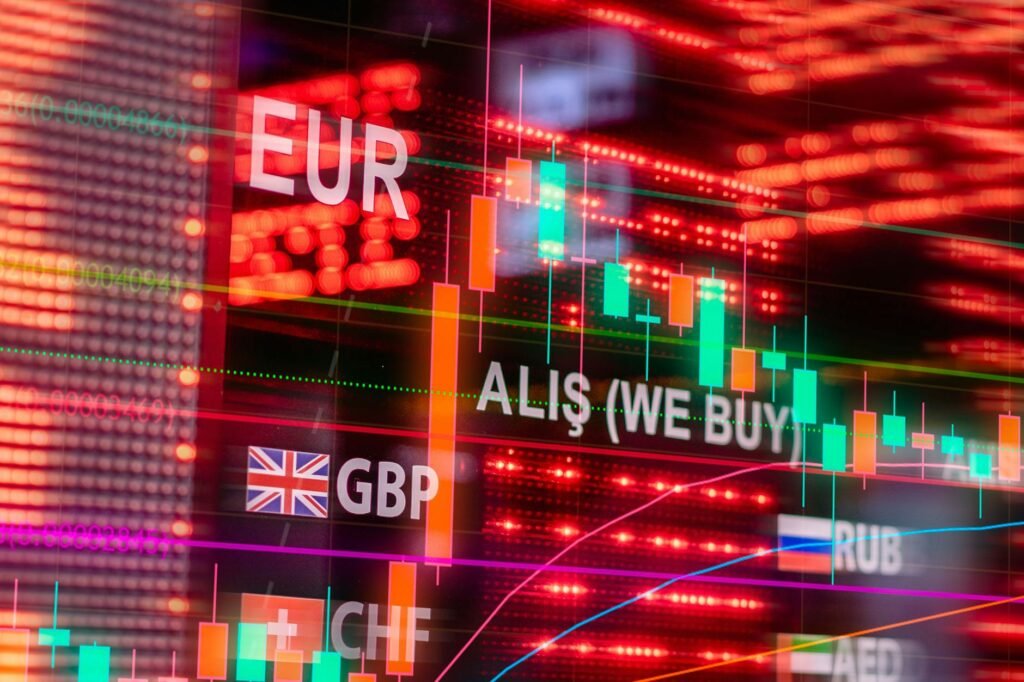

Navigating the 2026 Forex Landscape
The global foreign exchange (forex) market has reached an unprecedented scale in 2026, with daily trading volumes now exceeding $8.5 trillion. Driven by rapid advancements in AI-assisted trading platforms, decentralized liquidity pools, and shifting macroeconomic climates, retail forex trading has become more accessible—and competitive—than ever before. For aspiring traders looking to build sustainable wealth, forex offers unparalleled liquidity and round-the-clock opportunities. However, navigating this fast-paced environment requires a solid foundation. This comprehensive guide will equip you with the essential knowledge, tools, and strategies to confidently trade forex in 2026.
Understanding Currency Pairs: The Foundation of Forex
At its core, forex trading is the simultaneous buying of one currency and selling of another. Because of this, currencies are always traded in currency pairs. For example, in the EUR/USD pair, the Euro (EUR) is the base currency, and the US Dollar (USD) is the quote currency. The price represents how much of the quote currency is needed to buy one unit of the base currency.
The Three Categories of Pairs
Traders divide currency pairs into three distinct categories:
- Major Pairs: These involve the US Dollar paired with other global powerhouse currencies (e.g., EUR/USD, GBP/USD, USD/JPY). They offer the lowest transaction costs (spreads) and the highest liquidity.
- Minor Pairs: Also known as cross-currency pairs, these exclude the USD but contain other major currencies (e.g., EUR/GBP, AUD/JPY).
- Exotic Pairs: These pair a major currency with one from an emerging market (e.g., USD/SGD or USD/TRY). While volatile and carrying wider spreads, they offer unique opportunities driven by localized geopolitical shifts in 2026.
Leverage and Margin: The Mechanisms of Modern Trading
To make meaningful profits in a market where daily price movements are often less than 1%, retail traders utilize leverage. Leverage allows you to control a large position with a relatively small amount of actual capital.
How Leverage Works
If your broker offers 1:30 leverage, you can control a $30,000 position with just $1,000 of your own capital. In 2026, global regulators continue to enforce strict caps on leverage for retail accounts to prevent catastrophic losses. Understanding how leverage amplifies both your profits and your losses is crucial for long-term survival.
Demystifying Margin
Margin is the collateral required to open and maintain a leveraged position. It is essentially a good-faith deposit held by your broker. If your account equity falls below the broker’s required threshold due to losing trades, you will face a margin call. This requires you to deposit more funds immediately, or the platform will automatically close your active trades at a loss to protect the broker from negative balances.
Mastering the Charts: Technical Analysis in the AI Era
In 2026, technical analysis remains the primary tool for short-term traders looking to forecast price movements. However, the methodology has evolved. Modern traders now combine traditional chart reading with real-time AI analytics integrated directly into retail platforms to validate their setups.
Key Technical Concepts
To effectively analyze forex charts, beginners must master three core pillars:
- Support and Resistance: These are price levels where historical buying or selling pressure prevents the price from moving further. Identifying these zones helps you locate optimal entry and exit points.
- Trend Indicators: Tools like Moving Averages (specifically the 50-day and 200-day EMA) and the Relative Strength Index (RSI) help identify the market’s overall direction and whether a pair is overbought or oversold.
- Candlestick Patterns: Visual representations of price movements within a specific timeframe. Patterns like the “Hammer” or “Engulfing” candles signal potential market reversals.
In 2026, smart platforms offer automated AI-assisted pattern recognition. While these tools can speed up your analysis, rely on your foundational training to verify every trade before execution.
The Pillars of 2026 Risk Management
The difference between a successful wealth builder and a failed trader is not their win rate; it is their risk management. With the macroeconomic volatility of 2026, driven by global interest rate pivots and technological transformations, a disciplined risk strategy is non-negotiable.
The 1% Rule
Never risk more than 1% (or at most 2%) of your total trading account balance on a single trade. If you have a $10,000 account, your maximum risk per trade should be $100. This ensures that a string of consecutive losses will not deplete your capital.
Using Stop-Loss and Take-Profit Orders
A Stop-Loss (SL) order automatically closes your trade if the market moves against you, limiting your downside. A Take-Profit (TP) order locks in your gains once the target price is reached. Set these levels based on your technical analysis before you enter a trade to remove emotional decision-making from your executions.
Five Steps to Launch Your Forex Journey Safely
If you are ready to start building your trading business in 2026, follow this structured, risk-controlled path to success:
- Educate Yourself Daily: Spend time understanding macroeconomics, central bank decisions, and geopolitical events that drive currency values.
- Choose a Highly Regulated Broker: Ensure your broker is regulated by top-tier authorities (such as the FCA, ASIC, or CFTC) and offers modern, low-latency execution platforms.
- Start with a Demo Account: Practice trading with virtual money for at least 30 to 60 days to familiarize yourself with the platform mechanics and test your strategies.
- Focus on One Currency Pair: Master the personality, volatility patterns, and key trading sessions of a single pair—ideally EUR/USD or GBP/USD—before diversifying.
- Keep a Digital Trading Journal: Document every trade, including screenshots, entry/exit criteria, and your emotional state. In 2026, journaling tools can automate statistics to show you exactly where your edge lies.
Conclusion: Your Path to Financial Sovereignty
Forex trading in 2026 is a sophisticated, highly dynamic discipline that offers unparalleled opportunities for wealth generation. However, it is not a get-rich-quick scheme. Success requires consistency, endless learning, and unwavering emotional control. By mastering currency pairs, leveraging your capital responsibly, applying technical analysis, and enforcing strict risk management, you can build a sustainable trading business. Take your time, protect your capital, and let compound growth build your financial future.