
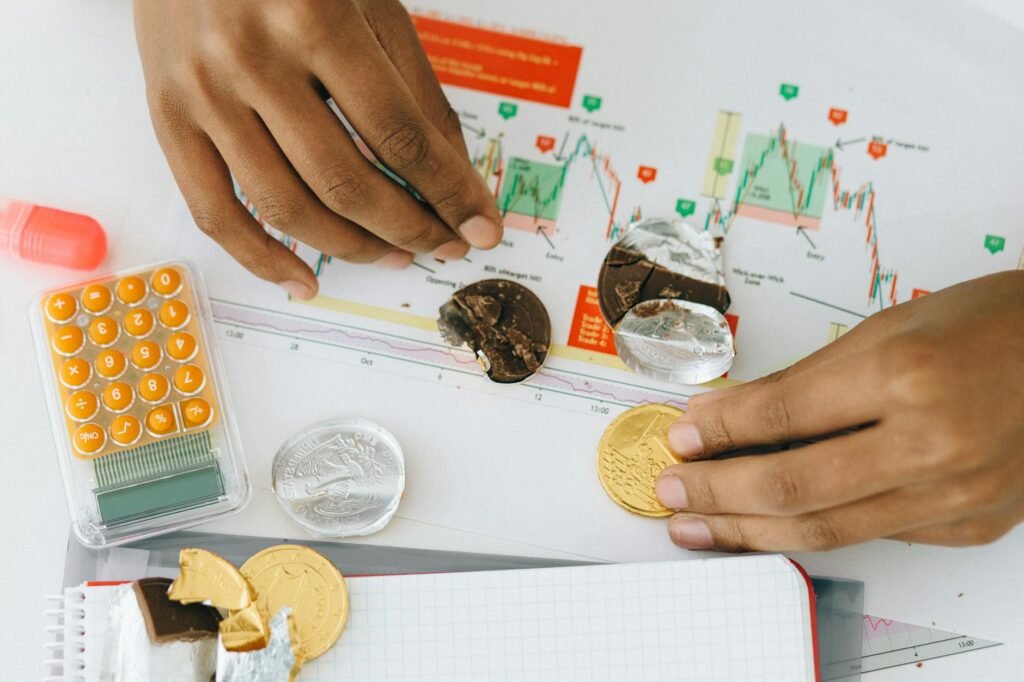

Welcome to 2026! As global financial markets continue their dynamic evolution, one asset consistently holds its allure: gold. Often seen as a safe haven, an inflation hedge, and a store of value, the yellow metal (XAU/USD) remains a cornerstone for savvy traders. But what does 2026 specifically hold for gold, and how can you position yourself to profit? This comprehensive guide from Gainsium will dive deep into the fundamental drivers, technical strategies, and crucial risk management tactics to navigate the gold market successfully in the current year.
The Golden Landscape in 2026: Fundamentals Driving XAU/USD
Gold prices are a complex interplay of macroeconomic forces, geopolitical events, and market sentiment. Understanding these underlying factors is paramount for informed trading decisions in 2026.
Inflation and Interest Rates: A Persistent Tug-of-War
In 2026, inflation remains a key concern for many economies, albeit with varying intensity. While some central banks, notably the U.S. Federal Reserve, have been navigating a delicate balance between controlling inflation and supporting growth, the long-term impact of past monetary policies continues to resonate. Higher-than-expected inflation tends to boost gold’s appeal as a hedge against the erosion of purchasing power. However, aggressive interest rate hikes by central banks can increase the opportunity cost of holding non-yielding gold, making other assets like bonds more attractive. In 2026, pay close attention to central bank rhetoric and CPI data globally. A scenario where inflation remains elevated but interest rate hikes are paused or even reversed (due to economic slowdown fears) could be highly bullish for gold.
The Dollar’s Dominance (or Decline): Inverse Relationship
Gold is typically priced in U.S. dollars, meaning a stronger dollar generally makes gold more expensive for holders of other currencies, dampening demand, and vice-versa. The U.S. Dollar Index (DXY) in 2026 is influenced by comparative economic performance, interest rate differentials, and global risk sentiment. Should the global economy stabilize and other major economies show stronger growth, we might see a softening of the dollar, providing a tailwind for gold. Conversely, renewed global instability driving capital into U.S. assets could strengthen the dollar and exert downward pressure on gold. Keep an eye on major economic indicators from the U.S., EU, Japan, and China.
Geopolitical Tensions & Central Bank Appetite
The geopolitical landscape in 2026 remains complex, with ongoing regional conflicts, supply chain disruptions, and shifting international alliances creating an environment of uncertainty. Such instability historically drives demand for gold as a safe-haven asset. Furthermore, central banks worldwide have been consistent net buyers of gold in recent years, diversifying their reserves away from traditional fiat currencies. This trend is expected to continue into 2026, providing a strong underlying demand floor for gold prices. Any significant escalation of global tensions or strategic reserve shifts by major nations could trigger substantial moves in XAU/USD.
Technical Strategies for Gold Trading in 2026
While fundamentals paint the big picture, technical analysis helps pinpoint entry and exit points, understand market psychology, and manage risk. Here’s what to focus on for XAU/USD in 2026.
Key Price Levels to Watch in 2026
As of early 2026, gold has shown resilience, maintaining its position above significant psychological barriers. Traders should monitor these hypothetical but realistic levels:
- Strong Support: The $2280 – $2300 zone has proven to be a crucial support level. A sustained break below this could signal deeper corrections towards $2200 – $2220.
- Key Resistance: The $2450 – $2480 region represents a major psychological and technical resistance. A decisive breakout above this, ideally on strong volume, could open the path towards new all-time highs, potentially targeting $2550 and even $2600.
- All-Time Highs: Keep an eye on the existing all-time high (e.g., ~$2450-$2480 from late 2025/early 2026), as breaking this level often indicates strong bullish momentum.
Essential Technical Indicators for XAU/USD
- Moving Averages (MA): Use 50-day, 100-day, and 200-day Simple Moving Averages (SMA) or Exponential Moving Averages (EMA) to identify trends. A golden cross (50-day MA crossing above 200-day MA) is a bullish signal, while a death cross is bearish.
- Relative Strength Index (RSI): The RSI helps identify overbought (above 70) or oversold (below 30) conditions. Divergences between price and RSI can signal potential reversals.
- Fibonacci Retracements/Extensions: Apply Fibonacci tools to recent major swings to identify potential support and resistance levels. Common retracement levels (38.2%, 50%, 61.8%) are often strong reversal points.
- Volume: Always accompany price action with volume analysis. Strong moves on high volume indicate conviction, while moves on low volume can be suspect.
Chart Patterns & Breakouts
Familiarize yourself with common chart patterns such as head and shoulders, double tops/bottoms, triangles, flags, and pennants. In 2026, given potential volatility, trading breakouts from consolidation patterns or established trendlines can be particularly profitable. Always wait for confirmation before entering a trade based on a pattern or breakout.
Risk Management & Practical Gold Trading Tips for 2026
No trading strategy, no matter how sophisticated, is complete without robust risk management. This is especially true for a volatile asset like gold.
Capital Preservation is Key
- Position Sizing: Never risk more than a small percentage (e.g., 1-2%) of your total trading capital on any single trade.
- Stop-Loss Orders: Always use stop-loss orders to limit potential losses. Determine your stop-loss level based on technical analysis (e.g., below a key support) and adjust it as the trade progresses (trailing stop-loss).
- Take-Profit Levels: Define clear take-profit targets based on resistance levels, Fibonacci extensions, or your risk/reward ratio. Don’t be greedy; it’s better to secure smaller profits consistently.
- Risk-Reward Ratio: Aim for trades where the potential profit is at least 2-3 times greater than the potential loss (e.g., 1:2 or 1:3 risk-reward).
Staying Informed in 2026
The global economic calendar for 2026 is packed with potential market movers. Keep a close watch on:
- U.S. Federal Reserve, ECB, and BoE interest rate decisions and press conferences.
- Key economic data releases (CPI, PPI, GDP, employment reports).
- Geopolitical developments and major political announcements.
- Speeches from central bank officials and economic summits.
Actionable Tips for Gold Traders in 2026:
- Start Small: If you’re new to gold trading, begin with smaller position sizes to gain experience without undue risk.
- Utilize Demo Accounts: Practice your strategies in a risk-free environment before committing real capital.
- Combine Analysis: Don’t rely solely on technical or fundamental analysis. A holistic approach is always superior.
- Stay Disciplined: Stick to your trading plan and risk management rules. Emotional decisions are costly.
- Review and Adapt: Regularly review your trades to identify what worked and what didn’t. Adapt your strategies as market conditions in 2026 evolve.
Conclusion
Gold trading in 2026 presents compelling opportunities for those who are prepared and disciplined. By understanding the fundamental forces of inflation, interest rates, the U.S. dollar, and global stability, combined with robust technical analysis and stringent risk management, you can navigate the XAU/USD market with confidence. Remember, the goal isn’t just to chase profits, but to preserve capital and grow your wealth sustainably. Stay informed, stay strategic, and may your 2026 gold trades shine brightly!