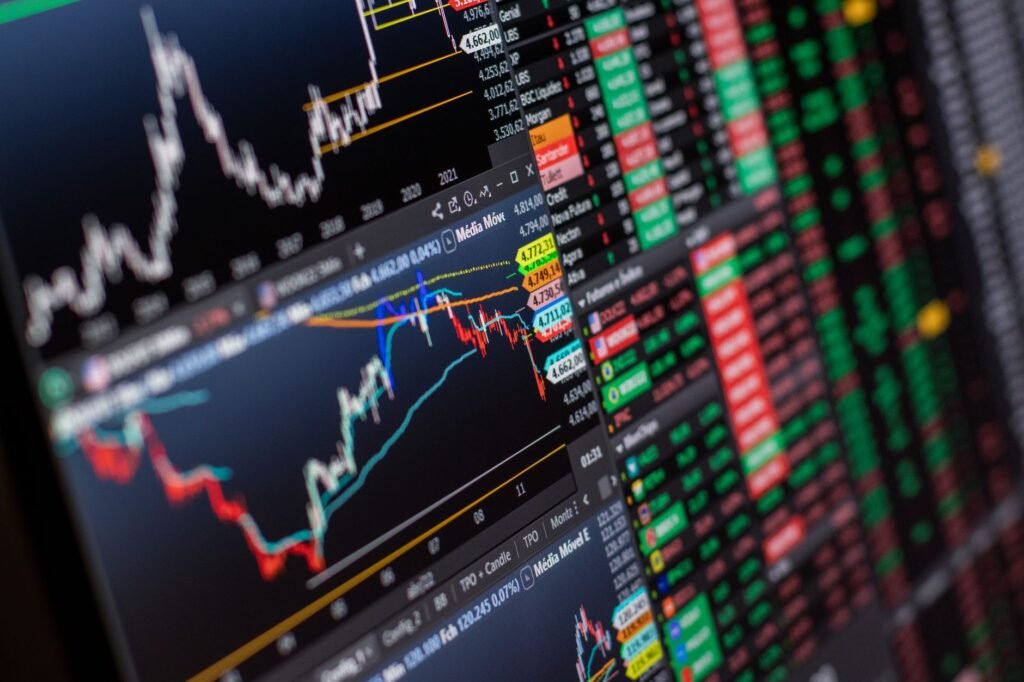

In the interconnected financial markets of 2026, where technology drives trading at unprecedented speeds, arbitrage trading remains a key strategy for those looking to exploit temporary price discrepancies. Arbitrage fundamentally involves the simultaneous purchase and sale of an asset in different markets to profit from fleeting price differences. This article will define arbitrage trading, explore its various forms, and detail how traders identify and execute these opportunities in today’s technologically advanced environment.
What Is Arbitrage Trading?
Arbitrage is the practice of capitalizing on market inefficiencies by simultaneously buying and selling an identical or equivalent asset across different markets to secure a profit from a price disparity. The theoretical ideal of arbitrage is a risk-free profit, as the discrepancy should be closed almost instantly. However, in the highly efficient, digitized markets of 2026, such pure opportunities are extremely rare and typically captured by ultra-low latency algorithmic systems. Success now often depends on speed, technology, and the ability to manage the intricate risks involved.
The evolution of arbitrage has been shaped by technological advancements. Historically, opportunities were more manual and slower. Today, algorithms and high-frequency trading (HFT) dominate, reducing profit margins per trade but allowing for immense volume. The fragmented nature of markets, particularly in digital assets, still creates pockets of inefficiency, but these are often fleeting and fiercely competitive.
Forms of Arbitrage Trading
Arbitrage manifests in several distinct forms, each requiring specific approaches and technologies.
Spatial Arbitrage
This common form involves buying an asset on one exchange at a lower price and simultaneously selling it on another where it trades higher. Examples include a stock listed on both the NYSE and LSE, or a cryptocurrency trading at different prices on various global exchanges. In 2026, the critical factor for spatial arbitrage is speed; minimal latency in data feeds and execution is paramount to capture these fleeting differences before they vanish.
Triangular Arbitrage
Triangular arbitrage exploits pricing inconsistencies between three different currencies in the foreign exchange (forex) market. For instance, converting U.S. Dollars to Euros, Euros to British Pounds, and then British Pounds back to U.S. Dollars might yield a profit if the cross rates are misaligned. This strategy is almost exclusively executed by sophisticated algorithms, given the microscopic and instantaneous nature of such mispricings.
Merger Arbitrage (Risk Arbitrage)
Distinct from pure arbitrage, merger arbitrage, also known as risk arbitrage, involves significant risk. It focuses on publicly announced takeover bids. Traders buy the target company’s stock, which typically trades below the announced acquisition price, betting that the deal will successfully complete. The profit arises from the stock’s convergence to the acquisition price. The risk, however, is that the merger could fail, causing a sharp decline in the target company’s stock value.
Statistical Arbitrage
This quantitative strategy identifies statistically mispriced relationships between financial instruments. A common method is pairs trading, where two historically correlated assets temporarily diverge. A statistical arbitrageur would short the overperforming asset and long the underperforming one, anticipating a reversion to their historical mean. This is not risk-free, as statistical relationships can break down, requiring advanced econometric models and continuous monitoring.
Convertible Arbitrage
Convertible arbitrage exploits inefficiencies between a convertible bond and its underlying common stock. Traders typically buy the convertible bond while simultaneously short-selling the underlying stock. The goal is to profit from mispricings in the bond’s embedded option, often while hedging against market movements in the underlying equity.
How Traders Identify & Execute Arbitrage in 2026
Successful arbitrage in 2026 relies heavily on technological superiority and meticulous execution.
Algorithmic Advantage
The speed required for most arbitrage forms means human execution is often too slow. Traders deploy:
- Ultra-low Latency Systems: Colocated servers near exchange matching engines and direct API connections minimize execution times to microseconds or nanoseconds.
- Advanced AI and Machine Learning: These technologies continuously scan vast amounts of real-time market data across multiple exchanges, identifying discrepancies and executing trades automatically.
- Sophisticated Data Feeds: Access to consolidated, granular real-time market data, including full order book depth, is crucial for detecting fleeting opportunities and managing liquidity.
Capital and Liquidity Management
Arbitrage opportunities often yield small profits per trade, necessitating substantial capital to achieve meaningful returns through high-volume execution. Effective liquidity management is critical to ensure that both legs of a trade can be executed at the desired prices, mitigating slippage—the difference between the expected and actual execution price—which can quickly erode thin margins.
Risk Management
Despite the
Disclaimer: This article is provided for general informational and educational purposes only and does not constitute financial, investment, trading, or legal advice. Gainsium is not a registered investment advisor. Markets are volatile and past performance does not guarantee future results. Readers should conduct their own research and consult a licensed financial advisor before making any investment decisions.