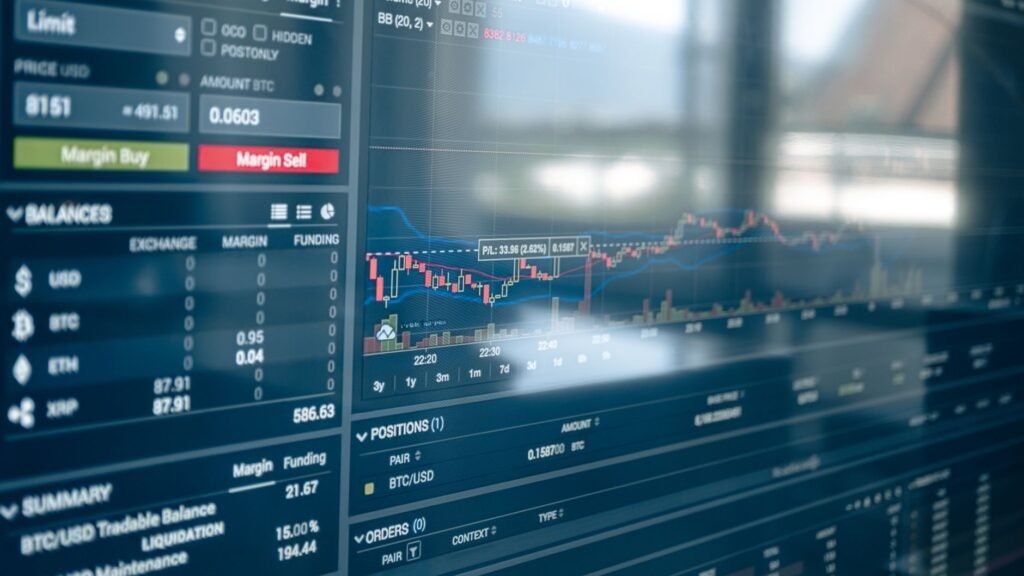

For individuals exploring financial markets in 2026, understanding the fundamental differences between options and futures contracts is crucial. While both are derivatives, meaning their value is derived from an underlying asset, they offer distinct mechanisms for speculating on price movements, hedging existing positions, or managing risk. This article breaks down these two popular trading instruments, explaining their mechanics, inherent risks, and potential applications for new traders in today’s evolving market landscape.
Understanding Derivatives
Derivatives are financial contracts whose value is linked to the performance of an underlying asset or group of assets. These assets can include stocks, bonds, commodities like oil or gold, currencies, or even market indexes. Derivatives allow traders to gain exposure to price movements without directly owning the underlying asset, often providing leverage, but also amplifying both potential gains and losses. As market accessibility continues to improve through advanced trading platforms in 2026, understanding these foundational instruments becomes increasingly important for informed decision-making.
Options Contracts: The Right, Not the Obligation
What are Options?
An options contract gives the buyer the right, but not the obligation, to buy or sell an underlying asset at a specified price (the strike price) on or before a specific date (the expiration date). For this right, the buyer pays a premium to the seller. The seller, in turn, takes on the obligation to fulfill the contract if the buyer chooses to exercise it.
Key Characteristics of Options
- Calls and Puts: A call option grants the right to buy the underlying asset, typically used by those who believe the price will rise. A put option grants the right to sell the underlying asset, often favored by those expecting a price decline.
- Strike Price and Expiration: Every option has a predefined strike price and an expiration date. The strike price is the price at which the underlying asset can be bought or sold. The expiration date is the last day the option can be exercised.
- Premium: The price paid by the option buyer to the seller for the right granted by the contract. This premium is the maximum loss for an option buyer.
- Risk Profile: For option buyers, the maximum loss is limited to the premium paid. For option sellers, the potential for loss can be substantial, and in some cases, theoretically unlimited, especially for uncovered (naked) options.
Potential Uses of Options
Options can be employed for various strategies:
- Speculation: Traders can speculate on price movements with a defined maximum loss (for buyers).
- Hedging: Options can be used to protect existing portfolios from adverse price movements. For example, buying put options on a stock owned can limit downside risk.
- Income Generation: Selling options (e.g., covered calls on shares already owned) can generate premium income, though this caps potential upside gains on the underlying asset.
Futures Contracts: The Obligation
What are Futures?
A futures contract is a standardized legal agreement to buy or sell a specific commodity or financial instrument at a predetermined price at a specified time in the future. Unlike options, futures impose an obligation on both the buyer and the seller to complete the transaction. In most cases, futures contracts are cash-settled rather than physically delivered.
Key Characteristics of Futures
- Standardized Contracts: Futures contracts are highly standardized regarding quality, quantity, delivery time, and location (if physical delivery is involved), making them highly liquid on exchanges.
- Leverage and Margin: Futures trading involves significant leverage. Traders are typically required to deposit a relatively small percentage of the contract’s total value as initial margin. This leverage can magnify both profits and losses.
- Mark-to-Market: Futures accounts are
Disclaimer: This article is provided for general informational and educational purposes only and does not constitute financial, investment, trading, or legal advice. Gainsium is not a registered investment advisor. Markets are volatile and past performance does not guarantee future results. Readers should conduct their own research and consult a licensed financial advisor before making any investment decisions.