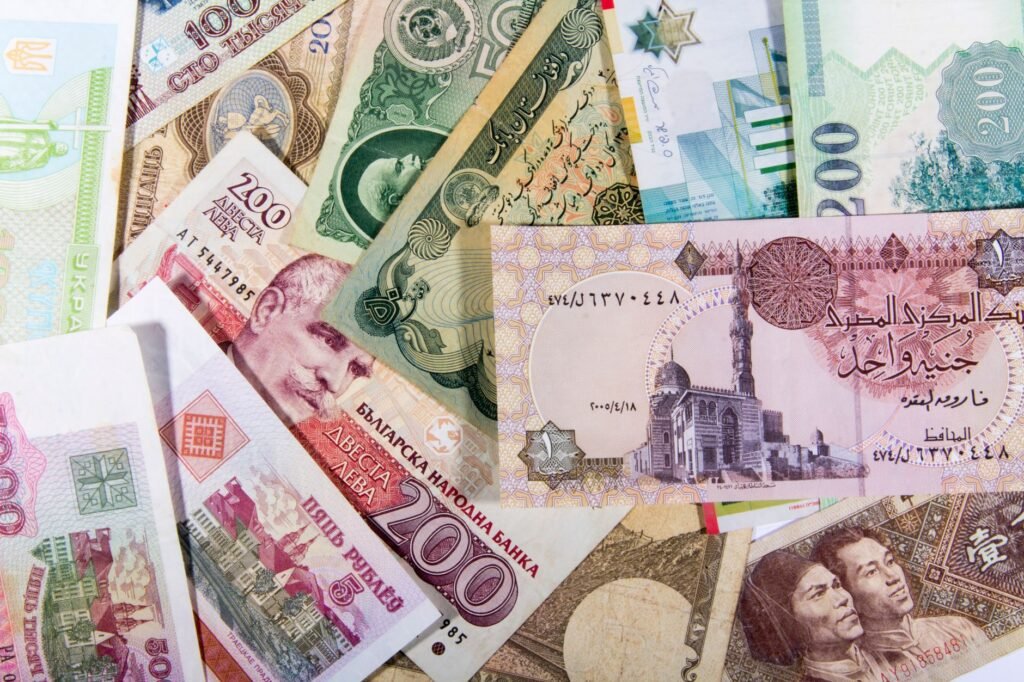

In 2026, the global economy continues to navigate a complex landscape characterized by evolving inflation trends. Understanding how these trends influence currency exchange rates is crucial for anyone monitoring international financial markets. Global inflation, which reflects a sustained increase in the general price level of goods and services across different economies, has a profound and multifaceted impact on the relative value of currencies, directly affecting international trade, investment flows, and the purchasing power of nations.
The Fundamental Link: Inflation and Purchasing Power
At its core, inflation erodes the purchasing power of a currency. When prices rise domestically, a unit of that currency can buy fewer goods and services within its own borders. Internationally, this principle extends to how much that currency can purchase in foreign goods and services, or how much foreign currency it can exchange for.
Inflation’s Erosion of Purchasing Power
- Domestic Value: Persistent high inflation within a country reduces the internal value of its currency. This internal devaluation is often reflected in its external value.
- International Perception: Foreign investors and traders perceive a currency from a high-inflation economy as less stable and potentially less valuable in the long run. If the prices of goods produced in a country are rising significantly faster than those of its trading partners, its exports become relatively more expensive, potentially decreasing demand.
Conversely, a country with relatively lower and more stable inflation compared to its trading partners may see its currency strengthen. Its exports remain competitive, and its currency retains more of its purchasing power, making it more attractive for international transactions.
Interest Rate Differentials: A Magnet for Capital
Central bank responses to inflation are a primary driver of currency movements. When inflation is high or persistent, central banks often implement contractionary monetary policies, primarily by raising interest rates. This action is designed to cool down the economy, reduce demand, and bring inflation back to target levels.
Central Bank Responses and Capital Flows
- Attracting Foreign Investment: Higher domestic interest rates make a country’s financial assets, such as government bonds and savings accounts, more attractive to foreign investors seeking better returns. This increased demand for a country’s assets translates into an increased demand for its currency, potentially leading to appreciation.
- Relative Rates Matter: It is not just the absolute level of interest rates but the interest rate differential between two countries that influences exchange rates. If Country A’s central bank raises rates significantly while Country B’s keeps rates low, capital is likely to flow from Country B to Country A, strengthening Country A’s currency relative to Country B’s.
In 2026, a continued divergence in monetary policy stances among major central banks is a key factor. Some economies might still be battling elevated inflation with tight policies, while others may have achieved price stability and could be considering easing, creating significant shifts in currency valuations.
Key Global Dynamics Influencing Currency in 2026
Beyond the direct inflation-interest rate link, several overarching global dynamics contribute to currency volatility in the current environment.
Persistent Supply Chain Dynamics
While some supply chain disruptions experienced in previous years have eased, the global economy in 2026 still observes ongoing reconfigurations. Efforts toward reshoring, nearshoring, and diversifying supply networks can influence production costs and trade balances. Economies that successfully adapt to these new supply chain realities, potentially by reducing reliance on volatile external inputs or by fostering efficient domestic production, may see their currencies benefit from improved trade balances and reduced import-driven inflationary pressures.
Geopolitical Tensions and Commodity Prices
Geopolitical events continue to cast a long shadow over global markets in 2026. Conflicts and political instability in key regions can disrupt commodity markets, particularly for energy and food. Countries that are net importers of essential commodities may experience imported inflation when global prices rise, putting downward pressure on their currencies. Conversely, commodity-exporting nations may see their currencies strengthen as higher commodity prices boost their export revenues.
Government Debt and Fiscal Health
The accumulation of government debt in many nations over recent years continues to be a concern. High levels of debt, especially when coupled with persistent budget deficits, can raise questions about a country’s long-term financial stability. This can erode investor confidence and make a currency less attractive, particularly if foreign investors perceive an increased risk of future inflation (as governments might resort to printing money) or default. Economies demonstrating strong fiscal discipline and sustainable debt trajectories may see their currencies favored.
How Currencies Respond: Divergent Paths
The interplay of these factors means that currencies often take divergent paths, even within the same inflationary environment.
- Currencies in High-Inflation Economies: Countries with persistently high and uncontrolled inflation, especially if coupled with a lack of credible central bank response or significant political instability, often experience currency depreciation. Investors may seek to move their capital to more stable environments, leading to outflows and a weaker domestic currency.
- Currencies in Relatively Stable Economies: Nations that effectively manage inflation, maintain attractive real interest rates, and demonstrate economic stability can see their currencies appreciate. Such currencies may also function as ‘safe havens’ during periods of global uncertainty, attracting capital seeking stability. However, even strong currencies can face headwinds if global growth slows significantly, impacting export demand.
The value of any currency is ultimately relative. Its strength or weakness is measured against other currencies, making the economic health and policy decisions of trading partners equally important. In 2026, a truly globalized financial system means that an inflationary shock or policy shift in one major economy can ripple through exchange rates worldwide, demanding continuous vigilance and adaptation from market participants.
The Complex Interplay
Understanding how global inflation influences currency exchange rates in 2026 requires appreciating a dynamic interplay of factors. While inflation’s direct erosion of purchasing power and central banks’ interest rate responses are fundamental, broader geopolitical forces, supply chain evolutions, and fiscal health also play significant roles. The relative strength or weakness of a currency is a reflection of domestic economic fundamentals, perceived stability, and the attractiveness of its financial assets on the global stage. For investors and businesses engaged in international transactions, monitoring these complex relationships remains essential.
Disclaimer: This article is provided for general informational and educational purposes only and does not constitute financial, investment, trading, or legal advice. Gainsium is not a registered investment advisor. Markets are volatile and past performance does not guarantee future results. Readers should conduct their own research and consult a licensed financial advisor before making any investment decisions.