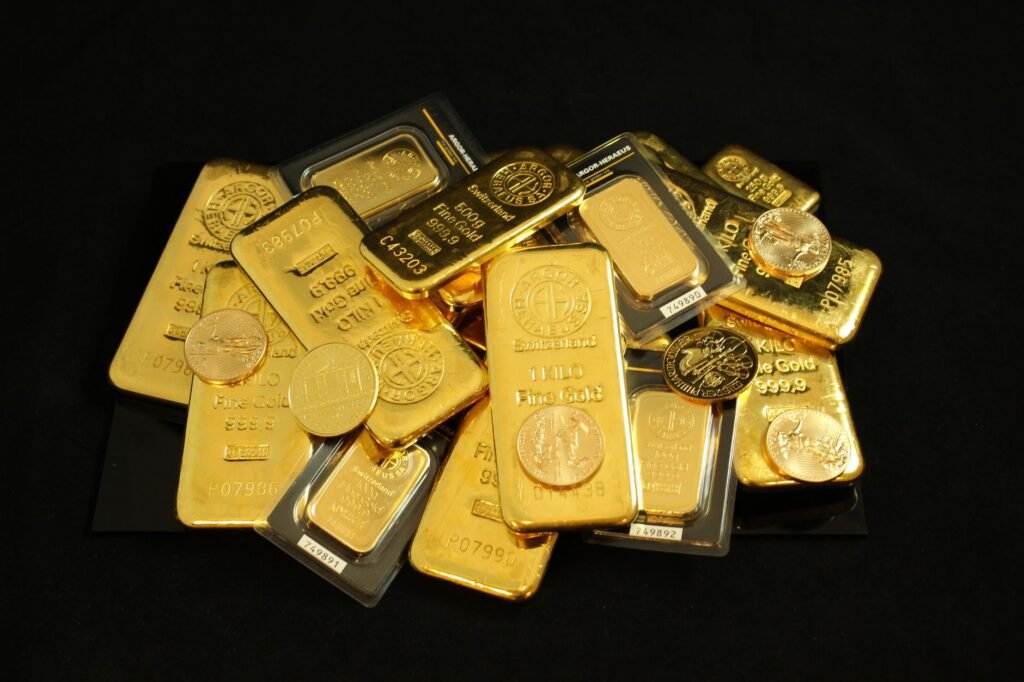

For centuries, gold has held a unique fascination for investors, often seen as both a store of value and a protector against economic turbulence. In 2026, as global financial landscapes continue to evolve, understanding gold’s distinct roles as a safe haven asset and an inflation hedge is more critical than ever. While often used interchangeably in casual conversation, these two functions address different investment objectives and respond to diverse market conditions, making their precise distinction vital for informed portfolio construction.
Gold as a Safe Haven Asset
The concept of a safe haven asset refers to an investment that is expected to retain or increase in value during periods of market volatility or economic distress. When broader markets experience significant downturns, or when geopolitical tensions escalate, investors often seek refuge in assets perceived as more stable and less correlated with conventional equities or bonds. Historically, gold has frequently filled this role.
During times of crisis, such as major financial collapses or international conflicts, investor sentiment shifts from seeking growth to preserving capital. Gold, with its intrinsic value and long-standing acceptance across cultures and economies, becomes an attractive option. Unlike stocks, it does not represent a claim on corporate earnings, and unlike bonds, it carries no counterparty risk from a specific government or corporation. Its tangibility and limited supply contribute to its perceived resilience.
Consider the market dynamics leading into 2026. Global geopolitical uncertainty remains a significant factor, with ongoing regional conflicts and shifting power balances creating an environment ripe for sudden market tremors. In such an unpredictable landscape, the desire for assets that can buffer portfolio shocks often increases. When fear grips the markets, the demand for gold tends to rise as investors move to protect their wealth from potential downturns in other asset classes. This flight to quality is a hallmark of gold’s safe haven characteristic.
While the exact triggers for a flight to safety can vary, they generally involve unexpected events that disrupt market confidence. These could include economic recessions, credit crises, or widespread systemic risks. Gold’s historical performance during such periods suggests a tendency for its value to appreciate, acting as a ballast against declines elsewhere in a diversified portfolio. This response is primarily driven by fear and the immediate need for capital preservation.
Gold as an Inflation Hedge
Distinct from its safe haven function, gold’s role as an inflation hedge centers on its ability to preserve purchasing power over the long term, particularly during periods when a currency’s value erodes due to rising prices. Inflation refers to the rate at which the general level of prices for goods and services is rising, and consequently, the purchasing power of currency is falling. An effective inflation hedge is an asset that tends to increase in value alongside the cost of living, thereby maintaining one’s real wealth.
The theory behind gold as an inflation hedge posits that because gold is a finite commodity, it holds an inherent value that fiat currencies—which can be printed at will by central banks—may lack. When the supply of money expands rapidly or government deficits grow, leading to concerns about currency debasement, some investors turn to gold to protect against the erosion of their wealth. Historically, during certain epochs of high and persistent inflation, gold prices have indeed shown a tendency to rise.
However, the relationship between gold and inflation is not always straightforward or immediate. Critics often point out that gold’s correlation with inflation can be inconsistent in the short to medium term. There have been periods when inflation surged, but gold either lagged or even declined, and conversely, times when gold rallied without significant inflationary pressures. This nuance suggests that while gold can be an effective long-term store of value, its day-to-day or year-to-year performance as a direct hedge against Consumer Price Index (CPI) movements can be more complex.
In 2026, discussions around inflation remain prominent. Following the significant economic shifts of the early 2020s, many economies have experienced elevated inflation rates compared to the preceding decade. Central banks globally have been navigating the challenge of bringing inflation back to target levels, often through interest rate adjustments. In an environment where the long-term inflation outlook is still debated, some investors continue to view gold as a fundamental component for safeguarding purchasing power against potential future inflationary surges, even if its short-term correlation can fluctuate.
Distinguishing Gold’s Dual Functions
While both roles contribute to gold’s appeal as a defensive asset, understanding the specific drivers behind its safe haven and inflation hedge characteristics is crucial. The primary distinction lies in the triggers and the nature of the economic threat gold is intended to address.
Safe Haven: Responding to Crisis and Uncertainty
- Trigger: Sudden, acute market volatility, geopolitical instability, economic crises, or systemic risks. These are often unexpected events that create a widespread flight from riskier assets.
- Motivation: Capital preservation, immediate protection against significant portfolio losses. It’s a reaction to fear and uncertainty.
- Time Horizon: Often short to medium-term, as investors seek temporary refuge until confidence returns or the crisis abates.
- Correlation: Tends to exhibit a negative correlation with equities and other risk assets during periods of extreme stress.
Inflation Hedge: Protecting Purchasing Power
- Trigger: Persistent, rising general price levels, currency debasement concerns, or long-term monetary policy shifts that threaten purchasing power. These are typically more gradual, systemic pressures.
- Motivation: Maintaining real wealth over extended periods, protecting against the erosion of savings due to inflation. It’s a proactive measure against a creeping economic threat.
- Time Horizon: Long-term, as inflation is an ongoing economic phenomenon that impacts wealth over years and decades.
- Correlation: Can show a positive correlation with inflation over very long periods, though often with significant lags and inconsistencies in the short term.
It is important to recognize that gold can, at times, exhibit both characteristics simultaneously. For instance, a geopolitical crisis that also threatens to disrupt global supply chains and push up commodity prices might see gold appreciate both as a safe haven and due to inflation concerns. However, the underlying reason for its appeal to investors in each scenario remains distinct. One is about immediate capital protection from sudden shocks, the other about preserving purchasing power from gradual monetary erosion.
Gold’s Role in a Diversified Portfolio in 2026
For investors considering gold in 2026, its application within a diversified portfolio often stems from a recognition of these dual capabilities. Portfolio construction typically involves balancing various asset classes to manage risk and pursue return objectives. Gold’s inclusion can serve as a strategic allocation designed to address specific risk factors.
When viewed as a safe haven, gold can act as a counterbalance to more volatile assets like equities. During periods of market downturns or heightened uncertainty—a recurring theme in the complex global economy of 2026—gold has the potential to help mitigate overall portfolio losses. Some investors allocate a portion of their portfolio to gold specifically for this non-correlated behavior during crises, aiming to smooth out returns and reduce overall portfolio risk.
Conversely, when considering gold as an inflation hedge, its appeal is more about long-term wealth preservation. With discussions around the persistence of elevated inflation rates and evolving central bank strategies influencing monetary policy, a segment of investors looks to gold as a tangible asset that may retain its value better than fiat currencies over many years. This perspective often emphasizes gold’s role in a long-term strategic asset allocation, rather than tactical, short-term trading.
In the current financial environment of 2026, characterized by higher interest rates than the previous decade, continued geopolitical complexities, and ongoing debates about the future trajectory of inflation, gold’s performance continues to be influenced by a myriad of factors. Interest rate movements, for instance, can impact gold’s appeal; higher real interest rates can make non-yielding assets like gold less attractive compared to interest-bearing alternatives. However, the underlying demand for safety and inflation protection can often outweigh these dynamics during times of pronounced concern.
It is important for investors to align their rationale for including gold with their specific financial objectives and risk tolerance. Whether seeking protection against market crashes, a safeguard against long-term purchasing power erosion, or both, understanding gold’s distinct characteristics is paramount. Diversification remains a cornerstone of prudent financial planning, and gold’s historical properties offer a unique potential contribution to a well-structured portfolio, provided its roles are clearly understood.
Conclusion
Gold’s enduring allure in the financial world stems from its multifaceted nature. In 2026, distinguishing between its functions as a safe haven asset and an inflation hedge is not merely an academic exercise; it is fundamental to making informed investment decisions. A safe haven provides a refuge from immediate market storms and geopolitical tremors, while an inflation hedge aims to preserve wealth against the slower, yet insidious, erosion of purchasing power. While gold can sometimes serve both purposes concurrently, the underlying drivers and strategic implications for investors are notably different.
As part of a diversified investment strategy, gold can offer unique benefits, acting as a potential stabilizer during periods of market uncertainty or as a long-term store of value when inflation concerns persist. Recognizing that Gainsium is not a registered investment advisor and this content is for general education, it remains crucial for individuals to conduct thorough research and consider their own financial situation before making any investment decisions. Understanding gold’s dual roles empowers investors to integrate it into their portfolios thoughtfully, aligning its characteristics with their specific risk management and wealth preservation goals in the dynamic economic landscape of 2026.
Disclaimer: This article is provided for general informational and educational purposes only and does not constitute financial, investment, trading, or legal advice. Gainsium is not a registered investment advisor. Markets are volatile and past performance does not guarantee future results. Readers should conduct their own research and consult a licensed financial advisor before making any investment decisions.