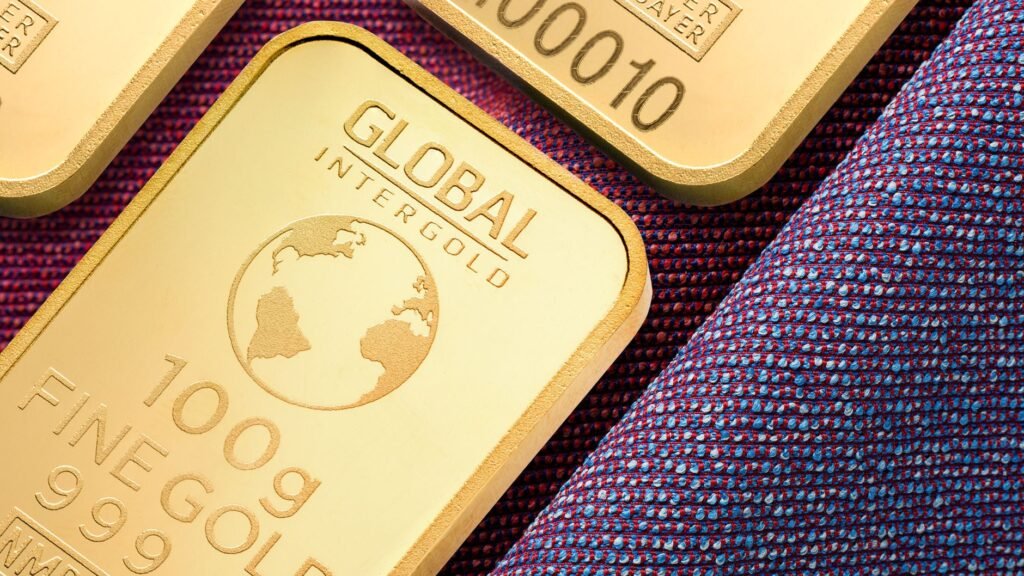

As we navigate the mid-point of the decade, the precious metals market remains a focal point for investors seeking stability and growth. 2026 finds gold at a critical juncture, having demonstrated remarkable resilience in the face of fluctuating economic forecasts and persistent global uncertainties. The burning question on every investor’s mind: can gold finally breach the formidable $3,000 per ounce barrier this year? At Gainsium, we believe understanding the multifaceted drivers—from inflation dynamics to central bank strategies and geopolitical currents—is essential for predicting the yellow metal’s trajectory. Let’s delve into the forces shaping gold’s path in 2026 and assess the likelihood of it reaching this coveted milestone.
Gold as the Enduring Inflation Hedge in 2026
While headline inflation rates have largely retreated from their post-pandemic peaks, the spectre of price instability continues to loom large. In 2026, many economies are grappling with what some analysts term ‘sticky inflation’ – persistent price pressures in core services, housing, and energy that resist conventional monetary policy tightening. This environment underscores gold’s traditional role as a store of value, particularly when real interest rates remain subdued or negative in key regions.
The Real Rate Conundrum
Central banks, including the Federal Reserve, the European Central Bank, and the Bank of England, are walking a tightrope. Their efforts to curb inflation without triggering a deep recession mean that interest rate cuts, while anticipated by some, are likely to be gradual and data-dependent. If inflation expectations remain elevated while nominal interest rates plateau or begin to decline, real interest rates will fall. This scenario historically reduces the opportunity cost of holding non-yielding assets like gold, making it significantly more attractive to institutional and retail investors alike. Gainsium’s analysis suggests that sustained negative real rates in major economies could provide a powerful tailwind for gold prices throughout 2026, propelling it towards new highs.
Central Banks: The Insatiable Buyers
One of the most significant, yet often underappreciated, drivers of gold’s recent strength has been the consistent and substantial buying spree by global central banks. This trend, which accelerated dramatically in the early 2020s, shows little sign of abating in 2026. Countries are increasingly diversifying their foreign exchange reserves away from traditional fiat currencies, driven by a confluence of economic and geopolitical motivations.
De-dollarization and Reserve Diversification
The imperative for reserve diversification has intensified in 2026. Geopolitical fragmentation and the weaponization of financial systems have prompted many nations to reduce their reliance on the U.S. dollar, seeking assets that are impervious to sanctions or political pressure. Gold, with its universal acceptance and lack of counterparty risk, fits this bill perfectly. Emerging market economies, in particular, continue to bolster their gold reserves as a strategic move to enhance financial sovereignty and provide a hedge against currency volatility. This sustained institutional demand acts as a robust floor for gold prices and a crucial factor in the quest for $3,000.
Geopolitical Tensions: Gold’s Classic Safe Haven
The geopolitical landscape of 2026 remains fraught with uncertainty, providing fertile ground for gold’s safe-haven appeal. From ongoing regional conflicts to simmering trade disputes and heightened cyber warfare risks, global stability is far from assured. Each uptick in geopolitical temperature historically translates into increased demand for gold.
Regional Flashpoints and Global Anxiety
We are witnessing several areas of heightened tension this year. Protracted conflicts in Eastern Europe and the Middle East continue to create ripples across global supply chains and energy markets. Simultaneously, escalating rhetoric around trade policies and technological supremacy between major economic blocs injects a layer of unpredictability into financial markets. Investors, seeking refuge from these storm clouds, naturally gravitate towards gold. Any significant escalation in these flashpoints could trigger a sharp upward revaluation of gold, pushing it closer to, or even beyond, the $3,000 threshold. The perceived neutrality and historical stability of gold make it an indispensable asset during times of global anxiety.
Economic Headwinds and Tailwinds: A Balanced View for 2026
Beyond the primary drivers, a complex interplay of global economic factors will influence gold’s performance in 2026. While some elements might act as headwinds, others could provide unexpected boosts.
The Dollar’s Direction and Global Growth
A persistently strong U.S. dollar, often seen as an alternative safe haven, could cap gold’s upside. However, if the Fed initiates rate cuts later in 2026 or global economic growth outside the U.S. accelerates, the dollar could weaken, providing a significant boost to gold, which is priced in dollars. Conversely, a global recession, while initially negative for commodities due to reduced industrial demand, could eventually drive safe-haven demand for gold if central banks resort to aggressive easing measures and quantitative easing returns to the policy toolkit.
Supply-Demand Dynamics Beyond Investment
While investment demand and central bank buying dominate the narrative, industrial and jewelry demand also play a role. A robust global economy would typically support jewelry sales, particularly in key markets like India and China, where cultural affinity for gold is deeply embedded. On the supply side, new gold discoveries are becoming rarer, and mining costs are rising due to regulatory burdens and deeper reserves. While not a primary driver of short-term price movements, these long-term supply constraints provide a fundamental underpinning for higher prices over the coming years, reinforcing the bullish outlook for 2026 and beyond.
Practical Advice for Gold Investors in 2026
Given the nuanced outlook, how should investors approach gold in 2026? Gainsium advocates for a strategic, long-term perspective.
- Diversification is Key: Gold should be viewed as a vital component of a well-diversified portfolio, acting as a hedge against inflation, currency depreciation, and market volatility. It’s not about ‘all in’ but smart allocation, typically 5-15% of a balanced portfolio.
- Long-Term Horizon: While the $3,000 target is exciting, gold’s true value often shines over extended periods. Avoid chasing short-term price spikes; instead, focus on its role as a strategic asset for wealth preservation.
- Consider Your Investment Vehicle: Investors have several options to gain exposure: physical gold (bullion, coins for direct ownership), gold ETFs (Exchange Traded Funds for liquidity), or shares in gold mining companies (offering leveraged exposure to gold price movements). Each carries different risks and rewards; choose what aligns with your risk tolerance and investment goals.
- Monitor Macroeconomic Trends: Keep a close eye on central bank policies, real interest rate differentials, inflation reports, geopolitical developments, and currency movements. These factors will be the primary determinants of gold’s trajectory.
The $3,000 Question: A Concluding Outlook
The confluence of persistent inflationary pressures, unwavering central bank demand, and an increasingly volatile geopolitical landscape creates a compelling case for gold in 2026. The psychological $3,000 barrier is not merely a symbolic target; it represents a continuation of the powerful fundamental drivers that have propelled gold’s ascent in recent years. While no prediction is certain, the forces at play suggest that gold has a strong probability of challenging, and potentially breaching, this significant milestone within 2026.
Gainsium’s assessment leans towards cautious optimism. Should even one of the major geopolitical flashpoints intensify, central banks signal a more dovish stance on interest rates amidst stubborn inflation, or the U.S. dollar experience sustained weakness, gold could find the momentum needed for a decisive move past $3,000. For investors, gold remains a timeless asset, offering protection and potential appreciation in an unpredictable world. Stay informed, stay diversified, and consider gold’s intrinsic value as you navigate the opportunities of 2026.