
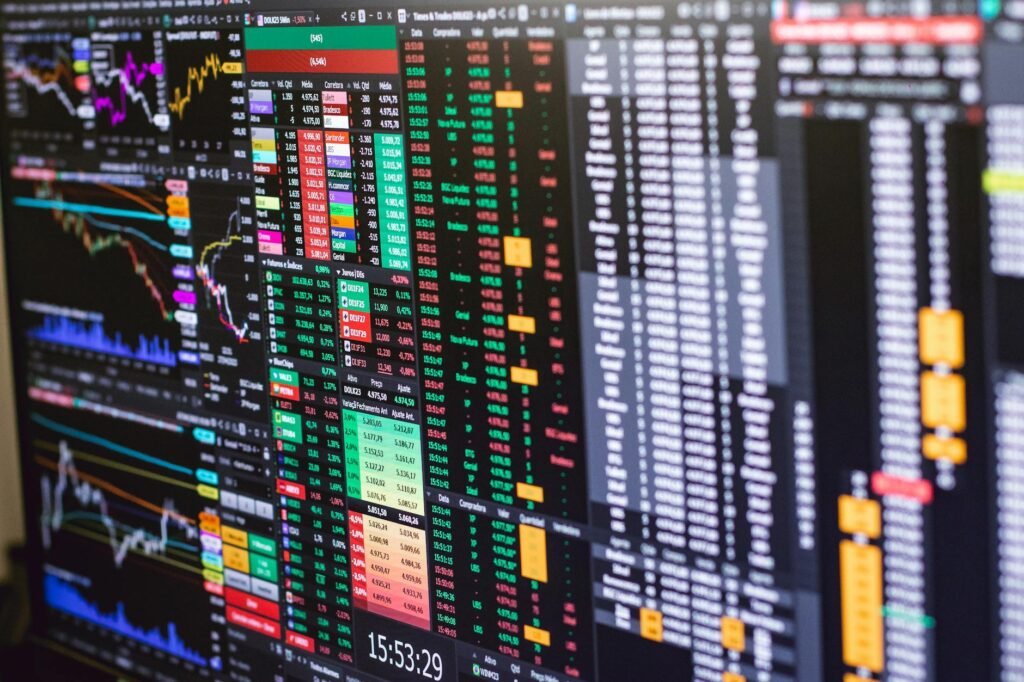

The financial markets of 2026 look vastly different than they did even a few years ago. With the widespread integration of consumer-accessible machine learning, unprecedented micro-liquidity, and round-the-clock trading cycles, day traders must adapt to survive. Success this year isn’t about out-running the algorithms; it’s about learning to run alongside them. At Gainsium, we believe that education is your greatest asset. Whether you are trading equities, forex, or crypto, mastering the right methodologies is essential to maintaining your edge in today’s fast-paced environment.
The 2026 Day Trading Landscape
As we navigate 2026, market dynamics are defined by high-frequency execution and predictive analytics. Retail traders now have access to institutional-grade tools, such as real-time sentiment analysis and AI-driven order flow trackers. To remain profitable, you must shift your focus from lagging technical indicators to leading real-time data points. This guide breaks down the three most effective day trading strategies for 2026: scalping, momentum trading, and breakout strategies, providing you with the exact blueprints needed to execute them successfully.
1. Next-Gen Scalping: Exploiting Micro-Volatility
Scalping has always been about speed, but in 2026, it is about precision. This strategy involves entering and exiting trades within seconds or minutes to capture tiny price movements. With transaction fees virtually non-existent on premium platforms and fractional-share liquidity at an all-time high, scalping remains one of the most lucrative strategies for disciplined traders.
How to Execute Scalping in 2026
Modern scalping relies heavily on Level 2 order book data and Volume Weighted Average Price (VWAP). Instead of looking at 15-minute charts, successful scalpers analyze 1-minute, 10-second, or tick charts to find imbalances in buying and selling pressure.
- The Setup: Identify a highly liquid asset with tight bid-ask spreads (e.g., mega-cap tech stocks or major currency pairs).
- The Trigger: Look for a sudden influx of buying volume on the Level 2 order book that pushes the price above the VWAP.
- The Exit: Secure profits at the next minor resistance level or immediately exit if the order book imbalances reverse. Do not hold trades for more than a few minutes.
2. Momentum Trading: Riding the Sentiment Waves
Momentum trading is the art of identifying assets that are already moving in a strong direction and jumping on board for the ride. In 2026, momentum is heavily driven by algorithmic news aggregation and retail crowd dynamics. When a catalyst hits the wires, capital floods into specific sectors rapidly, creating massive, predictable trends.
Identifying Momentum Catalysts
To master momentum trading today, you must integrate social sentiment metrics and real-time news feeds into your scanner. You are looking for assets experiencing unusual relative volume (RVOL) of at least 3x their 10-day average.
Once you identify a surging asset, use the Exponential Moving Average (EMA)—specifically the 9-period and 21-period EMAs on a 5-minute chart. As long as the price remains above the 9 EMA in an uptrend, the momentum is intact, and you should hold your position. Exit the moment the price closes below the 21 EMA, as this signals a trend exhaustion.
3. Precision Breakout Strategies: Trading Key Levels
Breakout trading is a classic strategy that has been highly refined for 2026. This method involves identifying key support or resistance levels and entering a trade when the price breaches these boundaries. Because algorithms frequently hunt for stop-losses around obvious key levels, successful breakout trading today requires identifying genuine volume confirmation to avoid costly “fakeouts.”
The Blueprint for a Successful Breakout Trade
To trade breakouts safely in the current market environment, follow this structured process:
- Identify Consolidation: Find an asset that has been trading within a tight, horizontal range for several hours. This builds up potential energy.
- Watch the Volume: As the price approaches the resistance line, look for a sharp increase in buying volume. A breakout on low volume is almost always a trap.
- Wait for the Retest: Instead of buying the initial break, wait for the price to pull back and test the former resistance level as new support. If it holds, enter the trade.
- Set the Target: Use the Average True Range (ATR) to set realistic profit targets and place your stop-loss just below the breakout level.
Essential Risk Management Rules for 2026
Even the best strategy will fail without strict risk management. In 2026, the speed of the market means that a single unmanaged trade can wipe out weeks of profits. To protect your capital, adhere to these fundamental rules on every trade:
- The 1% Rule: Never risk more than 1% of your total trading account balance on any single trade.
- Automated Stop-Losses: Always use hard stop-losses executed at the broker level to prevent catastrophic slippage during sudden market flushes.
- Risk-to-Reward Ratio: Maintain a minimum of a 1:2 risk-to-reward ratio. This ensures that even if you only win 40% of your trades, you will remain net profitable.
- Daily Loss Limit: Set a hard daily stop-loss limit (e.g., 3% of your total account). If you hit this limit, close your laptop and walk away for the day.
Conclusion
Day trading in 2026 offers immense opportunities for those who are prepared, disciplined, and technologically equipped. By mastering scalping for quick gains, utilizing momentum trading to ride macroeconomic waves, and executing breakout strategies with volume confirmation, you can build a robust trading business. Remember, consistency is the key to longevity. Refine your chosen strategy on a simulator, manage your risks ruthlessly, and let Gainsium guide you on your journey to financial sovereignty.