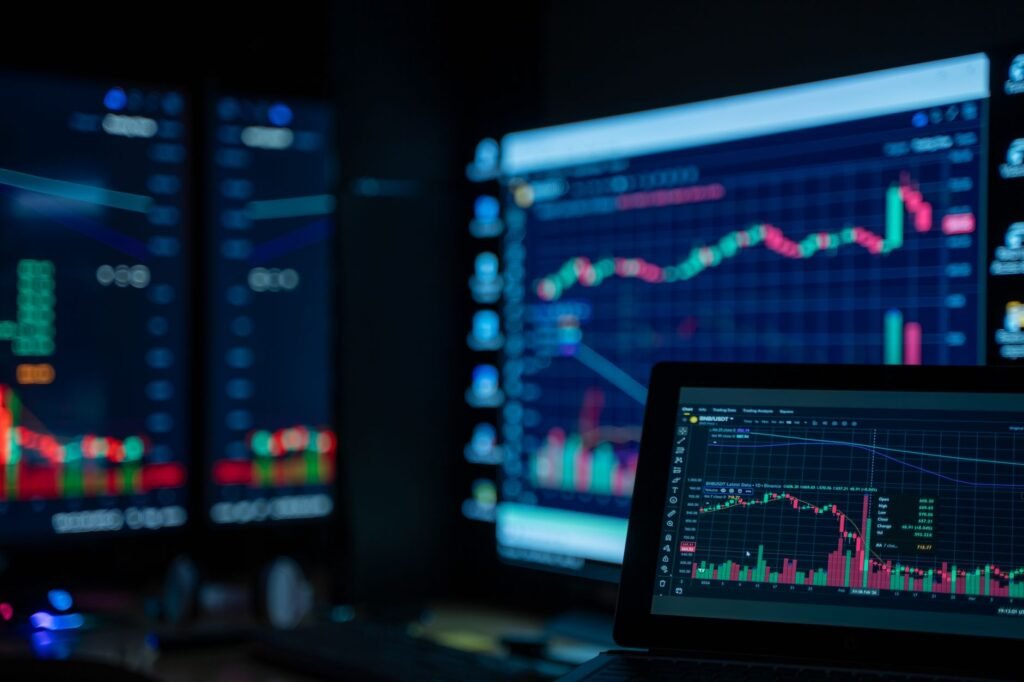

Algorithmic trading, often simply called algo trading, has evolved from an exclusive domain of institutional finance to an increasingly accessible tool for retail traders. In 2026, this advanced method of trade execution is no longer a futuristic concept but a practical reality for many, utilizing computer programs to follow a defined set of instructions for placing trades. This article will demystify algorithmic trading, explain its core principles, and detail how individual investors can access and leverage these automated strategies today.
What is Algorithmic Trading?
At its core, algorithmic trading involves using pre-programmed computer instructions to analyze market data, identify trading opportunities, and execute trades automatically. These algorithms are designed to follow a specific set of rules, often based on technical indicators, price action, volume, or other market parameters. The primary goal is to capitalize on speed, efficiency, and discipline, removing the emotional biases that can often hinder human trading decisions.
For instance, an algorithm might be programmed to buy 100 shares of a particular stock if its 50-day moving average crosses above its 200-day moving average and its Relative Strength Index (RSI) is below 70. Once these conditions are met, the algorithm executes the trade in milliseconds, often faster than a human could react. This rapid execution and adherence to predefined rules are central to the appeal of algo trading.
The Evolution and Accessibility for Retail Traders in 2026
Historically, algorithmic trading was predominantly the domain of large institutional players like hedge funds, investment banks, and proprietary trading firms. These entities invested heavily in sophisticated infrastructure, high-speed data feeds, and specialized quantitative analysts to gain an edge. However, the landscape has significantly shifted. By 2026, advancements in technology, increased availability of powerful computing resources, and the democratization of financial tools have made algorithmic trading more accessible to individual retail traders than ever before.
The growth of user-friendly platforms, open APIs (Application Programming Interfaces) from brokers, and the proliferation of educational resources have empowered retail traders to explore and implement automated strategies. This shift allows individuals to compete, to some extent, with larger players by leveraging technology for consistent execution and data analysis.
Accessing Algorithmic Strategies as a Retail Trader in 2026
Retail traders in 2026 have several avenues to engage with algorithmic trading, ranging from simple automated tools to custom-built systems:
-
Automated Trading Platforms and Broker-Provided Tools: Many online brokers now offer built-in algorithmic trading capabilities. These platforms often provide strategy builders where users can define rules using a graphical interface or select from a library of pre-built strategies. They are integrated directly with the broker’s execution systems, simplifying the setup process.
-
Third-Party Expert Advisors (EAs) and Trading Bots: Platforms like MetaTrader 4/5, NinjaTrader, and TradingView (with its Pine Script language) are popular environments for developing, testing, and deploying custom trading algorithms. Retail traders can either program their own EAs/bots, purchase them from marketplaces, or license them from developers. These tools automate trade execution based on the defined logic.
-
Low-Code/No-Code Solutions: A significant trend in 2026 is the rise of low-code and no-code platforms for strategy development. These tools allow traders to create complex algorithms using drag-and-drop interfaces and visual programming, eliminating the need for extensive coding knowledge. This dramatically lowers the barrier to entry for those without a programming background.
-
Copy Trading and Social Trading Platforms: For those who prefer not to build their own algorithms, copy trading platforms offer an automated solution. These platforms allow individuals to automatically replicate the trades of experienced traders or institutional strategies. While not directly building an algorithm, it’s a form of automated trading driven by human expert strategies.
-
APIs and Custom Development: More advanced retail traders, particularly those with programming skills, can leverage broker APIs to build highly customized trading systems. This approach offers the greatest flexibility, allowing for unique strategies and integration with advanced analytics or machine learning models.
Common Algorithmic Strategies for Retail Traders
While institutional algorithms can be incredibly complex, several core strategies are commonly adapted and employed by retail algo traders:
-
Trend Following: These algorithms identify and follow existing market trends. For example, a strategy might buy an asset when it breaks above a resistance level with significant volume, expecting the upward momentum to continue.
-
Mean Reversion: Contrary to trend following, mean reversion strategies assume that asset prices will eventually revert to their historical average. An algorithm might sell an asset that has moved significantly above its average price, expecting it to fall back.
-
Momentum Strategies: Similar to trend following, but with a focus on assets that are exhibiting strong price movement in a particular direction over a short period. The algorithm buys ‘hot’ assets, expecting their performance to persist.
-
Statistical Arbitrage: These strategies look for statistical relationships between different assets (e.g., pairs of stocks that historically move together). When this relationship temporarily breaks down, the algorithm trades to profit from the expected convergence. While institutional firms have an edge due to speed, simpler forms can be attempted by retail traders.
-
Breakout Strategies: Algorithms designed to detect when an asset’s price breaks out of a defined range (e.g., a consolidation pattern) and then enter a trade in the direction of the breakout.
Advantages and Challenges for Retail Traders
Advantages:
-
Elimination of Emotion: Algorithms trade based purely on logic and predefined rules, removing fear, greed, and other psychological factors that can lead to poor decisions.
-
Speed and Efficiency: Trades can be executed at optimal prices almost instantaneously, potentially capturing opportunities that human traders might miss.
-
Backtesting and Optimization: Strategies can be rigorously tested on historical data to assess their potential profitability and robustness before risking real capital. This allows for data-driven refinement.
-
Diversification: A single trader can manage multiple automated strategies across different assets or markets simultaneously, diversifying risk and increasing potential opportunities.
-
Consistency: Algorithms adhere strictly to the trading plan, ensuring disciplined execution without deviation.
Challenges:
-
Technical Complexity: Setting up and managing algorithms often requires some technical understanding, whether of platform interfaces, coding, or system maintenance.
-
Over-optimization (Curve Fitting): A strategy might perform exceptionally well on historical data but fail in live trading because it has been optimized too specifically to past conditions and lacks adaptability to new market dynamics.
-
System Failures: Technical glitches, internet outages, power failures, or software bugs can lead to missed trades or incorrect executions, potentially resulting in losses.
-
Market Monitoring: While automated, algorithms are not entirely
Disclaimer: This article is provided for general informational and educational purposes only and does not constitute financial, investment, trading, or legal advice. Gainsium is not a registered investment advisor. Markets are volatile and past performance does not guarantee future results. Readers should conduct their own research and consult a licensed financial advisor before making any investment decisions.