
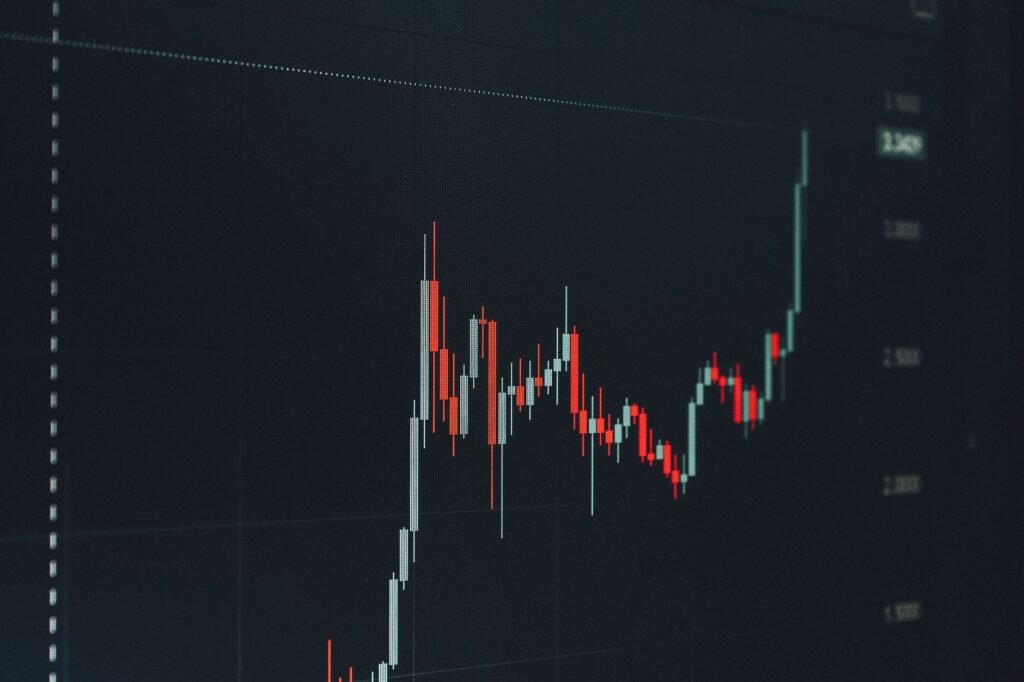

In 2026, financial markets are characterized by unprecedented data volumes and complexity. Understanding how AI algorithms detect market anomalies has become crucial for identifying both opportunities and risks. These sophisticated systems analyze vast datasets to pinpoint unusual patterns that deviate from expected market behavior, offering a powerful edge in an increasingly digital financial landscape.
The Evolution of AI in Financial Markets by 2026
The journey of artificial intelligence in finance has accelerated rapidly. By 2026, AI is no longer a niche technology but an integrated component across various financial operations, from algorithmic trading to fraud detection. The sheer volume and velocity of market data, including real-time transaction feeds, news sentiment, social media, and macroeconomic indicators, have made human-only analysis increasingly challenging. AI’s capacity for processing and pattern recognition at scale is indispensable.
Driving Factors for AI Adoption
Several factors have propelled AI’s prominence. The continued advancements in computational power, particularly with specialized hardware like GPUs and TPUs, allow for faster model training and inference. The development of more robust and interpretable AI models has also addressed some previous concerns about “black box” algorithms. Furthermore, the increasing regulatory focus on market surveillance has inadvertently pushed financial institutions towards AI solutions for compliance and anomaly detection.
In 2026, the market structure reflects this digital shift. High-frequency trading firms, hedge funds, and increasingly, traditional asset managers, leverage AI to maintain competitive advantage. The ability to identify subtle deviations from normal market conditions, whether due to a sudden shift in sentiment, an unusual trading volume pattern, or a data error, is critical.
Core AI Methods for Anomaly Detection in 2026
AI algorithms employ a variety of techniques to spot market anomalies. These methods range from statistical modeling to advanced deep learning architectures, each offering unique strengths in different market contexts.
Machine Learning Algorithms
Traditional machine learning (ML) models form the bedrock of many anomaly detection systems. Algorithms such as Isolation Forests work by isolating anomalies rather than profiling normal data points, making them effective for high-dimensional datasets. One-Class Support Vector Machines (SVMs) learn a boundary around ‘normal’ data, flagging any points outside this boundary as anomalous. Clustering algorithms, like K-Means, can identify data points that do not fit into any established cluster, indicating an anomaly. These models are particularly useful for detecting deviations in price movements, volume surges, or unusual correlations between assets.
For time-series data, models like ARIMA (AutoRegressive Integrated Moving Average) or Prophet establish baseline expectations. Anomalies are then detected when observed data points significantly diverge from these forecasts. This is crucial for identifying unexpected shifts in volatility or liquidity.
Deep Learning and Neural Networks
Deep learning, a subset of machine learning, has seen significant advancements by 2026, offering more sophisticated anomaly detection capabilities, especially with complex, unstructured data. Recurrent Neural Networks (RNNs) and Long Short-Term Memory (LSTM) networks are adept at processing sequential data, making them ideal for financial time series. They can learn intricate temporal dependencies and predict future market states, flagging significant deviations as anomalies. For instance, an LSTM might detect an anomalous pattern in a stock’s intraday trading volume that precedes an unusual price movement.
Autoencoders are another powerful deep learning technique. These neural networks are trained to reconstruct their input. When an anomaly is fed into an autoencoder, it struggles to reconstruct it accurately, resulting in a high reconstruction error, which signals an unusual event. This is particularly effective for detecting subtle, multi-variate anomalies that might be missed by simpler models.
Natural Language Processing (NLP)
Beyond numerical data, market sentiment plays a critical role. NLP algorithms, significantly enhanced by large language models (LLMs) by 2026, analyze vast amounts of textual data from news articles, earnings call transcripts, social media, and regulatory filings. They can detect shifts in sentiment, identify emerging narratives, or spot unusual phrasing that might indicate an impending market event or a coordinated action. For example, an NLP model might flag an unusual concentration of negative keywords related to a specific company or sector, even before traditional news outlets widely report on a developing issue. This enables AI systems to detect anomalies linked to informational disparities or sentiment shocks.
Applications and Implications for Investors in 2026
The practical applications of AI anomaly detection are wide-ranging, offering both proactive risk mitigation and reactive opportunity identification.
Identifying Trading Opportunities
AI-driven anomaly detection can unearth various trading opportunities. Algorithms can identify arbitrage opportunities where pricing discrepancies exist across different exchanges or assets, often fleeting due to market efficiency. They can also detect early signs of momentum shifts or trend reversals by spotting unusual buying or selling pressure before it becomes widely apparent. For instance, a sudden, unexplained divergence in a stock’s price from its peer group, when other factors are stable, could be flagged as an anomaly worthy of further investigation by a portfolio manager.
Furthermore, AI can analyze complex inter-market relationships, flagging when a typically correlated asset pair begins to decouple without an obvious fundamental reason. Such anomalies might present mean-reversion trading opportunities, though it is important to remember that markets can be unpredictable and past patterns do not guarantee future performance.
Risk Management and Early Warning Systems
Perhaps even more critical than opportunity identification is AI’s role in risk management. Anomaly detection systems serve as early warning signals for potential market instability or fraudulent activities. They can flag unusual trade sizes, suspicious order book activity, or rapid price changes that suggest market manipulation. For financial institutions, this aids in compliance with regulations designed to ensure market fairness and integrity.
For individual investors or asset managers, these systems can help identify unforeseen risks in their portfolios. For example, an AI might detect an unusual clustering of sell orders across several seemingly unrelated assets, which could signal a systemic liquidity event or a “fat finger” error in a large institutional trade. This allows for proactive adjustments to portfolio hedges or positions, potentially mitigating losses. Understanding these anomaly signals can enhance an investor’s ability to navigate volatile market conditions.
By 2026, AI algorithms have fundamentally reshaped how market anomalies are detected and analyzed. From traditional machine learning to advanced deep learning and sophisticated NLP, these technologies provide unparalleled capabilities for identifying deviations from expected market behavior. While AI offers powerful tools for discerning trading opportunities and bolstering risk management, it remains a tool requiring human oversight and strategic interpretation. Investors and financial professionals who understand and leverage these AI-driven insights are better positioned to navigate the complexities and capitalize on the dynamics of modern financial markets.
Disclaimer: This article is provided for general informational and educational purposes only and does not constitute financial, investment, trading, or legal advice. Gainsium is not a registered investment advisor. Markets are volatile and past performance does not guarantee future results. Readers should conduct their own research and consult a licensed financial advisor before making any investment decisions.