
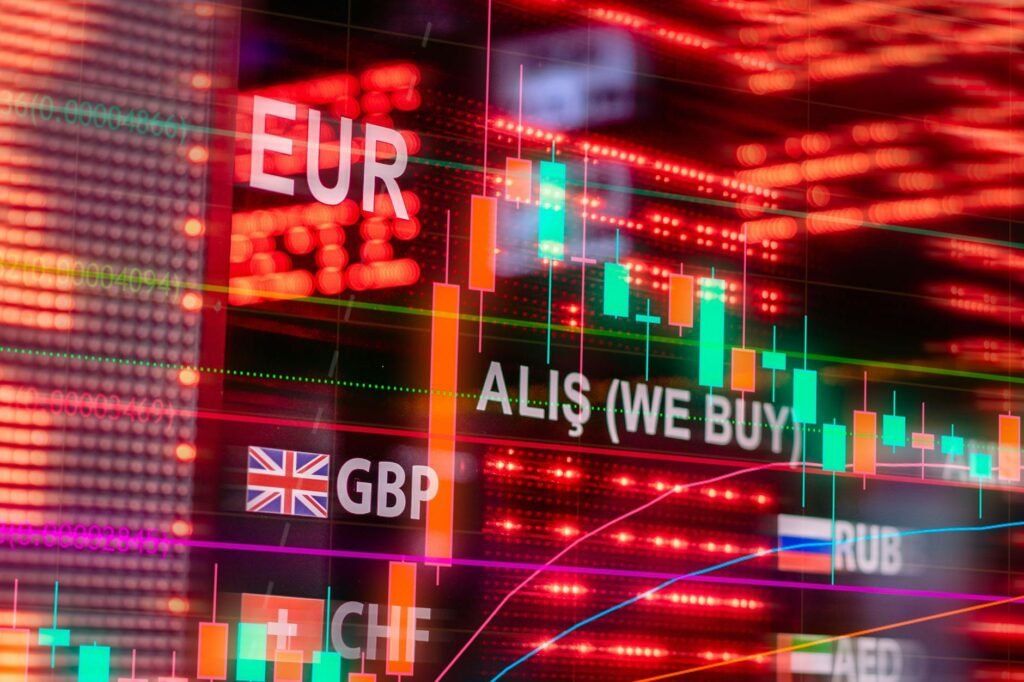

Introduction to Forex Trading in 2026
Welcome to the most exciting era of global finance. In 2026, the Foreign Exchange (Forex) market remains the largest and most liquid financial market in the world, with daily trading volumes now surpassing $8.5 trillion. Driven by rapid technological advancements, decentralized liquidity pools, and real-time AI-powered analytics, retail traders have unprecedented access to global currency fluctuations. Whether you are looking to build a secondary income stream or build generational wealth, mastering Forex trading in 2026 requires a firm grasp of market fundamentals, advanced trading tools, and disciplined risk management.
This comprehensive guide is designed to take you from absolute beginner to a confident, strategic market participant. Here is everything you need to know to navigate the currency markets safely and profitably this year.
Understanding the Basics: What is Forex?
At its core, Forex trading is the simultaneous buying of one currency and selling of another. Currencies are always traded in pairs. For example, when you trade the EUR/USD, you are speculating on the relative strength of the Euro against the US Dollar.
The Anatomy of a Currency Pair
In any currency pair, the first currency listed is called the base currency, and the second is the quote currency.
- Base Currency: The currency you are buying or selling (e.g., EUR in EUR/USD).
- Quote Currency: The currency used to make the purchase (e.g., USD in EUR/USD).
If the EUR/USD is trading at 1.1200, it means you need 1.12 US Dollars to purchase 1 Euro. If you believe the Euro will strengthen against the Dollar, you go “long” (buy). If you believe the Euro will weaken, you go “short” (sell).
Major, Minor, and Exotic Pairs
In 2026, the market is categorized into three primary currency groups. Major pairs involve the US Dollar paired with other global powerhouse currencies (such as EUR/USD, GBP/USD, and USD/JPY) and offer the highest liquidity and lowest transaction costs. Minor pairs exclude the US Dollar but feature major currencies (like EUR/GBP or AUD/JPY). Exotic pairs pair a major currency with an emerging economy’s currency (such as USD/SGD or USD/MXN). As a beginner, focusing exclusively on Major pairs is highly recommended due to their stability and predictable spreads.
Leverage and Margin: The Double-Edged Sword
To trade successfully in the Forex market, you must understand how capital leverage works. Leverage allows you to control large market positions with a relatively small amount of actual capital.
What is Margin?
Margin is the minimum deposit required by your broker to open and maintain a leveraged position. Think of it as a good-faith deposit or collateral. In 2026, global regulatory frameworks (such as ESMA and ASIC) have standardized margin requirements to protect retail traders, typically requiring a margin of 1% to 3.3% for major pairs.
The Impact of Leverage
Leverage is expressed as a ratio, such as 30:1 or 50:1. With 30:1 leverage, a $1,000 margin deposit allows you to control a position worth $30,000. While this drastically amplifies your potential profits, it equally amplifies your potential losses. Managing leverage is the dividing line between successful traders and those who lose their capital rapidly.
Analyzing the Markets: Technical Analysis & AI Copilots
To make profitable trades, you need a methodology to predict market direction. In 2026, successful traders combine traditional Technical Analysis with modern AI analytical copilots integrated into retail trading platforms.
The Fundamentals of Technical Analysis
Technical analysis involves studying historical price charts and market statistics to identify patterns and trends. The core components include:
- Support and Resistance: Key price levels where a currency pair historically struggles to break through, acting as virtual floors and ceilings.
- Candlestick Patterns: Visual representations of price movements that signal market sentiment, such as “bullish engulfing” or “hammer” formations.
- Technical Indicators: Algorithmic calculations like the Relative Strength Index (RSI) to identify overbought or oversold conditions, and Moving Averages to determine trend direction.
Embracing AI Trading Assistants in 2026
The defining trend of 2026 retail trading is the democratization of AI. Modern platforms offer real-time sentiment analysis, automated chart pattern recognition, and predictive analytics. Use these tools to validate your manual technical analysis, but never rely on them blindly. A successful trader uses AI as an assistant, not a replacement for critical thinking.
The Golden Rules of Risk Management
The single most important factor determining your longevity as a Forex trader is risk management. Without strict risk protocols, even the best trading strategy will eventually lead to a blown account.
The 1% Capital Preservation Rule
Never risk more than 1% of your total trading capital on a single trade. If you have a $10,000 trading account, your maximum risk per trade should be $100. This ensuring that even a string of ten consecutive losses only drawdowns your account by 10%, keeping you in the game to recover.
Always Use Stop-Loss and Take-Profit Orders
A Stop-Loss (SL) order is an automated instruction that closes your trade at a predetermined price level if the market moves against you. Conversely, a Take-Profit (TP) order automatically locks in your gains when the market hits your target. Setting these orders before executing a trade removes emotional decision-making from the equation.
Your Step-by-Step Action Plan to Start Trading
Ready to take action and build your wealth? Follow this systematic roadmap to launch your trading journey in 2026:
- Choose a Regulated Broker: Opt for brokers regulated by top-tier authorities (such as the FCA, ASIC, or NFA) that offer low spreads, robust cybersecurity, and direct integration with modern trading platforms.
- Start with a Demo Account: Spend your first 4 to 8 weeks trading with virtual money. Practice executing orders, testing technical indicators, and managing risk without risking a single real dollar.
- Develop a Written Trading Plan: Outline your strategy, preferred currency pairs, trading hours, and exact risk parameters. Treat trading like a professional business.
- Fund with Venture Capital: When transitioning to live trading, only fund your account with capital you can afford to lose. Start small, focusing on micro-lots (0.01 size) to adapt to the emotional reality of live financial risk.
- Keep a Trading Journal: Document every trade, noting the entry reason, emotional state, exit point, and final outcome. Continuous review is the secret to accelerating your learning curve.
Conclusion: The Path to Forex Success in 2026
Forex trading in 2026 offers unparalleled opportunities for financial growth, but it is not a get-rich-quick scheme. It is a highly demanding skill that requires patience, continuous education, and absolute emotional discipline. By mastering currency mechanics, utilizing the leverage limits responsibly, embracing modern analytical tools, and aggressively managing your risk, you can position yourself to capture consistent profits from the world’s largest financial market. Start small, stay disciplined, and let the compounding power of consistent trading build your wealth.