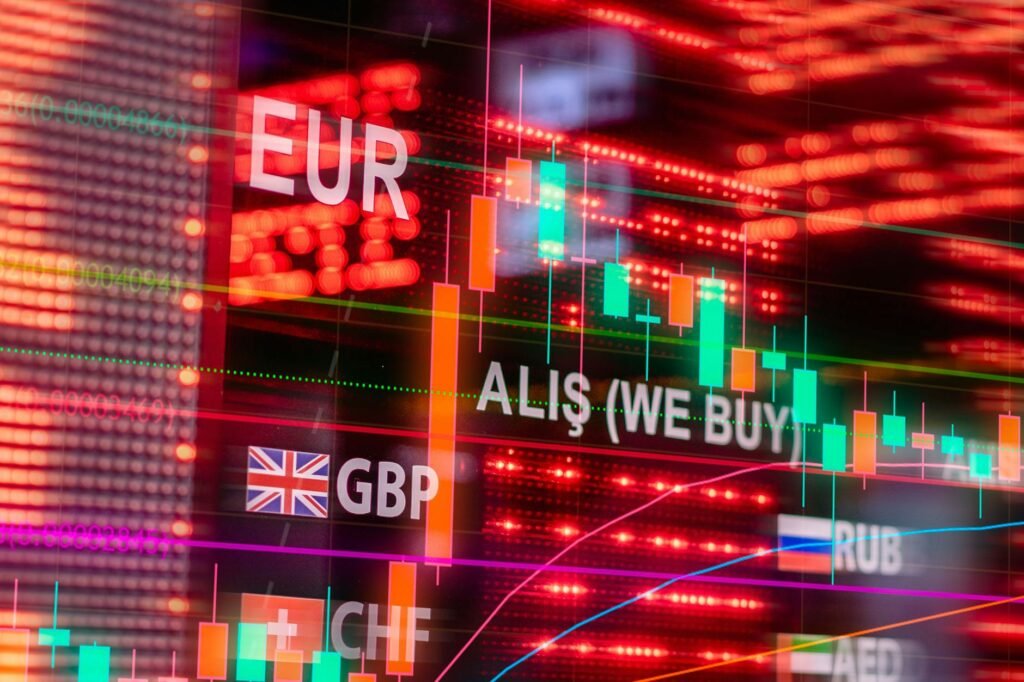

Welcome to Gainsium, your premier destination for financial empowerment. The foreign exchange (Forex) market remains the largest and most liquid financial market in the world, processing over $8.5 trillion in daily volume in 2026. With the integration of advanced AI trading assistants, real-time sentiment tracking, and the expansion of digital currency pairings, there has never been a more exciting or accessible time for beginners to learn how to trade currencies. Whether your goal is to generate a secondary income stream or build long-term generational wealth, this comprehensive guide will equip you with the fundamental knowledge required to navigate the Forex market with confidence in 2026.
Understanding the Basics: Currency Pairs in 2026
Forex trading is the simultaneous buying of one currency and selling of another. Currencies are always traded in pairs. For example, when you trade the EUR/USD, you are trading the Euro against the US Dollar. The first currency in the pair is called the base currency, and the second is the quote currency. The exchange rate tells you how much of the quote currency is needed to buy one unit of the base currency.
In 2026, currency pairs are generally classified into three distinct categories:
- Major Pairs: These always involve the US Dollar paired with another highly liquid global currency (e.g., EUR/USD, GBP/USD, USD/JPY). They offer the lowest spreads and highest liquidity.
- Minor Pairs: Also known as cross-currency pairs, these consist of major currencies excluding the US Dollar (e.g., EUR/GBP, AUD/JPY).
- Exotic Pairs: These pair a major currency with the currency of a developing or emerging economy (e.g., USD/SGD, EUR/TRY). While they offer high volatility, they come with higher transaction costs (spreads).
A notable trend in 2026 is the emergence of digital fiat currencies, or Central Bank Digital Currencies (CBDCs), which have started to influence liquidity pools and settle times, making understanding these structural components more vital than ever.
The Power and Peril of Leverage and Margin
One of the most attractive, yet highly misunderstood, aspects of Forex trading is the use of leverage. Leverage allows you to control a large position with a relatively small amount of capital. For example, with a leverage ratio of 1:30, you can control a $30,000 position with just $1,000 of your own capital.
The money required to open and maintain a leveraged position is known as the margin. While leverage can significantly magnify your profits, it can just as easily amplify your losses. If the market moves against you and your account balance drops below the minimum required margin, your broker will issue a margin call, automatically closing your active positions to prevent further losses.
In 2026, global regulators have standardized leverage limits for retail traders to protect capital, typically capping leverage at 1:30 for major pairs. As a beginner, the golden rule is to use leverage conservatively. Just because a broker offers high leverage does not mean you should use it to its maximum capacity.
Technical Analysis in the Era of AI Assistants
To make profitable trades, you must learn how to analyze market movements. In 2026, successful traders utilize a hybrid approach, combining traditional technical analysis with modern, AI-powered predictive indicators available on platforms like Gainsium.
Technical analysis involves studying historical price charts and market statistics to identify patterns that suggest future price direction. Here are the core pillars you need to master:
1. Support and Resistance Levels
Support is a price level where a downtrend tends to pause due to a concentration of buying demand. Resistance is the level where an uptrend tends to pause due to a concentration of selling pressure. Identifying these levels helps you determine optimal entry and exit points.
2. Candlestick Patterns
Candlestick charts provide visual clues about market psychology. Learning to read standard patterns, such as the Hammer, Engulfing, and Doji candles, helps you gauge whether buyers or sellers are currently in control of the market.
3. Technical Indicators
Indicators are mathematical calculations plotted on a price chart. Popular indicators include Moving Averages (MA) for trend identification, the Relative Strength Index (RSI) to identify overbought or oversold conditions, and Average True Range (ATR) to measure market volatility.
Bulletproof Risk Management Strategies
The secret that separates professional traders from beginners is not their ability to predict the future, but their dedication to risk management. Without strict risk protocols, even the most advanced trading strategy will eventually fail.
To protect your trading capital in 2026, implement these non-negotiable risk rules:
- The 1% Rule: Never risk more than 1% to 2% of your total account balance on a single trade. If you have a $10,000 account, your maximum risk per trade should be $100.
- Always Use a Stop-Loss Order: A stop-loss is an automated order placed with your broker to close a position when it reaches a specific price. This prevents catastrophic losses if the market moves rapidly against you during high-impact macroeconomic announcements.
- Maintain a Favorable Risk-to-Reward Ratio: Aim for a minimum ratio of 1:2. This means that for every dollar you risk, you stand to make two dollars. With a 1:2 ratio, you only need to be right 40% of the time to remain profitable.
Step-by-Step Roadmap to Your First Forex Trade
Now that you understand the mechanics, leverage, technicals, and risk, here is your actionable checklist to launch your Forex trading journey successfully this year:
- Educate Yourself Daily: Spend time analyzing real-time charts, reading economic calendars, and understanding central bank interest rate decisions.
- Choose a Highly Regulated Broker: Ensure your broker is regulated by top-tier financial authorities (such as the FCA, ASIC, or NFA) and offers low spreads and transparent fee structures.
- Start with a Demo Account: Practice trading with virtual money. Use this phase to familiarize yourself with execution software and to test your trading plans without financial risk.
- Develop a Written Trading Plan: Outline your entry triggers, exit rules, risk tolerance, and the specific currency pairs you will focus on.
- Keep a Trading Journal: Record every trade you make, including the rationale behind it and the outcome. This is the fastest way to identify mistakes and refine your edge.
Conclusion: Cultivating a Wealth-Building Mindset
Forex trading in 2026 offers unparalleled opportunities for financial growth, but it requires discipline, continuous learning, and emotional control. Success does not happen overnight. By focusing on preserving your capital through strict risk management, mastering technical analysis, and utilizing modern trading tools wisely, you can build a sustainable, highly profitable trading career. Stay patient, trust your process, and let Gainsium guide you every step of the way toward mastering the global currency markets.