
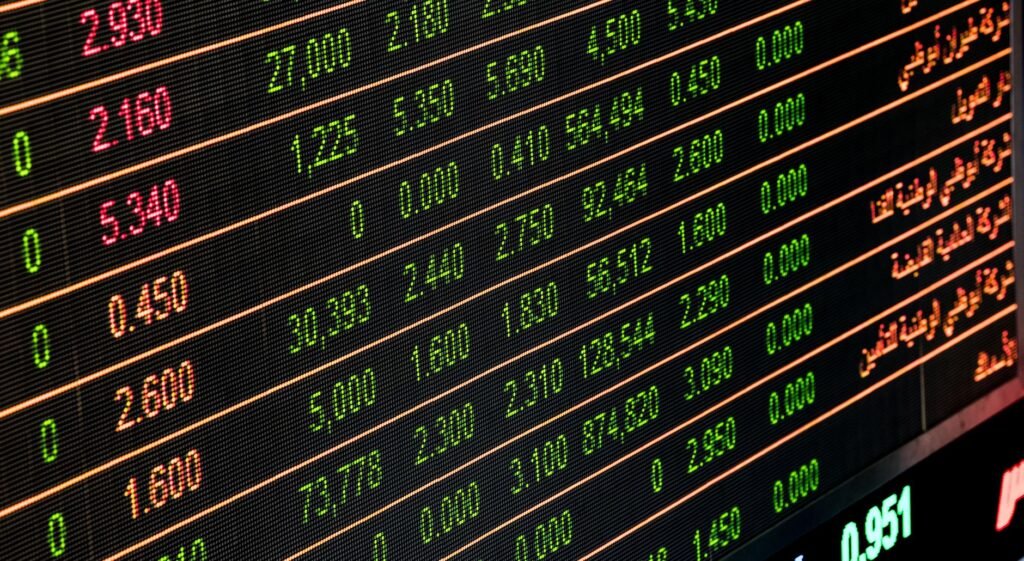

In the dynamic financial landscape of 2026, understanding sophisticated trading strategies is essential. So, how does arbitrage trading work across different markets? Arbitrage involves simultaneously buying and selling an asset to exploit temporary price discrepancies between distinct markets or forms of the same asset, aiming to generate risk-free or low-risk profits from these fleeting imbalances. This strategy remains a cornerstone for market participants seeking to capitalize on market inefficiencies.
The Fundamental Concept of Arbitrage
Arbitrage, at its core, is the practice of exploiting price differences for the same financial instrument across different markets or in different forms. The fundamental principle is straightforward: if an asset can be purchased in one market for a lower price and simultaneously sold in another market for a higher price, a profit can be made from the price differential, minus any transaction costs. Historically, this concept has existed for centuries, evolving from traders physically moving goods between cities to modern electronic systems executing trades across global exchanges in milliseconds.
The theoretical appeal of arbitrage lies in its potential for risk-free profit. In a perfectly efficient market, arbitrage opportunities would not exist, as all relevant information would be instantly reflected in prices. However, real-world markets are not perfectly efficient due to factors like information lags, liquidity constraints, regulatory differences, and the sheer volume of transactions. These imperfections create the temporary dislocations that arbitrageurs seek to exploit.
The Role of Market Efficiency
As markets become increasingly interconnected and technologically advanced, genuine arbitrage opportunities are often fleeting. In 2026, with the widespread adoption of high-frequency trading (HFT) and advanced algorithmic systems, price discrepancies are identified and closed almost instantly. This means that successful arbitrage often requires significant technological infrastructure, rapid execution capabilities, and access to low-latency market data. While the theoretical concept remains simple, practical execution in today’s markets is highly competitive.
Types of Arbitrage in Modern Markets (2026 Perspective)
Arbitrage manifests in various forms, each tailored to different market structures and asset classes. In 2026, several key types continue to be prevalent, often powered by sophisticated technology:
1. Geographical or Spatial Arbitrage
This is perhaps the most intuitive form, involving buying an asset on one exchange where it trades at a lower price and selling it on another exchange where it trades at a higher price. For example, a stock might trade slightly cheaper on the London Stock Exchange than on the New York Stock Exchange. With advanced cross-border trading platforms and faster settlement times – such as the continued expansion of T+1 settlement cycles in various major markets by 2026 – these opportunities, though minuscule, can still be exploited by firms with direct access to multiple venues.
2. Triangular Arbitrage (Forex)
Specific to the foreign exchange (forex) market, triangular arbitrage involves exploiting discrepancies between three different currencies. For instance, if the exchange rate between USD and EUR, EUR and GBP, and GBP and USD do not align perfectly, a trader can convert one currency into a second, then into a third, and finally back into the original, netting a profit from the mispricing. The extreme liquidity and fragmented nature of the forex market mean these opportunities, when they arise, are typically very small and closed rapidly by automated systems.
3. Statistical Arbitrage
Far more complex, statistical arbitrage involves identifying statistically significant price relationships between different assets that tend to move together or maintain a certain spread. When this relationship temporarily breaks down, algorithms can initiate trades to profit from the expected reversion to the mean. In 2026, this often involves machine learning models analyzing vast datasets to uncover subtle, short-term mispricings across thousands of assets, including equities, commodities, and derivatives.
4. Merger Arbitrage (Risk Arbitrage)
Unlike other forms that aim for near risk-free returns, merger arbitrage involves a degree of risk, hence its alternative name. This strategy focuses on the stocks of companies involved in an acquisition. Typically, after a merger announcement, the target company’s stock trades below the acquisition price offered by the acquirer. Arbitrageurs buy the target company’s stock and short-sell the acquirer’s stock (if the deal is stock-for-stock), profiting if the merger successfully closes and the price differential converges. The risk here is that the merger might fall through or be delayed, causing the spread to widen.
5. Convertible Arbitrage
This strategy exploits mispricings between convertible bonds and the underlying equity into which they can be converted. If a convertible bond is undervalued relative to the equity, a trader might buy the bond and short-sell the stock. This often involves complex quantitative models to determine the fair value of the convertible bond’s option component, a common practice among hedge funds with specialized expertise.
Identifying and Exploiting Opportunities in 2026
The landscape for arbitrage in 2026 is heavily shaped by technology and speed. Identifying opportunities is no longer a human endeavor but almost exclusively the domain of sophisticated computer systems.
- High-Frequency Trading (HFT): HFT firms utilize powerful computers and ultra-low-latency networks to execute millions of trades per second. They are often the first to detect and capitalize on micro-arbitrage opportunities that last mere milliseconds.
- Algorithmic Strategies: Beyond HFT, complex algorithms are designed to monitor multiple markets simultaneously, identify specific arbitrage conditions, and execute multi-leg trades automatically. These algorithms are constantly refined using artificial intelligence and machine learning to adapt to evolving market dynamics.
- Data Infrastructure: Access to real-time, consolidated market data feeds from all relevant exchanges is critical. Any delay in receiving or processing data can mean the difference between capturing a profit and missing an opportunity entirely.
- Transaction Costs: Even the smallest fees – commissions, exchange fees, and potential slippage – can erode the razor-thin margins of arbitrage. Firms engaging in arbitrage often negotiate preferential trading rates or operate as market makers to minimize these costs.
The sheer speed and computational power required mean that individual traders or smaller firms face significant barriers to entry in pure arbitrage. While educational content like this explains the mechanics, the practical reality in 2026 is that capturing these opportunities typically requires institutional-level resources.
Risks and Challenges of Arbitrage
While often termed
Disclaimer: This article is provided for general informational and educational purposes only and does not constitute financial, investment, trading, or legal advice. Gainsium is not a registered investment advisor. Markets are volatile and past performance does not guarantee future results. Readers should conduct their own research and consult a licensed financial advisor before making any investment decisions.