
For individuals looking to engage with financial markets beyond long-term buy-and-hold strategies, momentum investing and swing trading represent two popular yet distinct approaches. While both aim to profit from price movements in securities, they differ significantly in their time horizons, risk profiles, and the specific strategies employed. Understanding these key distinctions is crucial for anyone considering incorporating these methods into their market engagement.
Understanding Momentum Investing
Momentum investing is a strategy based on the idea that assets performing well recently will continue to perform well in the near future. This “momentum effect” leads investors to seek securities exhibiting strong upward price trends and significant trading volume, indicating conviction. The core principles include trend following, where the goal is to identify and ride established trends rather than predict tops or bottoms. Emphasis is also placed on relative strength, comparing an asset’s performance against the broader market or peers. While active, momentum investing typically involves holding periods from several weeks to many months, as long as the underlying trend remains intact. In the dynamic 2026 market, with rapid information flow, trends can accelerate or reverse quickly, requiring continuous vigilance.
Understanding Swing Trading
Swing trading is a short-term strategy designed to profit from the “swings” in an asset’s price, typically over a few days to a couple of weeks. Swing traders focus on anticipating and reacting to intermediate-term price fluctuations, aiming to buy near short-term lows and sell near short-term highs within an existing trend or range. A heavy reliance on technical analysis is central, using tools like moving averages, candlestick patterns, oscillators (e.g., RSI), and support/resistance levels to identify precise entry and exit points. Strict risk management, including stop-loss orders, is paramount due to the shorter time horizon and exposure to rapid market shifts. In 2026, sophisticated trading platforms offer extensive tools, but increased competition and volatile market conditions demand robust strategies for navigating swift, news-driven moves.
Key Differences in Practice
The distinction between momentum investing and swing trading is most evident in their operational approaches.
Time Horizon
The most significant divergence is the holding period. Momentum investors typically hold positions for weeks or months, aiming to capture the bulk of an extended trend. Their analysis often uses daily or weekly charts to confirm the larger trend’s sustainability. In contrast, swing traders operate on a much shorter timeline, holding assets for a few days to a couple of weeks. They generally utilize hourly or daily charts to pinpoint specific entry and exit points for smaller price oscillations within a broader move.
Risk Profile
Both strategies carry distinct risk profiles. Momentum investing, though targeting larger moves, is vulnerable to significant reversals if a trend breaks down. The risk involves a sustained upward trend dissipating, potentially leading to substantial drawdowns. Monitoring for signs of trend exhaustion is critical. Swing trading involves a higher frequency of trades, which can lead to increased transaction costs and greater exposure to overnight gaps or sudden market news. The shorter time frame means quick, significant losses are possible if stop-losses are not adhered to or if liquidity is thin. Success often hinges on a higher win rate and strong risk-to-reward ratios on individual trades.
Strategy and Tools
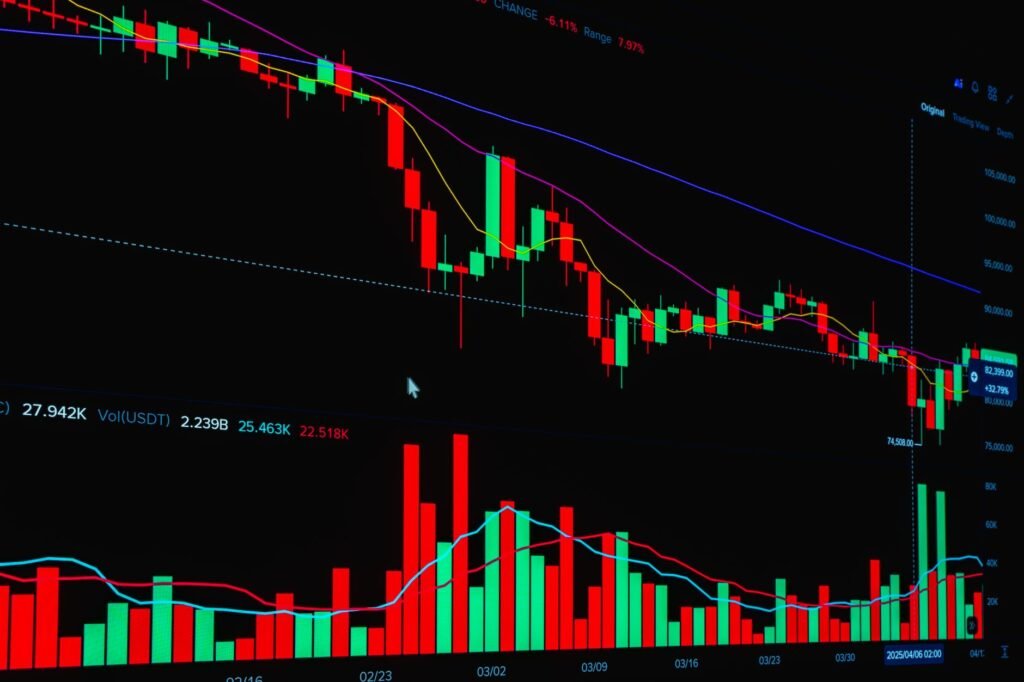
Momentum investors frequently employ quantitative screens to identify securities with strong past performance over specific look-back periods (e.g., 3- to 12-month returns). They may also consider fundamental analysis to confirm catalysts for continued growth. Indicators such as simple moving averages to define trend direction, or the Relative Strength Index (RSI) used to confirm strength, are common. Swing traders, conversely, rely heavily on a wider array of technical indicators and chart patterns. They might seek specific candlestick formations at support/resistance levels, confluence of multiple indicators (e.g., oversold RSI coinciding with a bounce), or classical chart patterns. Volume analysis is also key to confirming price action validity.
Navigating the 2026 Market Landscape
The financial markets in 2026 continue to be shaped by several prevailing trends influencing both momentum and swing strategies. The pervasive use of artificial intelligence and machine learning in trading algorithms means markets can react to information with increasing speed and efficiency, potentially compressing trend durations or intensifying price swings. This demands adaptability. Ongoing discussions regarding global inflation and interest rate trajectories continue to impact capital flows; periods of higher inflation might fuel certain sector momentum, while economic uncertainty could lead to choppier markets with more identifiable swing opportunities. Furthermore, increased retail participation, often leveraging social media, can contribute to rapid, localized trends or intense, short-term volatility in specific assets. Understanding these broader market currents is essential for effectively positioning either strategy.
Choosing Your Approach
The choice between momentum investing and swing trading largely depends on an individual’s available time, risk tolerance, and psychological disposition. Momentum investing may suit those comfortable identifying broader trends and holding positions over a longer span, requiring less frequent direct intervention but demanding patience. Swing trading, on the other hand, often appeals to those who thrive on active engagement, rapid decision-making, and stringent application of risk management protocols across shorter time frames. Both approaches necessitate continuous learning, adaptation to evolving market conditions, and a disciplined focus on preserving capital.
Disclaimer: This article is provided for general informational and educational purposes only and does not constitute financial, investment, trading, or legal advice. Gainsium is not a registered investment advisor. Markets are volatile and past performance does not guarantee future results. Readers should conduct their own research and consult a licensed financial advisor before making any investment decisions.