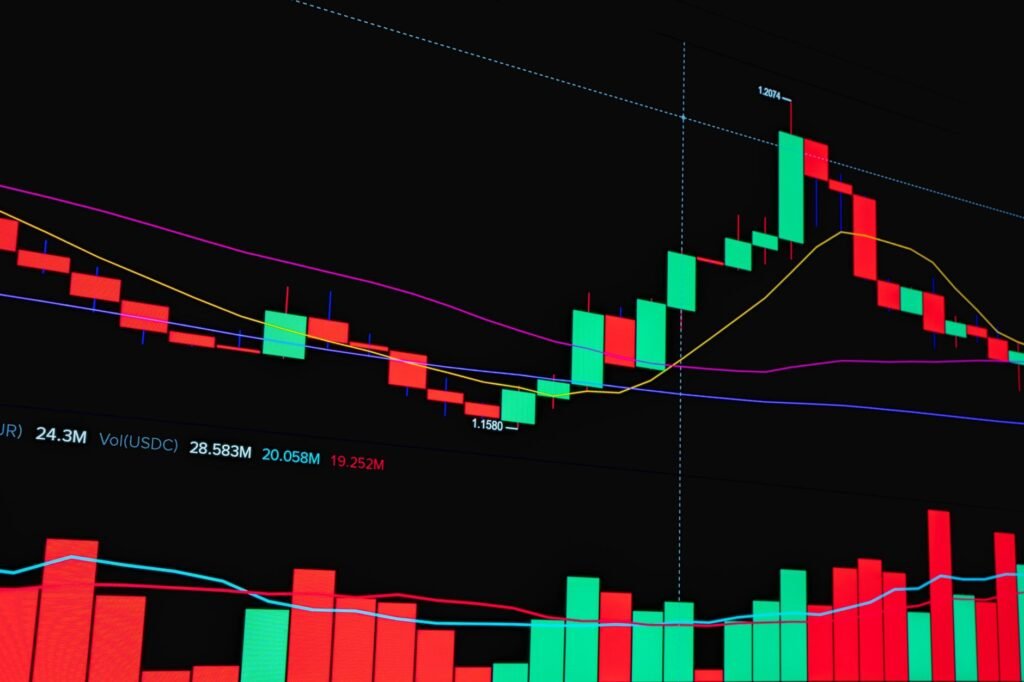

Market volatility refers to the rate at which the price of a security, an index, or a market changes over a given period. Essentially, it describes the magnitude and speed of price swings. For traders and investors alike, understanding how to identify, interpret, and measure this ebb and flow is crucial for navigating financial markets, especially as global economic factors continue to influence asset prices in 2026.
Understanding market volatility is not just about observing price movements; it’s about discerning the underlying forces that drive these changes and employing tools to quantify them. While some might perceive volatility purely as risk, it also represents potential opportunities for traders who can anticipate and react to significant price fluctuations.
Understanding Market Volatility
Volatility is often described as a measure of an asset’s dispersion of returns. High volatility means an asset’s price can change dramatically over a short time, in either direction, while low volatility suggests prices are relatively stable. This concept is fundamental to financial markets, impacting everything from option pricing to portfolio risk management.
What Causes Market Volatility?
Market volatility is a complex phenomenon driven by a confluence of factors, both economic and psychological. In 2026, global markets continue to grapple with shifting central bank policies that responded to inflation, ongoing geopolitical tensions impacting energy and commodity markets, and the ever-present influence of technological advancements.
- Economic Data: Releases of key economic indicators like inflation rates, GDP growth, unemployment figures, and interest rate decisions from central banks can cause immediate and significant market reactions. Unexpected data often triggers higher volatility. For instance, post-pandemic economic adjustments have led to periods of increased sensitivity to inflation reports.
- Geopolitical Events: Major political developments, international conflicts, trade disputes, or even significant elections can create uncertainty, prompting investors to adjust their positions rapidly and increasing market choppiness.
- Corporate Earnings and News: Individual stock prices, and consequently broader market sectors, can experience high volatility around corporate earnings reports, merger and acquisition announcements, or significant product developments.
- Liquidity: Markets with lower trading volume or fewer buyers and sellers can experience higher volatility, as even relatively small orders can disproportionately move prices.
- Technological Factors: The rise of high-frequency trading (HFT) and algorithmic trading, increasingly powered by AI, can amplify market movements by executing trades at lightning speed in response to new information. While this often contributes to market efficiency, it can also accelerate price swings during periods of uncertainty.
- Market Sentiment and Psychology: Fear, greed, and herd mentality can lead to irrational exuberance or panic selling, independent of fundamental data, causing prices to swing wildly.
-
Disclaimer: This article is provided for general informational and educational purposes only and does not constitute financial, investment, trading, or legal advice. Gainsium is not a registered investment advisor. Markets are volatile and past performance does not guarantee future results. Readers should conduct their own research and consult a licensed financial advisor before making any investment decisions.