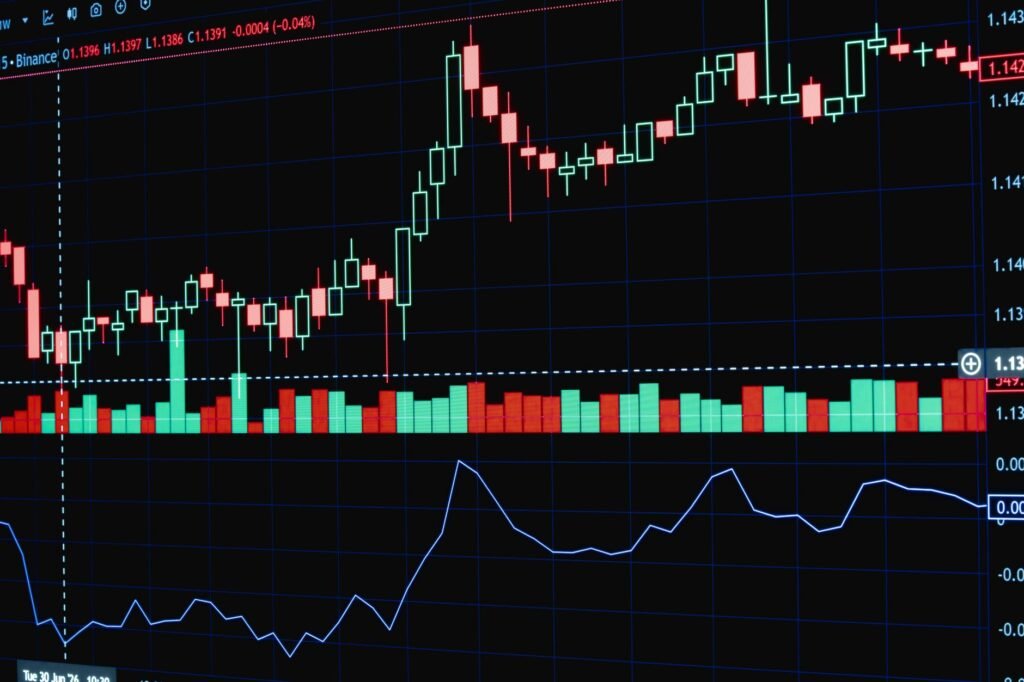

In 2026, financial markets continue to navigate a landscape shaped by evolving monetary policies, persistent inflation concerns, and a dynamic geopolitical environment. Such conditions often foster heightened volatility, presenting both challenges and opportunities for those seeking to engage with financial instruments beyond traditional stocks and bonds. For investors with a robust understanding of market mechanics and risk management, advanced options strategies can offer versatile tools to potentially capitalize on price swings or to hedge existing portfolios. This article explores five such advanced options strategies, providing a general overview of their application in a volatile 2026 market.
Understanding Market Volatility in 2026
The year 2026 finds global markets grappling with several key themes. Central banks are balancing inflation control with economic growth, leading to an interest rate environment that can shift rapidly. Technological advancements continue to disrupt traditional sectors while creating new avenues for investment, often accompanied by significant price fluctuations in related equities. Furthermore, ongoing geopolitical tensions contribute to an elevated baseline of uncertainty, with sudden news events capable of triggering sharp market reactions. In this context, understanding and managing volatility is paramount for sophisticated investors. Options, by their nature, are instruments whose value is significantly influenced by volatility, making them prime candidates for strategic deployment.
The Role of Advanced Options Strategies
Advanced options strategies go beyond simply buying or selling calls and puts. They often involve combining multiple options contracts with different strike prices, expiration dates, and sometimes even different underlying assets. The objective is typically to create a specific risk-reward profile tailored to an investor’s outlook on the underlying asset’s price movement, volatility, and time decay. These strategies are designed to be more nuanced, potentially offering opportunities in various market conditions—whether an investor anticipates a directional move, expects the market to remain within a range, or seeks protection for an existing portfolio.
1. The Iron Condor
The Iron Condor is a neutral options strategy designed to profit from an underlying asset remaining within a specific price range until expiration. It is typically employed when an investor anticipates low to moderate volatility. In a 2026 market characterized by periods of range-bound trading despite overall volatility, this strategy can be particularly relevant.
Strategy Mechanics
An Iron Condor involves selling an out-of-the-money (OTM) call spread and an OTM put spread on the same underlying asset with the same expiration date. Specifically, an investor might sell an OTM call and buy a further OTM call (bear call spread), and simultaneously sell an OTM put and buy a further OTM put (bull put spread). Both spreads collect premium, and the maximum profit is the net premium received. The maximum loss is limited to the difference between the strike prices in either spread, minus the net premium received, representing a defined risk strategy.
Application in 2026 Volatility
If, for instance, a major index like the S&P 500 is perceived to trade within a relatively narrow, albeit higher, range for a period in 2026, an Iron Condor could be constructed. Investors aim to profit from the time decay of the options sold, provided the underlying asset stays between the sold call and put strike prices. While often considered a low-volatility strategy, it can be adjusted to account for perceived ranges even in an overall volatile environment, provided those ranges are well-defined.
2. Long Straddle or Strangle
When significant price movement is anticipated but the direction is uncertain, a Long Straddle or Long Strangle can be an effective volatility play. These strategies benefit from a substantial move in either direction, making them suitable for an environment where economic reports or geopolitical events in 2026 could trigger large, unpredictable shifts.
Strategy Mechanics
A Long Straddle involves simultaneously buying an at-the-money (ATM) call and an ATM put with the same strike price and expiration date. A Long Strangle is similar but uses OTM calls and puts, typically selling for less premium and requiring an even larger move to profit. Both strategies have unlimited profit potential as the underlying asset moves sharply away from the strike price, but suffer from time decay and have a maximum loss equal to the premium paid if the underlying asset remains flat.
Application in 2026 Volatility
Consider an upcoming central bank announcement or a major earnings report for a sector-leading tech company in 2026, where the outcome is highly uncertain but likely to cause a significant price reaction. An investor might employ a Long Straddle, betting on volatility rather than direction. While the cost of entry can be significant due to buying two options, the potential for substantial gains can offset this if a major price dislocation occurs.
3. Calendar Spread (Horizontal Spread)
The Calendar Spread, also known as a Horizontal Spread, is a strategy that capitalizes on time decay (theta) and potentially a directional move over time, typically with a neutral to slightly directional bias. This strategy leverages the differing rates of time decay for options with different expiration dates.
Strategy Mechanics
A typical Calendar Spread involves selling a near-term option (call or put) and buying a longer-term option (call or put) with the same strike price and underlying asset. For example, an investor might sell a March 2026 call and buy a June 2026 call, both with the same strike price. The objective is for the near-term option to expire worthless or lose value quickly due to time decay, while the longer-term option retains more of its value. This strategy profits if the underlying asset stays near the strike price until the near-term option expires, or if implied volatility increases for the longer-term option.
Application in 2026 Volatility
In 2026, if an investor expects a stock to consolidate around a certain price level in the short term before a potential breakout or breakdown later in the year, a Calendar Spread could be suitable. It allows an investor to profit from the rapid time decay of the shorter-term option while maintaining exposure with the longer-term option. This strategy requires careful management, especially considering shifts in implied volatility between the two expiration cycles.
4. Ratio Backspread
A Ratio Backspread is a strategy that involves buying more options than selling, aiming to profit from a significant price move in one direction while limiting downside risk. It’s often used when an investor has a strong directional conviction and expects a sharp move, perhaps following a catalyst in the 2026 market.
Strategy Mechanics
A common Ratio Call Backspread involves selling one ATM or slightly OTM call and buying two (or more) further OTM calls with the same expiration date. The goal is to establish the spread for a credit or a small debit. The strategy offers limited risk if the underlying asset falls (often for a small profit from the initial credit) and theoretically unlimited profit potential if the underlying asset rises significantly past the bought calls. A Ratio Put Backspread works similarly for a bearish outlook.
Application in 2026 Volatility
Given the potential for specific sectors or companies to experience rapid growth or decline in 2026 due to technological innovation or regulatory shifts, a Ratio Backspread could be employed. For instance, if an investor believes a particular AI stock is poised for a massive upward move, but also wants to limit potential losses if the move doesn’t materialize, a call backspread allows them to participate in a significant rally with defined maximum risk, and potentially even a small profit if the stock stays flat or falls.
5. Collar Strategy
The Collar Strategy is primarily a hedging technique used by investors who hold a long position in a stock and wish to protect against a significant downside move, while also being willing to cap their upside potential. This can be particularly relevant in a volatile 2026, where protecting gains or limiting losses on core holdings is a priority.
Strategy Mechanics
A Collar involves three components: owning shares of stock, selling an OTM call option against those shares (a covered call), and buying an OTM put option with the same expiration date. The premium received from selling the covered call helps to offset the cost of buying the protective put. This strategy defines a range within which the stock price is expected to move: the put strike sets a floor (limiting downside risk), and the call strike sets a ceiling (capping upside potential).
Application in 2026 Volatility
Suppose an investor holds a substantial position in a blue-chip company that has performed well but faces near-term uncertainty, perhaps due to upcoming economic data or market-wide jitters in 2026. To protect against a sharp correction without liquidating the position, a Collar could be implemented. This strategy provides downside protection, typically for a reduced or even net-zero cost, in exchange for relinquishing some potential upside. It allows investors to stay invested in a stock they believe in long-term while navigating periods of increased market volatility.
Conclusion
The 2026 market environment, marked by evolving economic factors and geopolitical dynamics, underscores the importance of sophisticated risk management and strategic opportunity identification. The five advanced options strategies discussed—the Iron Condor, Long Straddle/Strangle, Calendar Spread, Ratio Backspread, and Collar Strategy—offer diverse approaches for navigating such conditions. Each strategy has a unique risk-reward profile and is suited to different market outlooks, whether an investor anticipates range-bound trading, significant directional moves, or seeks to protect existing assets. While powerful, these strategies require a deep understanding of options mechanics, careful analysis of market conditions, and a clear appreciation of their associated risks. Investors considering these approaches are encouraged to ensure they align with their individual financial goals and risk tolerance.
Disclaimer: This article is provided for general informational and educational purposes only and does not constitute financial, investment, trading, or legal advice. Gainsium is not a registered investment advisor. Markets are volatile and past performance does not guarantee future results. Readers should conduct their own research and consult a licensed financial advisor before making any investment decisions.