
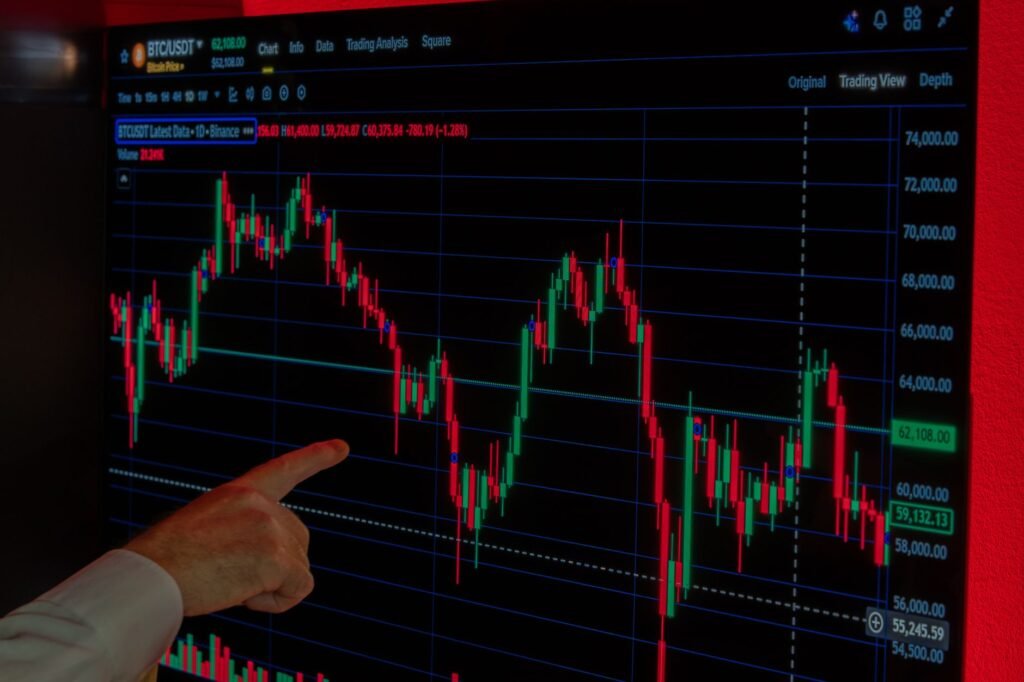

In 2026, investors continue to navigate a financial landscape characterized by dynamic shifts, from evolving geopolitical tensions and inflation concerns to rapid technological advancements. These factors often contribute to periods of increased market volatility, making effective risk management more crucial than ever. This article will detail four essential risk management strategies that investors can implement to protect their portfolios during such turbulent times, offering general educational insights rather than personalized financial advice.
Understanding Market Volatility in 2026
The year 2026 presents a complex backdrop for investors. Global supply chains, though more resilient than in prior years, still face potential disruptions. Central banks across major economies are balancing efforts to manage inflation with supporting economic growth, leading to varied interest rate environments that can impact different asset classes distinctly. Furthermore, the accelerating pace of technological innovation, particularly in areas like artificial intelligence and sustainable energy, creates both significant opportunities and potential dislocations. Understanding this multifaceted environment is the first step in preparing a robust risk management plan.
The Imperative of Risk Management
Risk management is not about avoiding all risk, which is impossible in investing; rather, it’s about understanding, measuring, and mitigating potential downsides to align with an investor’s goals and risk tolerance. For 2026, with market cycles potentially shortening and unexpected events having broader impacts, a proactive approach to risk is paramount. The goal is to build a portfolio that can weather storms while still participating in growth opportunities.
1. Diversification Across Asset Classes
One of the foundational principles of risk management is diversification. This strategy involves spreading investments across various asset classes, industries, and geographical regions. The core idea is that different investments will not all perform poorly (or well) at the same time, thereby reducing the overall risk of a portfolio.
Broadening Your Investment Spectrum
- Equities: While offering growth potential, equities can be volatile. Diversifying within equities means investing across different sectors (e.g., technology, healthcare, consumer staples) and market capitalizations (large-cap, mid-cap, small-cap), and even geographically (domestic and international markets).
- Fixed Income: Bonds and other fixed-income instruments traditionally offer stability and income. In 2026, with varying interest rate outlooks, careful consideration of bond durations and credit quality becomes important. Government bonds, corporate bonds, and municipal bonds each carry different risk/reward profiles.
- Real Estate: Direct property investments or real estate investment trusts (REITs) can provide diversification from traditional stocks and bonds, potentially offering inflation protection and income.
- Commodities: Assets like gold, silver, and other raw materials can sometimes act as a hedge against inflation or geopolitical instability. Historically, gold, for instance, has often been seen as a safe-haven asset during periods of market uncertainty.
- Alternative Investments: For suitable investors, exposure to private equity, hedge funds, or managed futures can provide further diversification, though these often come with higher minimums, less liquidity, and complex risk profiles.
By combining assets that have low correlation – meaning they tend to move independently of each other – an investor may reduce the overall volatility of their portfolio. The specific mix will depend heavily on individual financial goals and risk tolerance.
2. Strategic Asset Allocation and Regular Rebalancing
Beyond simply diversifying, asset allocation involves determining the appropriate proportion of each asset class within a portfolio. This decision is highly personal and should be based on an investor’s time horizon, financial goals, and comfort level with risk.
Crafting Your Portfolio Blueprint
- Risk Tolerance: Younger investors with a longer time horizon might opt for a higher allocation to equities, accepting greater short-term volatility for higher long-term growth potential. Those closer to retirement, or with a lower risk tolerance, typically lean towards a more conservative allocation with a greater emphasis on fixed income.
- Time Horizon: The length of time an investor plans to hold their investments significantly influences allocation. Short-term goals typically warrant more conservative allocations to preserve capital.
Once an initial allocation is set, rebalancing becomes crucial. Market movements can cause a portfolio’s actual asset allocation to drift from its target. For example, if equities perform exceptionally well, their percentage of the total portfolio might increase beyond the desired level, thereby increasing the portfolio’s risk profile.
Maintaining Your Target Risk Level
Rebalancing involves periodically adjusting the portfolio back to its original target allocation. This might mean selling some assets that have performed well and buying more of those that have underperformed, or simply directing new contributions to the underperforming asset classes. Common rebalancing schedules include annually or semi-annually, or when an asset class deviates by a certain percentage from its target. This systematic approach helps an investor to maintain a consistent risk level and can also act as a disciplined way to sell high and buy low.
3. Incorporating Hedging Strategies and Defensive Positions
In highly volatile markets like those potentially seen in 2026, some investors explore hedging strategies and establish defensive positions to further mitigate risk. This doesn’t necessarily mean employing complex derivatives, but rather allocating to assets that historically perform well or maintain value during downturns.
Shielding Your Portfolio from Downturns
- Defensive Sectors: Investing in companies from defensive sectors, such as utilities, consumer staples, and healthcare, can offer some stability. These companies typically provide essential goods and services that remain in demand even during economic slowdowns, making their earnings less susceptible to market fluctuations.
- Precious Metals: Gold and other precious metals have historically been considered safe havens during economic uncertainty and periods of inflation. Including a modest allocation to these assets can act as a buffer against market declines and currency devaluation concerns.
- Cash and Cash Equivalents: Holding a portion of a portfolio in cash or highly liquid cash equivalents provides flexibility and preserves capital during volatile periods. It also allows an investor to capitalize on buying opportunities when asset prices become more attractive.
- Income-Generating Assets: Certain dividend-paying stocks or high-quality bonds can provide a stream of income that may help offset capital losses during market downturns. The stability of consistent income can be particularly appealing in uncertain environments.
While some advanced investors may consider options or other derivatives for hedging, these instruments carry their own complexities and risks and are generally suitable for those with significant expertise and understanding.
4. Employing Dollar-Cost Averaging (DCA)
Dollar-cost averaging is a straightforward strategy that involves investing a fixed amount of money at regular intervals, regardless of market conditions. This approach is particularly effective in volatile markets because it removes the temptation to time the market, which is notoriously difficult to do consistently and successfully.
A Disciplined Approach to Investing
- Mitigating Volatility: When prices are high, a fixed dollar amount buys fewer shares; when prices are low, it buys more shares. Over time, this averages out the purchase price, potentially leading to a lower average cost per share than if an investor had made a lump-sum investment at a market peak.
- Reducing Emotional Decisions: DCA instills discipline by automating investments. It helps investors avoid impulsive decisions driven by fear during market downturns or greed during upward trends, which can often lead to poor investment outcomes.
- Long-Term Focus: This strategy is best suited for long-term investors who are consistently contributing to their portfolios, such as through regular contributions to retirement accounts. It capitalizes on the market’s historical tendency to trend upwards over extended periods, despite short-term fluctuations.
By committing to a regular investment schedule, dollar-cost averaging helps build wealth incrementally and systematically, making market volatility less intimidating and potentially more advantageous for the disciplined investor.
Conclusion
Navigating the complex and potentially volatile markets of 2026 requires a thoughtful and disciplined approach to risk management. By implementing strategies such as broad diversification, maintaining strategic asset allocation through regular rebalancing, considering defensive positions and hedging, and utilizing dollar-cost averaging, investors can build a more resilient portfolio. These approaches, when tailored to individual circumstances, can help manage risk and foster long-term financial success.
Disclaimer: This article is provided for general informational and educational purposes only and does not constitute financial, investment, trading, or legal advice. Gainsium is not a registered investment advisor. Markets are volatile and past performance does not guarantee future results. Readers should conduct their own research and consult a licensed financial advisor before making any investment decisions.