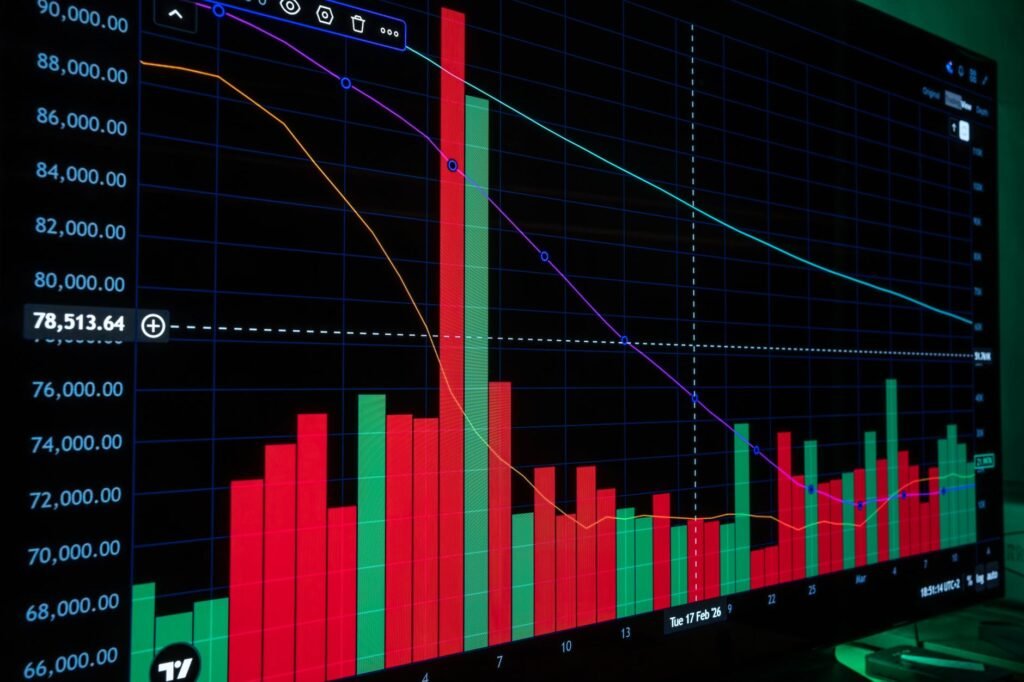

Market volatility is a persistent characteristic of financial markets, representing the degree of variation in asset prices over a given period. As investors navigate 2026, understanding what drives these fluctuations and how they can impact investment portfolios becomes increasingly important for making informed decisions. This article aims to define market volatility, explore its primary causes and effects on investments, and outline general strategies investors might consider to understand and potentially mitigate its influence.
What Is Market Volatility?
At its core, market volatility refers to the rate at which the price of a security, an index, or an entire market increases or decreases over a given set of returns. It is commonly measured by statistical metrics like standard deviation. High volatility signifies that an asset’s price can fluctuate dramatically over a short period, experiencing large swings both up and down. Conversely, low volatility suggests relatively stable and predictable price movements.
It is crucial to recognize that volatility is not inherently good or bad; rather, it is a normal and often healthy aspect of dynamic markets. While periods of high volatility can evoke anxiety and uncertainty, they can also present unique opportunities for disciplined investors. Understanding volatility helps distinguish between temporary market noise and fundamental shifts, allowing for more strategic decision-making rather than impulsive reactions.
Key Drivers of Market Volatility in 2026
Several factors typically contribute to market volatility, and in 2026, a combination of economic, geopolitical, and technological elements continue to shape the financial landscape.
Economic Indicators and Geopolitical Events
-
Inflation and Interest Rates: While global inflationary pressures may have moderated from their peaks earlier in the decade, the persistence of inflation and the response of central banks remain significant drivers. In 2026, monetary policy decisions—specifically regarding interest rates—continue to influence market sentiment. Any unexpected shifts in central bank guidance or economic data related to inflation, employment, or economic growth can trigger immediate market reactions, as investors reassess future earnings and discount rates.
-
Global Economic Growth: Reports on GDP, consumer spending, and manufacturing output provide vital insights into the health of national and international economies. Divergences from growth forecasts, whether positive or negative, can introduce volatility as markets adjust expectations for corporate profits and economic stability.
-
Geopolitical Tensions: The global geopolitical environment is a perpetual source of uncertainty. Regional conflicts, trade disputes among major economic blocs, and political instability in key resource-producing regions can disrupt supply chains, impact commodity prices, and affect international capital flows. These events often lead to sudden shifts in investor confidence and market direction.
Technological Shifts and Sector-Specific Dynamics
-
Rapid Technological Advancements: The mid-2020s are characterized by transformative technological innovation, particularly in areas like artificial intelligence, biotechnology, and renewable energy. While these sectors offer significant growth potential, they are also prone to higher volatility. Enthusiastic speculation can lead to rapid price appreciation, but any perceived setbacks, regulatory hurdles, or shifts in competitive landscapes can result in sharp corrections.
-
Regulatory Landscape: Evolving regulations across industries—from data privacy and antitrust enforcement in technology to environmental mandates in energy—can create uncertainty for specific companies and sectors. Anticipation or implementation of new policies can lead to revaluations of affected firms, contributing to market turbulence.
-
Corporate Earnings: The quarterly earnings season consistently generates increased market activity. Companies reporting results that significantly exceed or fall short of analyst expectations, or those providing revised future guidance, often experience substantial price movements. If these surprises are widespread across major sectors, they can impact broader market indices.
Impact of Volatility on Investments
Market volatility can manifest in several ways, influencing both individual investments and overall portfolio performance:
-
Portfolio Value Fluctuations: The most immediate and noticeable effect is the rapid up and down movement in the total value of an investment portfolio. While these swings can be unsettling, it is important to remember that they are often temporary.
-
Emotional Decision-Making: Periods of high volatility can test an investor’s resolve. Fear of further losses can lead to impulsive selling, while the allure of quick gains can prompt speculative buying. Such emotionally driven decisions often run counter to long-term financial goals.
-
Risk Perception: Volatility can heighten the perceived risk of investments, even those with strong underlying fundamentals. This altered perception might lead investors to shy away from growth opportunities or overemphasize safer, lower-returning assets.
-
Liquidity and Trading Costs: In extreme volatile conditions, especially during market dislocations, liquidity for certain assets can decrease, and bid-ask spreads may widen, potentially increasing transaction costs for those needing to buy or sell.
Strategies for Navigating Volatility
While market volatility cannot be eliminated, investors can employ several general strategies to understand and potentially mitigate its impact, particularly in dynamic periods like 2026.
Diversification
The principle behind diversification is to avoid having ‘all your eggs in one basket.’ By spreading investments across various asset classes—such as equities, fixed income, real estate, and commodities—and also across different industries and geographic regions, investors can potentially cushion the impact of underperformance in any single area. For instance, while technology stocks might experience a downturn, a well-diversified portfolio might see stability from utilities or bonds. It is important to note that while diversification can help reduce portfolio risk, it does not guarantee against loss, particularly during extreme market events.
Long-Term Perspective
Focusing on the long-term horizon is a foundational principle for many successful investors, particularly during volatile periods. History has shown that equity markets, despite experiencing numerous corrections and bear markets, have consistently delivered positive returns over extended periods. Short-term market fluctuations, while potentially unnerving, often represent temporary noise within a broader upward trend. Resisting the urge to react to every market dip and instead maintaining a focus on compounding returns over years or decades can be a powerful antidote to volatility-induced anxiety. This approach aligns with the adage that ‘time in the market’ is often more impactful than ‘timing the market.’
Dollar-Cost Averaging
Dollar-cost averaging is a strategy where an investor commits to investing a fixed amount of money into a particular investment at regular intervals, regardless of the asset’s current price. This means that when prices are high, fewer shares are purchased, and when prices are low, more shares are acquired. Over time, this disciplined approach can help reduce the average cost per share, mitigating the risk associated with investing a large lump sum at an inopportune market peak. It removes some of the emotional decision-making often triggered by market volatility, replacing it with a consistent, automated investment schedule.
Rebalancing and Risk Management
Maintaining a strategic asset allocation is crucial, and rebalancing is the practice of periodically adjusting a portfolio back to its target asset weights. For example, if equities have performed exceptionally well, they might now represent a larger percentage of the portfolio than initially intended, thereby increasing overall risk. Rebalancing would involve selling some of those outperforming assets and re-investing in underperforming ones, or those that have fallen below their target allocation. This disciplined approach ensures that a portfolio’s risk level remains consistent with an investor’s comfort level and financial objectives, preventing an unintended drift towards higher risk during bull markets or lower risk during bear markets.
Cash Reserves and Liquidity
An often-overlooked strategy during volatile times is the importance of maintaining adequate cash reserves or a robust emergency fund. Having readily accessible liquidity can provide a critical financial buffer against unexpected personal expenses or economic shocks, preventing the need to liquidate investments at potentially unfavorable prices during a market downturn. Furthermore, for those with a strategic outlook, cash reserves can represent ‘dry powder’—capital available to take advantage of attractive investment opportunities that may arise when market prices are temporarily depressed during periods of heightened volatility.
Disclaimer: This article is provided for general informational and educational purposes only and does not constitute financial, investment, trading, or legal advice. Gainsium is not a registered investment advisor. Markets are volatile and past performance does not guarantee future results. Readers should conduct their own research and consult a licensed financial advisor before making any investment decisions.