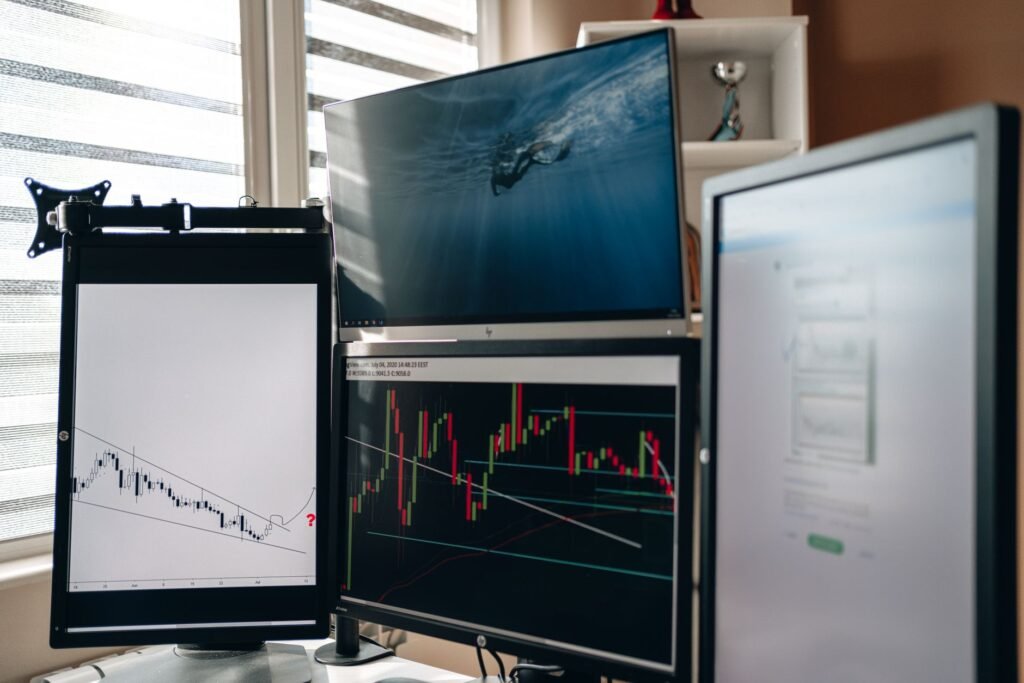

High-Frequency Trading (HFT) is a sophisticated form of algorithmic trading characterized by extremely rapid execution of orders, typically within microseconds. In 2026, HFT continues to be a dominant force, profoundly shaping the modern financial market structure by influencing liquidity, price discovery, and volatility across various asset classes.
What is High-Frequency Trading (HFT)?
High-Frequency Trading involves using powerful computer programs and ultra-low latency technology to execute a large number of orders at incredibly high speeds. These firms leverage proprietary algorithms to analyze market data, identify trading opportunities, and place or cancel orders in fractions of a second. The core tenets of HFT are:
- Speed: The paramount factor, measured in microseconds or even nanoseconds, achieved through technological superiority.
- Algorithms: Complex mathematical models that automatically execute trades based on predefined rules and real-time market data.
- High Turnover: HFT strategies involve a large volume of trades, often with small profit margins per trade, accumulating significant profits over many transactions.
- Short Holding Periods: Positions are typically held for very brief durations, from seconds to minutes, designed to capitalize on fleeting price discrepancies.
The landscape of financial markets in 2026 is largely defined by this algorithmic arms race, where technological infrastructure and strategic algorithm design offer significant competitive advantages.
Operational Mechanisms of HFT
HFT firms employ a diverse array of strategies, all predicated on speed and efficiency. Understanding these mechanisms reveals how HFT interacts with and impacts market dynamics:
Market Making
A primary HFT strategy is automated market making. HFT firms continuously quote both bid (buy) and ask (sell) prices for a security, aiming to profit from the spread between the two. By always being ready to buy from sellers and sell to buyers, they provide continuous liquidity to the market. Their speed allows them to update these quotes faster than competitors, reducing their risk of being picked off by adverse price movements.
Latency Arbitrage
This strategy exploits tiny price differences for the same asset on different exchanges or trading venues. Due to the fractional time it takes for information to travel, an HFT firm with a slight technological edge can detect a price discrepancy on one exchange and quickly trade on another before the prices converge. While profit margins per trade are minuscule, the high volume of trades makes it profitable.
Statistical Arbitrage
HFT algorithms identify statistical relationships between various financial instruments. For instance, if two historically correlated stocks momentarily diverge in price, HFT algorithms can execute trades to profit from their anticipated convergence back to their historical relationship. These models constantly adapt to new market data.
Event-Driven Strategies
These strategies involve reacting to public information releases (e.g., economic data, corporate earnings announcements, news headlines) faster than human traders. HFT systems can process and act upon this information in milliseconds, executing trades that capitalize on immediate price reactions before the broader market fully incorporates the news.
Technological Infrastructure
The foundation of HFT is its advanced technology. This includes:
- Co-location: HFT firms place their servers in the same data centers as the exchange’s matching engines, dramatically reducing the physical distance data needs to travel.
- Dedicated Fiber Optic Lines: For strategies involving multiple exchanges, firms invest in the shortest possible fiber optic routes to minimize data transmission time.
- Hardware Acceleration: Specialized hardware like FPGAs (Field-Programmable Gate Arrays) processes market data and executes algorithms faster than general-purpose CPUs.
- Proprietary Algorithms: Continual research and development go into creating and refining algorithms that can identify opportunities and manage risk with unparalleled precision and speed.
HFT’s Influence on Market Structure in 2026
The pervasive nature of HFT has fundamentally altered market operations, with noticeable effects on liquidity, price discovery, and volatility.
Impact on Liquidity
HFT is widely recognized for its contribution to market liquidity under normal conditions. By continuously quoting bid and ask prices, HFT firms narrow bid-ask spreads, making it cheaper for other market participants to trade. This increased competition among market makers often translates to more efficient pricing and lower transaction costs for investors.
However, concerns persist regarding ‘phantom liquidity.’ In times of market stress or sudden adverse events, HFT algorithms may rapidly withdraw their orders, exacerbating price declines and contributing to sudden drops, often termed ‘flash crashes.’ This rapid withdrawal is a risk management feature of their algorithms, designed to protect them from losses, but it can leave the market temporarily devoid of depth when it is needed most.
Influence on Price Discovery
HFT accelerates price discovery by quickly incorporating new information into asset prices. The immediate reaction of HFT algorithms to news or order imbalances ensures that prices reflect available information almost instantaneously. This enhances market efficiency, as assets are more accurately priced based on the latest data. The speed at which HFT operates means that any new information is often reflected in prices before most human traders can even comprehend it.
Effects on Volatility
The impact of HFT on market volatility is a complex and often debated topic. On one hand, by continuously quoting prices and facilitating trades, HFT can dampen volatility by providing a steady stream of liquidity, absorbing minor imbalances, and preventing large price swings from small orders. Their activity tends to smooth out price movements in routine trading.
On the other hand, HFT strategies can also amplify volatility during periods of high uncertainty or market stress. The rapid and synchronized withdrawal of HFT liquidity, or their rapid directional trading during a significant market event, can lead to sudden price dislocations and contribute to sharp, short-lived market movements. Regulatory bodies in 2026 continue to monitor these dynamics closely, seeking to understand the conditions under which HFT contributes to market stability versus instability.
Market Fairness and Efficiency
HFT undeniably contributes to market efficiency by reducing transaction costs and speeding up price discovery. However, the advantage conferred by superior technology raises questions about market fairness. Critics argue that HFT’s technological edge creates an uneven playing field, where other market participants are at an inherent disadvantage. Debates in 2026 often revolve around balancing innovation and efficiency with equitable access and participation in financial markets.
Conclusion
In 2026, High-Frequency Trading remains an indispensable, albeit complex, component of global financial markets. Its operational speed and algorithmic precision have fundamentally reshaped how assets are priced, traded, and settled. While HFT significantly contributes to market liquidity and efficiency under normal conditions, its potential to amplify volatility and withdraw liquidity during crises continues to be a subject of ongoing discussion and regulatory scrutiny. Understanding HFT is crucial for any participant navigating the intricacies of modern financial markets.
Disclaimer: This article is provided for general informational and educational purposes only and does not constitute financial, investment, trading, or legal advice. Gainsium is not a registered investment advisor. Markets are volatile and past performance does not guarantee future results. Readers should conduct their own research and consult a licensed financial advisor before making any investment decisions.