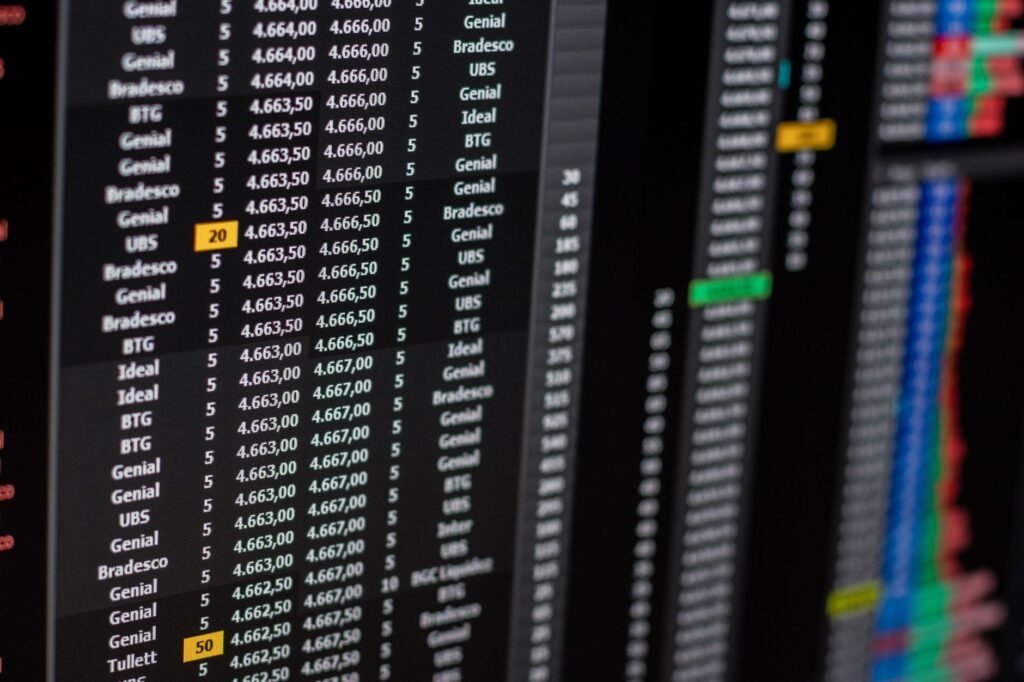

In the rapidly evolving financial landscape of 2026, understanding the mechanisms that drive market activity is crucial. One such mechanism, algorithmic trading, has reshaped how financial instruments are bought and sold. This article will define algorithmic trading and explain how artificial intelligence (AI) technologies are profoundly enhancing and optimizing these strategies in today’s sophisticated financial markets.
The Foundations of Algorithmic Trading
At its core, algorithmic trading, often referred to as ‘algo trading,’ involves using computer programs to execute trades automatically based on predefined sets of rules. These rules can be simple, like executing an order at a specific price, or highly complex, involving multiple market variables and conditions. The primary advantage lies in execution speed, precision, and the ability to process vast amounts of data far beyond human capabilities.
Historically, algorithmic trading began to gain traction in the late 20th century with the advent of electronic trading platforms. Early algorithms primarily focused on executing large institutional orders with minimal market impact, such as Volume-Weighted Average Price (VWAP) and Time-Weighted Average Price (TWAP) strategies. As computational power grew and market data became more accessible, the complexity of these algorithms expanded significantly.
Key benefits of algorithmic trading include:
- Increased Efficiency: Automating trade execution reduces manual errors and allows for rapid decision-making.
- Reduced Costs: Optimizing trade execution can lead to better prices and lower transaction costs for large orders.
- Systematic Approach: Eliminates emotional biases from trading decisions, relying purely on pre-programmed logic.
- Speed: Trades can be executed in milliseconds, capitalizing on fleeting market opportunities.
Common traditional algorithmic strategies encompass:
- Arbitrage: Exploiting small price discrepancies across different markets or instruments.
- Market Making: Providing liquidity by continuously placing both buy and sell orders.
- Trend Following: Identifying and capitalizing on market trends.
- Statistical Arbitrage: Identifying statistically mispriced relationships between financial instruments.
AI’s Transformative Impact on Algorithmic Trading in 2026
While traditional algorithms operate on explicit, static rules, the financial markets of 2026 are characterized by unprecedented volatility, interconnectedness, and data deluge. This environment demands more adaptive and intelligent systems, which is where Artificial Intelligence (AI) plays a pivotal role. AI technologies empower algorithmic trading strategies to move beyond fixed rules, enabling them to learn, adapt, and optimize in real-time.
Machine Learning for Predictive Analytics
Machine Learning (ML), a subset of AI, has become fundamental to modern algorithmic trading. ML algorithms can analyze colossal datasets—including historical price movements, trading volumes, macroeconomic indicators, and even alternative data sources—to identify intricate patterns and make highly accurate predictions about future market behavior. Unlike traditional statistical models that require explicit programming of relationships, ML models learn these relationships autonomously. This capability allows systems to adapt strategies as market conditions shift, leading to more robust performance in varied environments.
Deep Learning for Complex Strategy Development
Deep Learning (DL), an advanced form of ML utilizing neural networks, excels at recognizing highly complex, non-linear relationships within data that might be invisible to human analysts or simpler ML models. In 2026, DL is increasingly applied to develop sophisticated trading strategies, such as those identifying subtle signals in high-frequency data or optimizing portfolio allocations across thousands of assets simultaneously. Furthermore, generative AI models are being explored to assist in strategy formulation, stress testing, and even creating synthetic market data for more rigorous backtesting, accelerating the development cycle for new trading approaches.
Natural Language Processing (NLP) for Sentiment Analysis
The sheer volume of textual information impacting markets—news articles, corporate reports, social media feeds, and central bank statements—makes manual analysis impossible for real-time trading decisions. Natural Language Processing (NLP), another key AI domain, allows algorithms to process and understand this unstructured text data. By performing sentiment analysis, NLP-driven algorithms can gauge market sentiment towards specific assets or the broader economy instantly. For instance, an algorithm might detect a sudden surge in negative sentiment regarding a particular sector across financial news sources and adjust its trading positions accordingly, often faster than human traders can even read the headlines.
Reinforcement Learning for Optimal Execution
Reinforcement Learning (RL) is perhaps one of the most exciting AI applications in algorithmic trading for 2026. RL involves training agents to make a sequence of decisions in an environment to maximize a cumulative reward. In trading, an RL agent can learn optimal execution strategies by interacting with a simulated market, iteratively discovering the best way to place orders, manage inventory, and minimize market impact under various conditions. This allows for highly dynamic and adaptive execution, where the algorithm continuously refines its approach based on the immediate feedback from its actions in the market.
Market Landscape and Considerations for AI-Driven Algorithmic Trading in 2026
By 2026, AI-driven algorithmic trading has become a dominant force across global financial markets, particularly among institutional players like hedge funds, proprietary trading firms, and large banks. While advanced retail platforms are beginning to offer more sophisticated tools leveraging AI principles, the cutting edge remains largely within well-resourced institutions. This widespread adoption has brought both unprecedented efficiencies and new considerations.
A significant trend in 2026 is the growing focus on explainable AI (XAI). As AI models become more complex and operate as ‘black boxes,’ regulators and firms themselves are increasingly demanding transparency into how these algorithms arrive at their decisions. This is crucial for compliance, risk management, and troubleshooting in highly regulated environments. Developing AI models that can provide clear rationales for their trades is an active area of research and implementation.
The regulatory landscape is also continuously evolving to address the unique challenges posed by AI in trading. Concerns around market stability, potential for ‘flash crashes,’ manipulation, and the fair treatment of all market participants have led regulatory bodies worldwide to scrutinize AI algorithms more closely. While there are no universal prescriptive rules, a common theme is the expectation of robust testing, comprehensive risk frameworks, and clear accountability for AI-driven systems.
Challenges persist for firms leveraging AI:
- Data Quality: AI models are only as good as the data they are trained on. Sourcing clean, comprehensive, and relevant datasets remains a significant hurdle.
- Computational Power: Training and deploying advanced AI models require substantial computational resources, including high-performance computing infrastructure.
- Model Overfitting: A risk where models perform exceptionally well on historical data but fail to generalize to new, unseen market conditions. Rigorous validation techniques are essential to mitigate this.
- Ethical Considerations: Questions surrounding fairness, bias, and the potential for AI to exacerbate existing market inequalities are gaining prominence.
- Talent Gap: The demand for skilled professionals proficient in both finance and AI remains high, creating a competitive environment for talent.
Looking ahead, the synergy between human expertise and AI capabilities is becoming a prevailing model. Instead of fully autonomous AI, many firms adopt hybrid approaches where human strategists oversee, refine, and provide crucial insights that AI systems then leverage for execution and optimization. This collaborative model aims to combine the strengths of both, mitigating the risks of purely automated systems while still harnessing AI’s unparalleled processing power.
Disclaimer: This article is provided for general informational and educational purposes only and does not constitute financial, investment, trading, or legal advice. Gainsium is not a registered investment advisor. Markets are volatile and past performance does not guarantee future results. Readers should conduct their own research and consult a licensed financial advisor before making any investment decisions.