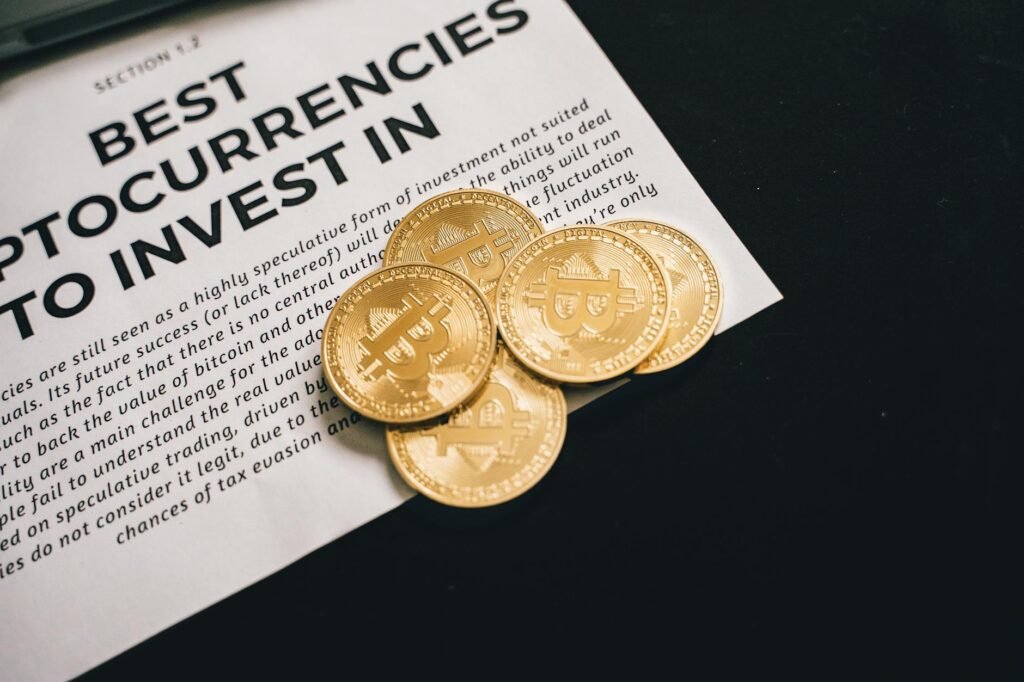

The New Era of Crypto: Navigating the 2026 Market
Welcome to 2026, a year where the cryptocurrency market has transitioned from a speculative frontier into a highly sophisticated, institutionally-backed financial ecosystem. Following the maturity of spot ETFs and the implementation of comprehensive global regulations like Europe’s MiCA, the “wild west” era of digital assets is officially behind us. Today, building wealth through crypto requires a strategic approach focused on real-world utility, protocol revenue, and sustainable ecosystem growth.
For Gainsium readers, the current market landscape presents unprecedented opportunities. The post-2024 halving cycles have consolidated, and we are seeing a stark divergence between projects with genuine product-market fit and those built on mere speculation. To help you position your portfolio for maximum growth this year, we have analyzed the market to bring you the top 10 cryptocurrencies to watch in 2026, alongside actionable asset allocation strategies.
The Anchors: Blue-Chip Powerhouses
1. Bitcoin (BTC) – The Sovereign Reserve Asset
In 2026, Bitcoin (BTC) remains the undisputed king of digital assets. No longer just a speculative instrument, BTC has cemented its status as a sovereign reserve asset and a staple in corporate treasuries globally. With institutional inflows via spot ETFs reaching stable, predictable patterns, Bitcoin acts as the ultimate macro hedge and the foundational anchor for any serious crypto portfolio.
2. Ethereum (ETH) – The Global Settlement Layer
While layer-2 networks handle the bulk of consumer transactions, Ethereum (ETH) remains the highly profitable settlement engine beneath them. Ethereum’s ultrasound money mechanics continue to burn ETH during high-activity periods, making it highly deflationary. As institutional staking derivatives yield competitive risk-adjusted returns, ETH is the premier yield-bearing asset of the decentralized web in 2026.
The Contenders: Top Altcoins Defining 2026
Beyond the top two, the altcoin market has bifurcated. The winners of 2026 are those driving massive transactional volume or solving critical infrastructure bottlenecks.
3. Solana (SOL) – The Consumer Activity Hub
Solana (SOL) has solidified its position as the primary layer-1 blockchain for retail users, decentralized finance (DeFi), and payments. Thanks to its ultra-low fees and sub-second finality, Solana hosts the vast majority of consumer-facing decentralized applications (dApps) and stablecoin volumes, challenging Ethereum’s historical dominance in active user metrics.
4. Near Protocol (NEAR) – The AI and Web3 Intersection
As artificial intelligence dominates the technology sector in 2026, Near Protocol (NEAR) has emerged as the leading blockchain for decentralized AI. With its state-of-the-art sharding technology and focus on user-owned AI models, NEAR provides the computational and data integrity layers required for secure, decentralized machine learning applications.
5. Render Network (RENDER) – Decentralized GPU Computing
Representing the red-hot Decentralized Physical Infrastructure Networks (DePIN) sector, Render (RENDER) connects node operators with developers needing massive GPU compute power for AI training, rendering, and spatial computing. Render’s marketplace model is highly profitable, capturing significant real-world demand in 2026.
6. Chainlink (LINK) – The Universal Interoperability Standard
No blockchain can operate in isolation, and Chainlink (LINK) remains the industry’s essential oracle network. With the widespread adoption of its Cross-Chain Interoperability Protocol (CCIP), Chainlink acts as the bridge between traditional banking systems (like Swift) and public ledgers, making it irreplaceable for institutional tokenization.
7. Ondo Finance (ONDO) – Real-World Asset (RWA) Pioneer
The tokenization of real-world assets is one of 2026’s most explosive trends. Ondo Finance (ONDO) bridges institutional-grade financial products—such as U.S. Treasuries and money market funds—onto public blockchains. ONDO is a must-watch as yield-hungry investors seek low-risk, on-chain yields.
8. Celestia (TIA) – The Modular Scaling Pioneer
By separating consensus from data availability, Celestia (TIA) has revolutionized how new blockchains are launched. In 2026, hundreds of customizable modular rollups utilize Celestia to dramatically lower their operational costs, securing TIA’s place as a critical infrastructure token.
9. Toncoin (TON) – Mass-Market Consumer Adoption
Leveraging its native integration with Telegram’s 900+ million monthly users, Toncoin (TON) has quietly onboarded more retail users into Web3 than almost any other ecosystem. From micro-payments to Web3 gaming, TON is the gateway for mainstream crypto adoption in 2026.
10. Jupiter (JUP) – The Liquidity Aggregator of Choice
As Solana’s premier decentralized exchange (DEX) aggregator, Jupiter (JUP) routing algorithms handle billions of dollars in daily trading volume. With its expanding suite of perpetual swaps, launchpads, and yield products, JUP has evolved from a simple aggregator into a full-scale decentralized investment bank.
Key Macro Trends Shaping the 2026 Crypto Market
To invest successfully in 2026, you must align your capital with the dominant secular trends driving the industry forward:
- The Confluence of AI and Crypto: Projects that leverage blockchain decentralization to democratize access to AI compute, data labeling, and cryptographic verification are seeing the fastest capital inflows.
- Institutional RWA Tokenization: BlackRock, Franklin Templeton, and other asset management giants are tokenizing trillions of dollars in traditional assets, funneling liquidity into protocols like Chainlink and Ondo.
- Layer-2 Maturity: The focus has shifted from high gas fees on base layers to seamless, gas-abstracted user experiences built on top of modular rollup stacks.
2026 Portfolio Allocation & Risk Management
A successful crypto investment strategy in 2026 is built on disciplined risk management rather than chasing overnight riches. Below is our recommended asset allocation blueprint for balanced wealth accumulation in the current market environment:
- Conservative/Wealth Preservation (50% – 60%): Allocate the bulk of your capital to Bitcoin (BTC) and Ethereum (ETH). These are your foundational assets designed to capture systemic market growth while preserving capital during drawdowns.
- Growth & Infrastructure (30% – 40%): Invest in high-utility layer-1s and essential middleware like Solana (SOL), Chainlink (LINK), and Celestia (TIA). These protocols possess proven cash flows and developer traction.
- Speculative/High-Alpha (10%): Allocate a small portion of your portfolio to emerging narratives such as DePIN (RENDER), AI (NEAR), or tokenized assets (ONDO). These carry higher volatility but offer asymmetric upside potential.
Actionable Risk Mitigation Steps for 2026:
- Implement Dollar-Cost Averaging (DCA): Do not attempt to time market tops or bottoms. Establish automated weekly or monthly purchases of your core holdings to smooth out volatility.
- Secure Your Assets: With institutional-grade phishing and smart contract exploits still present, use cold-storage hardware wallets for your long-term holds and interact with DeFi protocols using dedicated hot wallets.
- Take Profits Systematically: Determine your exit targets before entering any trade. Implement trailing stop-losses or convert portions of your speculative gains into stablecoins or BTC/ETH during parabolic run-ups.
Closing Thoughts: The Path to Wealth in 2026
The 2026 cryptocurrency market offers a highly lucrative environment for investors who approach it with a business mindset. By focusing on projects with robust technological fundamentals, strong communities, and real-world revenue streams, you can build a resilient portfolio primed for long-term compounding. Stay disciplined, keep learning, and let the fundamentals guide your path to financial freedom.