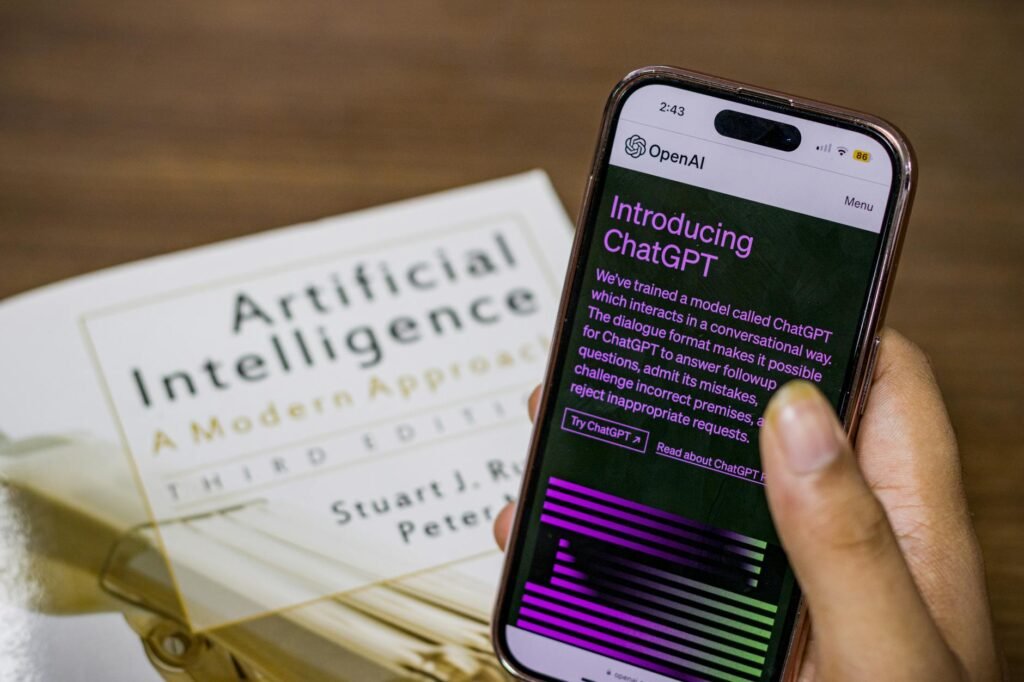

Welcome to 2026, where the investment landscape is undergoing its most profound transformation in decades, thanks to artificial intelligence. What was once the domain of elite quantitative analysts is now becoming accessible to every investor. ChatGPT, a trailblazer in general-purpose AI, has evolved significantly, and alongside a new generation of specialized AI tools, it’s fundamentally reshaping how we approach market research, stock analysis, and investment decision-making. This isn’t just about faster data crunching; it’s about gaining unprecedented insights, identifying opportunities, and making more informed choices in a world brimming with data.
The AI Evolution in Investing: A 2026 Perspective
The year 2026 marks a pivotal moment for AI in finance. General-purpose Large Language Models (LLMs) like ChatGPT-5 (or similar iterations) are now far more sophisticated, boasting enhanced reasoning capabilities, better real-time data access, and a deeper understanding of financial contexts. Beyond these versatile assistants, specialized financial AI platforms have matured significantly. We’re seeing widespread adoption of AI not just for automating tasks, but for generating strategic insights, predicting market movements, and even personalizing investment advice. According to a recent Gainsium survey, over 60% of retail investors plan to integrate AI tools into their investment process by the end of 2026, up from less than 20% just two years prior.
- Enhanced Accuracy: AI models are better at filtering noise and identifying genuine signals amidst market chatter.
- Real-time Insights: The ability to process and analyze vast streams of live data, including news, social media, and economic indicators, has become standard.
- Accessibility: Complex analytical tools are now more user-friendly, democratizing advanced research that was once exclusive.
ChatGPT as Your Market Research Co-Pilot
While specialized tools handle the heavy lifting of quantitative analysis, ChatGPT remains an invaluable co-pilot for qualitative and preliminary market research. Its strength lies in synthesizing vast amounts of unstructured data and generating actionable summaries.
Data Synthesis & Trend Identification
Imagine sifting through hundreds of analyst reports, news articles, and company filings. ChatGPT can do this in minutes. By prompting it effectively, you can get concise summaries and identify overarching trends.
- Prompt Example: “Summarize the key growth drivers and competitive landscape described in the last 10 quarterly reports for ‘Acme Corp’ (ticker: ACME). Also, identify any emerging technological trends mentioned that could impact their industry by 2028.”
- Benefit: Quickly grasp the essence of a company’s strategic direction, potential future headwinds/tailwinds, and industry shifts without hours of manual reading.
Sentiment Analysis & News Monitoring
Staying on top of market sentiment is crucial. ChatGPT, especially when integrated with real-time news feeds via plugins or API access, can provide a quick pulse check on a company or industry.
- Prompt Example: “Analyze the sentiment towards the ‘renewable energy sector’ based on news articles from the last 24 hours. Highlight any major positive or negative developments and potential market reactions.”
- Benefit: Get a rapid assessment of public and media perception, helping you understand potential short-term price movements or shifts in investor confidence. Always cross-reference with traditional news sources for accuracy and context.
Ideation & Hypothesis Generation
Stuck for investment ideas? ChatGPT can be a powerful brainstorming partner. It can help you explore niche markets, identify overlooked companies, or stress-test your initial investment hypotheses.
- Prompt Example: “Suggest 5 publicly traded companies in the sustainable agriculture technology space with market caps under $5 billion, strong growth potential, and relatively low debt. Provide brief reasons for each suggestion.”
- Benefit: Generate diverse ideas you might not have considered, serving as an excellent starting point for deeper due diligence.
Beyond ChatGPT: Advanced AI Tools for Deeper Analysis
While ChatGPT excels at synthesis and ideation, serious investors in 2026 are leveraging a suite of specialized AI tools for more granular, quantitative analysis. These platforms often combine LLM capabilities with proprietary financial databases and machine learning algorithms.
Quantitative Stock Analysis & Predictive Modeling
Dedicated AI platforms now offer advanced screening capabilities, predictive analytics, and algorithmic trading insights. Tools like ‘AlphaSense AI’ or ‘TrendFinder Pro’ (hypothetical names representing real trends) can analyze historical stock performance, economic indicators, technical patterns, and even alternative data (e.g., satellite imagery for retail traffic, supply chain sensor data) to forecast future trends with greater precision.
- Use Case: Identifying stocks with specific fundamental characteristics that historically outperform, predicting earnings beats/misses, or uncovering early signs of disruptive innovation.
Risk Assessment & Portfolio Optimization
AI-driven portfolio management tools can help optimize asset allocation, model various market scenarios (e.g., inflation shocks, recession probabilities), and identify potential risks that human analysts might miss due to cognitive biases. They can dynamically adjust recommendations based on market volatility, macroeconomic forecasts, and your personal risk tolerance and financial goals.
- Prediction 2026: We expect to see a surge in AI-powered personal financial advisors, offering highly customized and proactive portfolio adjustments, becoming a standard feature for digitally native investors.
Due Diligence & Report Generation
Advanced AI can digest complex legal documents, regulatory filings (like 10-K, 10-Q), patent databases, and even ESG reports to flag potential issues or opportunities. Some platforms can even draft preliminary investment memos, summarizing key findings and flagging critical data points for human review, significantly speeding up the due diligence process.
Practical Steps: Integrating AI into Your Investment Workflow
To effectively harness AI for your investment strategy, consider these actionable steps:
- Define Your Research Goal: Before prompting, know exactly what information you need. Specificity and clear parameters yield better AI responses.
- Choose the Right Tool: Use ChatGPT for qualitative synthesis, brainstorming, and initial sentiment checks. Deploy specialized financial AI for quantitative analysis, risk modeling, and deep dives into specific datasets.
- Verify, Verify, Verify: AI is powerful but not infallible. Always cross-reference AI-generated insights with traditional sources, audited financial statements, and expert opinions. Hallucinations (AI making up facts or fabricating data) are less common in 2026 but still possible, especially with less common data.
- Iterate Your Prompts: Don’t settle for the first AI response. Refine your prompts, ask follow-up questions, and provide additional context or constraints to get the most valuable output.
- Stay Updated: The AI landscape evolves rapidly. Regularly explore new tools, features, and prompting techniques to stay ahead and maximize your competitive advantage.
The Human Element: AI’s Limitations and Ethical Considerations
Despite its incredible capabilities, AI is a tool, not a crystal ball. Its insights are only as good as the data it’s trained on, and biases can inadvertently creep in. Regulatory bodies worldwide are actively discussing AI ethics in finance, particularly concerning transparency, accountability, and the prevention of market manipulation.
Key Limitations:
- Lack of Nuance: AI struggles with truly subjective human factors, geopolitical ‘black swans’, or highly nuanced contextual understanding that only a human can infer.
- Data Quality: ‘Garbage in, garbage out’ still applies. If the training data is flawed, incomplete, or outdated, AI output will suffer.
- No Intuition: AI lacks human intuition, creativity, and the ability to empathize with market psychology in unpredictable ways. It operates on patterns, not foresight.
Therefore, your role as the investor remains paramount. AI augments your capabilities; it doesn’t replace your critical thinking, risk assessment, or ultimate decision-making responsibility. Use it to enhance your judgment, not replace it.
Conclusion
The convergence of advanced AI, including accessible tools like ChatGPT and sophisticated specialized platforms, is fundamentally democratizing and enhancing market research for investors in 2026. By strategically integrating these technologies, you can gain a significant edge – identifying trends faster, analyzing data more efficiently, and formulating more robust investment theses. Remember, AI is a powerful assistant, not an autonomous decision-maker. Combine its analytical prowess with your human judgment and critical thinking, and you’ll be well-positioned to navigate the complex markets of tomorrow and beyond.



I’ve come across many blogs, but this one truly stands out in terms of quality and authenticity Keep up the amazing work!