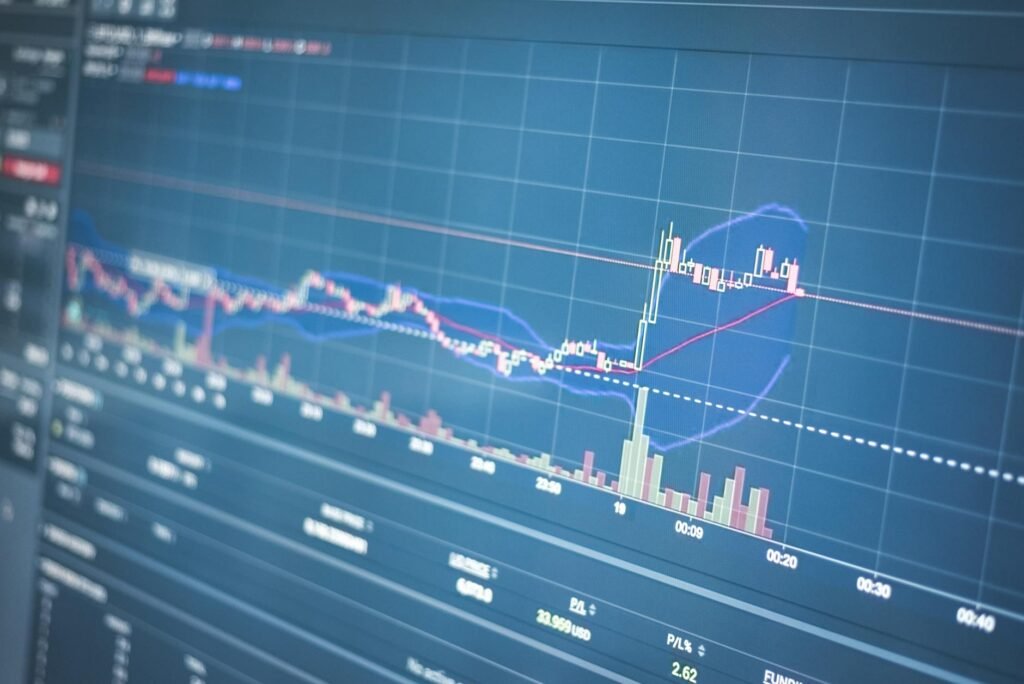

Welcome to 2026, a year where the financial landscape has fundamentally shifted. The speculative bubbles of the early 2020s have deflated, interest rates have normalized at a sustainable plateau, and artificial intelligence has transitioned from a hyped concept into a core driver of corporate earnings. For today’s investor, building wealth in the stock market is no longer about chasing viral trends; it is about strategic asset allocation, rigorous analysis, and long-term discipline. Whether you are starting your investing journey or optimizing an existing portfolio, this guide will provide you with the blueprint to navigate the stock market in 2026 and beyond.
1. Fundamental Analysis: Spotting Real Value in 2026
In 2026, the market rewards companies with robust balance sheets and tangible cash flows. The era of “growth at all costs” has been replaced by a focus on sustainable profitability. To identify high-quality stocks, your fundamental analysis should focus on three critical pillars:
Earnings Quality and AI Integration
It is no longer enough for a company to simply mention “AI” in its earnings calls. Investors must look for tangible productivity gains and revenue growth driven by technological integration. Analyze operating margins: are they expanding because of automated workflows and AI-driven efficiencies? Companies that successfully monetize technology to lower their operational expenses are prime candidates for long-term growth.
Debt and Cash Flow Metrics
With global interest rates settled at a higher baseline than the previous decade, capital is no longer cheap. Focus on companies with low debt-to-equity ratios and high Free Cash Flow (FCF) yield. A strong cash position allows companies to self-fund their expansion, pay dividends, and survive economic downturns without relying on expensive debt issuance.
2. Technical Analysis: Navigating High-Frequency Markets
While fundamental analysis tells you what to buy, technical analysis tells you when to buy. In 2026, algorithmic trading dominates market volume, making technical levels cleaner and more predictable than ever. Incorporating basic technical indicators can significantly improve your entry and exit points.
Key Indicators for 2026 Investors
- Moving Averages (50-day and 200-day EMA): These remain the gold standard for trend identification. In 2026, look for “golden crosses” on weekly charts to identify major macro shifts.
- Relative Strength Index (RSI): Use the weekly RSI to identify historically overbought (above 70) or oversold (below 30) conditions, helping you avoid buying at local peaks.
- Volume-Weighted Average Price (VWAP): Essential for intraday and swing traders to determine whether they are getting a fair price relative to institutional volume.
By combining technical analysis with fundamental research, you prevent the common mistake of buying a fundamentally great company during a severe technical downtrend.
3. Portfolio Diversification Reimagined
The traditional 60/40 portfolio has evolved. In 2026, true diversification requires a global, multi-asset approach to shield your wealth from localized geopolitical tensions and sector-specific downturns.
The Modern Asset Allocation Mix
A resilient 2026 portfolio should balance defensive stability with high-growth potential. Consider the following strategic allocation:
- Core Equities (50-60%): Blue-chip, dividend-paying companies in sectors like healthcare, defense, and enterprise software.
- Thematic Growth (15-20%): Targeted ETFs focusing on secular trends like automation, biotechnology, and the transition to smart grids.
- International Exposure (15%): Emerging markets that are benefiting from supply chain diversification away from traditional manufacturing hubs.
- Defensive/Cash Alternatives (10%): Short-term government bonds and high-yield cash instruments yielding reliable income in the current interest rate environment.
4. Long-Term Wealth Building Strategies
Building wealth in the stock market is a marathon, not a sprint. The most successful investors in 2026 rely on automated systems and psychological discipline to compound their capital over decades.
Implement Systematic Dollar-Cost Averaging (DCA)
Trying to time the market perfectly is a losing game. By automating your investments—setting a fixed amount of money to buy your favorite index funds or stocks every week or month—you remove emotion from the equation. When prices are low, your fixed dollar amount buys more shares; when prices are high, it buys fewer. Over time, this lowers your average cost basis and yields superior risk-adjusted returns.
The Power of Dividend Reinvestment (DRIP)
Never underestimate the compounding power of dividends. By enabling a Dividend Reinvestment Plan (DRIP) with your broker, your dividends are automatically used to buy fractional shares of the issuing company. This creates a powerful compounding flywheel, exponentially increasing your share count and future payouts without requiring fresh capital inputs.
Actionable Steps to Start Today
- Define Your Risk Tolerance: Assess your financial timeline. If you need your capital within the next three years, favor capital preservation over volatile growth stocks.
- Audit Your Current Portfolio: Eliminate low-quality, unprofitable speculative stocks that struggle in a higher-interest-rate environment.
- Set Up Automation: Automate your monthly transfers to your brokerage account to ensure consistent wealth building.
- Review Quarterly, Not Daily: Keep your emotions in check by limiting portfolio check-ins to scheduled quarterly reviews.
Conclusion
Investing in the 2026 stock market requires a return to classic principles: understanding company fundamentals, utilizing technical trends, diversifying across global sectors, and committing to a long-term vision. By blocking out short-term market noise and focusing on consistent, structured wealth-building strategies, you can secure your financial future and build lasting wealth. Start optimizing your portfolio today, and let the power of compounding do the heavy lifting for you.