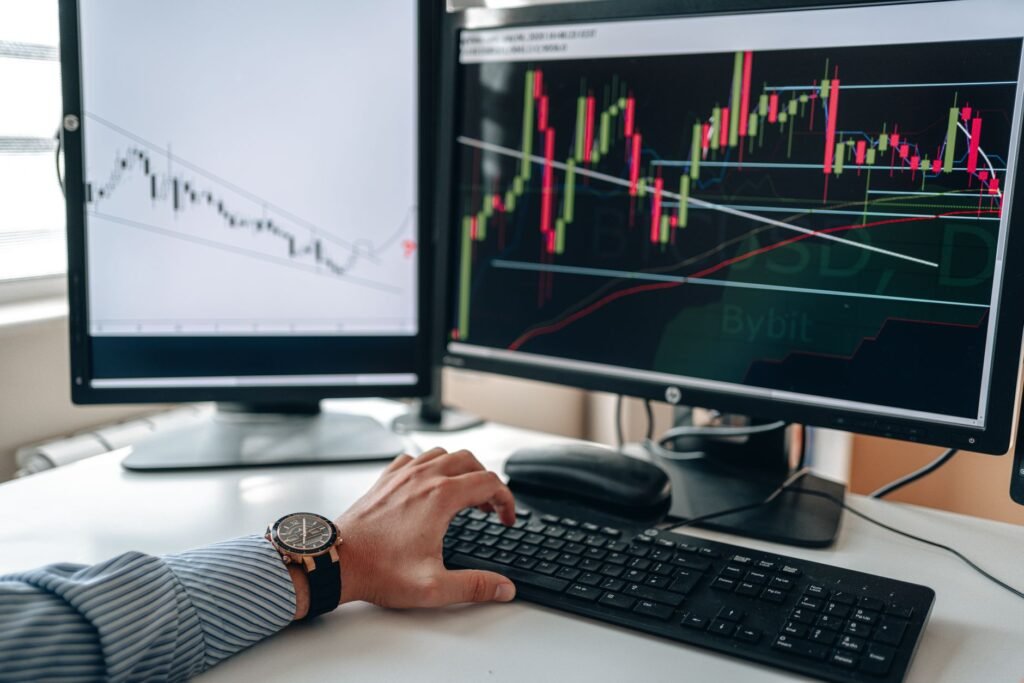

In 2026, financial markets are awash in information from news, social media, and economic data. For traders, making informed decisions quickly is paramount. This article explores how artificial intelligence (AI) has become an indispensable tool for market sentiment analysis, enabling traders to distill actionable insights from this vast data ocean and leverage them in their decision-making.
The Evolution of Market Analysis: From Gut Feel to AI Algorithms
Historically, market analysis relied on fundamental data, technical patterns, and human intuition. However, the sheer volume and velocity of digital information today challenge purely human analysis. The internet brought information overload, making it hard to identify relevant signals. By 2026, with AI widely adopted, financial markets use AI systems to process and interpret data at unparalleled scale and speed, transforming sentiment understanding for traders.
Dissecting AI-Powered Sentiment Analysis in 2026
What is Market Sentiment?
Market sentiment refers to the overall attitude of investors towards an asset, market, or economy – whether bullish, bearish, or neutral. This collective mood can powerfully drive short-term price movements, sometimes overriding fundamental valuations. Understanding this can provide valuable context for trading decisions.
The AI Engine: Data Ingestion and Processing
AI-powered sentiment analysis hinges on ingesting and processing massive amounts of unstructured data. In 2026, key sources include:
- News Articles: Global financial news, business publications, wire services.
- Social Media: Platforms like X, Reddit, specialized forums reflecting real-time reactions and narratives.
- Earnings Call Transcripts: Insights into management’s outlook and analyst concerns.
- Analyst Reports: Expert opinions and forecasts from financial institutions.
- Regulatory Filings: Official documents revealing shifts in corporate sentiment or risk.
Natural Language Processing (NLP) techniques, a subfield of AI, analyze text for sentiment by identifying keywords, phrases, and context. Advanced machine learning (ML) models are trained on vast datasets to recognize nuances, sarcasm, and financial jargon, moving beyond simple keyword counts. This enables sophisticated tasks like named entity recognition and relationship extraction. AI systems process millions of data points in real-time, offering an instantaneous pulse of market sentiment, often preceding traditional price movements.
Beyond Simple Positive/Negative: Nuance and Context
Modern AI sentiment analysis in 2026 offers advanced capabilities beyond binary classification:
- Granular Sentiment Scores: Numerical scores (e.g., -1 to +1) indicating sentiment intensity.
- Topic-Specific Sentiment: Analyzing sentiment for specific products, divisions, or strategic initiatives, providing targeted insights.
- Emotion Detection: Some models identify underlying emotions (fear, joy, anger), potentially predictive of market volatility.
- Anomaly Detection: Flagging sudden, unusual shifts in sentiment that may indicate breaking news, manipulation, or impending market events.
These nuances provide a comprehensive picture of market psychology, allowing more precise signal interpretation.
Leveraging AI Sentiment Insights for Trading Decisions
Identifying Emerging Trends and Shifts
AI can detect subtle shifts in market discourse that precede significant price movements. A consistent increase in positive social media chatter around a sector might signal growing investor interest before mainstream news. Conversely, a sudden surge in negative sentiment for a favored stock could warn of downward pressure. Traders use these insights as a leading indicator for anticipating demand/supply shifts, useful in fast-moving markets for early entry/exit points.
Confirmation and Risk Management
Sentiment analysis confirms signals from other methods. If fundamental and technical analysis suggest a positive outlook, strong AI-driven sentiment provides added conviction. Conversely, negative sentiment despite positive fundamentals might signal unaddressed concerns, prompting caution. For risk management, real-time sentiment can identify market overreactions. A sharp drop might indicate panic selling, potentially creating short-term opportunities or signaling a need to reduce exposure if justified.
Algorithmic Trading and Automated Strategies
Institutional traders integrate AI sentiment into algorithmic strategies, automatically adjusting positions or modifying risk based on sentiment thresholds. While once exclusive, 2026 sees more retail platforms and APIs offering AI sentiment data, allowing individual traders to build or subscribe to services incorporating these insights.
Practical Considerations for Traders in 2026
Choosing the Right Tools
Traders should evaluate AI sentiment platforms based on:
- Data Sources: Breadth and relevance of news, social media, and financial data.
- Accuracy and Nuance: Sophistication of NLP/ML models in understanding context, sarcasm, and financial jargon.
- Customization: Ability to tailor to specific sectors, assets, or strategies.
- Integration: Compatibility with existing trading platforms.
- Real-time Capabilities: Minimal latency in analysis delivery.
Many brokerage platforms offer integrated sentiment indicators, while third-party providers offer deeper analysis. It’s crucial to test and validate any tool.
Integrating Sentiment into a Broader Strategy
AI sentiment analysis should not be the sole basis for decisions. It’s most effective as a component of a comprehensive strategy also considering:
- Fundamental Analysis: Understanding intrinsic asset value.
- Technical Analysis: Identifying price trends, support, and resistance.
- Macroeconomic Factors: Global economic conditions, interest rates, inflation, and geopolitical events.
Sentiment provides context and timing, but fundamental and technical factors often dictate long-term trajectories. A temporary sentiment-driven surge might reverse if not backed by fundamentals.
Understanding Limitations
Even in 2026, AI sentiment analysis has limitations:
- Bias in Training Data: Models reflect biases in historical data, potentially leading to skewed interpretations.
- Noise and Manipulation: Social media can contain irrelevant “noise” or deliberate manipulation, though AI improves at filtering this.
- Lag for Certain Events: Highly unexpected events might break faster than AI models can fully process and disseminate sentiment shifts, especially without sufficient historical linguistic parallels.
Traders should approach AI sentiment tools critically, understanding they are aids, not infallible crystal balls. Continuous learning and adaptation remain essential.
Conclusion
In 2026, AI-powered market sentiment analysis is a transformative force in trading. Harnessing NLP and machine learning, AI tools process vast unstructured data, providing real-time insights into market mood. While not a standalone solution, integrating these insights with traditional fundamental and technical analysis can significantly enhance decision-making, offering an edge in identifying trends, confirming strategies, and managing risk in an increasingly data-driven financial landscape.
Disclaimer: This article is provided for general informational and educational purposes only and does not constitute financial, investment, trading, or legal advice. Gainsium is not a registered investment advisor. Markets are volatile and past performance does not guarantee future results. Readers should conduct their own research and consult a licensed financial advisor before making any investment decisions.