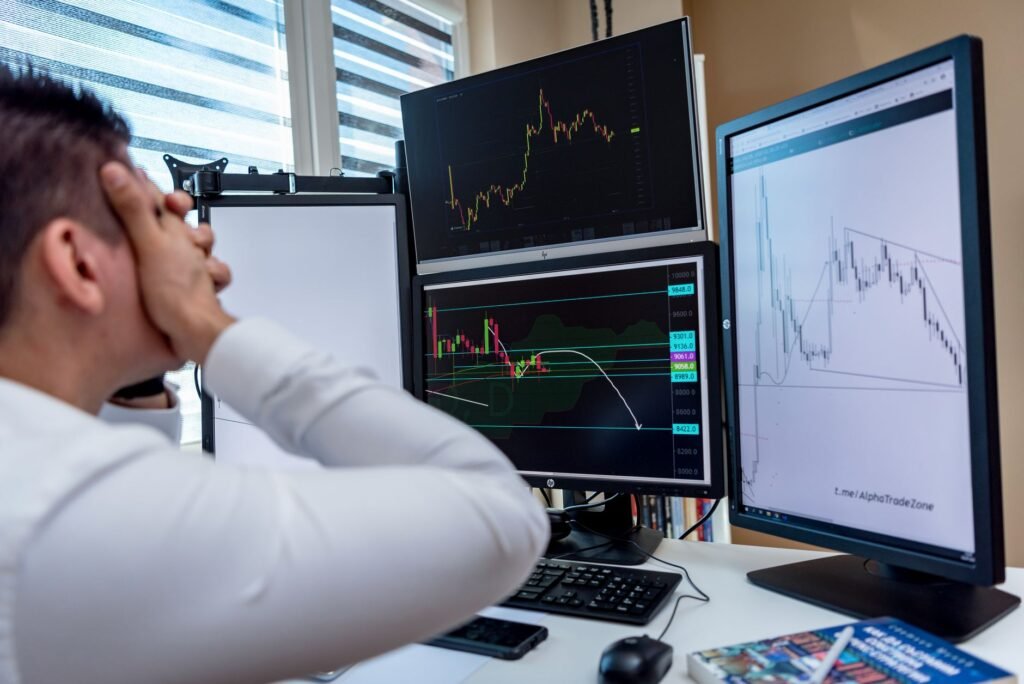

For individuals looking to actively participate in financial markets, day trading and swing trading represent two popular yet distinct approaches. Understanding the core differences between day trading and swing trading is crucial for determining which strategy aligns best with an individual’s available time, financial goals, and comfort level with market volatility. This article will explore these two active trading methodologies, outlining their operational differences, unique demands, and potential implications for traders in the current market environment of 2026.
Day Trading Explained
Day trading involves the practice of executing multiple trades within a single trading day, with all positions closed before the market closes. The primary goal is to capitalize on small price movements in highly liquid assets, such as stocks, currencies, or commodities, often leveraging significant capital. This approach requires constant vigilance and quick decision-making, as traders aim to profit from short-term volatility rather than long-term trends.
What is Day Trading?
At its heart, day trading is an intraday strategy, meaning all trades are opened and closed within the same market session. Traders typically do not hold positions overnight, thereby avoiding the risk of overnight price gaps that can occur due to news released after market hours. In 2026, the proliferation of advanced trading platforms and high-speed internet continues to facilitate rapid execution, making day trading more accessible to a wider range of participants, though it remains a demanding discipline.
Time Commitment & Intensity
Day trading demands a full-time commitment, often requiring traders to be at their screens for the majority of the market day. The rapid pace of market movements, especially in highly volatile assets, necessitates continuous monitoring. This intensive schedule means that day traders often treat trading as their primary occupation, dedicating hours to market analysis, trade execution, and risk management during active trading hours.
Market Focus & Tools
Day traders predominantly rely on technical analysis, using charts, indicators, and price action to identify entry and exit points. They often focus on assets with high liquidity and volatility to ensure trades can be entered and exited quickly without significant price impact. Common tools include real-time data feeds, advanced charting software, and direct market access (DMA) to minimize latency. The emphasis is on identifying patterns and reacting swiftly to intraday market shifts, often disregarding fundamental news that might impact longer-term positions.
Risk Profile & Potential
The risk profile for day trading is generally considered high. The use of leverage, common in day trading to amplify potential gains from small price movements, also magnifies potential losses. Emotional discipline is paramount, as quick decisions under pressure can lead to significant financial consequences. While the potential for substantial daily gains exists, day trading also carries a high probability of significant losses for inexperienced or undisciplined traders. Income potential varies widely based on experience, market conditions, and time invested, and consistent profitability is challenging to achieve.
Swing Trading Explained
Swing trading involves holding positions for a duration longer than a single day but typically shorter than long-term investing—usually for a few days to several weeks. The objective of swing trading is to capture gains from “swings” in price within a broader trend, or from market reversals. This approach offers a more relaxed pace compared to day trading while still actively seeking to profit from market movements.
What is Swing Trading?
Swing traders aim to identify assets that are poised for a significant price movement in one direction. Unlike day traders, they are willing to hold positions overnight and sometimes over weekends, accepting the associated overnight gap risk. Their analysis often involves looking at daily or weekly charts to identify trends, support, and resistance levels. The strategy is designed to capitalize on medium-term price trends, which can last from a few days up to a couple of months.
Time Commitment & Flexibility
Compared to day trading, swing trading requires a more moderate time commitment. Traders typically spend a few hours each day or week analyzing charts and setting up trades, rather than monitoring markets continuously. This flexibility makes swing trading appealing to individuals who cannot dedicate full-time attention to the markets, such as those with existing employment or other commitments. However, periodic checks on positions and news events remain important.
Market Focus & Strategy
Swing traders often employ a combination of technical and fundamental analysis. While technical indicators are crucial for identifying entry and exit points, a swing trader might also consider fundamental factors that could influence an asset over a few weeks, such as upcoming earnings reports, economic data releases, or industry-specific news. They often look for assets that are breaking out of consolidation patterns or showing strong momentum in a particular direction. The focus is on capturing the larger moves within trends, rather than the minor intraday fluctuations.
Risk Profile & Potential
Swing trading generally carries a moderate to high risk profile. While it avoids the extreme leverage and rapid-fire decisions of day trading, it introduces overnight and weekend risk. Unexpected news or events outside market hours can lead to significant price gaps against a swing trader’s position. Proper risk management, including setting stop-loss orders and managing position sizes, is critical. The potential for returns can be substantial if trends are correctly identified, but losses can also accumulate if trades go against expectations. As with any active trading, income potential is variable and success is not guaranteed.
Key Differences & Considerations
Choosing between day trading and swing trading involves weighing several crucial factors that differentiate these strategies.
Time Horizon & Trade Frequency
- Day Trading: Trades are typically held for minutes or hours, never overnight. This results in a very high trade frequency, potentially dozens or even hundreds of trades per day.
- Swing Trading: Positions are held for days or weeks. Trade frequency is much lower, often only a few trades per week or month.
Capital Requirements & Fees
Day trading often requires a significant amount of capital, especially for equities in the United States, where the Pattern Day Trader (PDT) rule requires a minimum of $25,000 in an account. Due to the high frequency of trades, transaction fees and commissions, while often low per trade in 2026 due to competitive brokerage offerings, can accumulate quickly. Swing trading typically does not fall under the PDT rule and involves fewer trades, thus incurring fewer aggregate transaction costs, although individual trade sizes might be larger.
Psychological Demands
Both approaches are psychologically demanding, but in different ways. Day trading requires intense focus, rapid decision-making, and emotional resilience to handle frequent small losses and quick profit-taking. Swing trading demands patience to let trades play out, the ability to tolerate overnight risk, and the discipline to adhere to a trading plan even when markets are moving against a temporary position. The constant exposure to market noise can be more taxing for day traders, while the uncertainty of overnight moves can be a source of stress for swing traders.
Which Approach Suits You?
The optimal trading approach largely depends on an individual’s personal circumstances, temperament, and financial objectives.
Assess Your Schedule
If you have a demanding job or cannot dedicate several hours each day to monitoring markets, swing trading might be a more suitable option. Its more flexible schedule allows for analysis and trade management outside of peak market hours. Conversely, if you have the freedom and desire to treat trading as a full-time endeavor, day trading offers the intensity and rapid action that some find appealing.
Evaluate Your Risk Tolerance
Consider your comfort level with risk. Day trading, with its high leverage and rapid movements, often entails a higher degree of immediate risk. If you are comfortable with such rapid fluctuations and the potential for magnified gains and losses, day trading could align with your risk appetite. If you prefer to capture larger, slower moves and are willing to accept overnight risks for potentially larger per-trade profits, swing trading might be more appropriate. In 2026, market volatility, influenced by global economic shifts and technological advancements, underscores the importance of a clear risk management strategy for both.
Consider Your Capital
Your available capital can also be a deciding factor. If you meet the PDT rule minimums and are prepared for the higher transaction costs, day trading is an option. For those with less capital or who prefer to minimize cumulative fees, swing trading often presents a more accessible entry point without specific daily trading limits.
Ultimately, both day trading and swing trading require significant dedication to learning, disciplined execution, and robust risk management. It is advisable to thoroughly research, practice with simulated accounts, and start with small capital to gain experience before committing substantial funds to either strategy. The choice hinges on a deep understanding of your own working style, financial capacity, and psychological makeup.
Disclaimer: This article is provided for general informational and educational purposes only and does not constitute financial, investment, trading, or legal advice. Gainsium is not a registered investment advisor. Markets are volatile and past performance does not guarantee future results. Readers should conduct their own research and consult a licensed financial advisor before making any investment decisions.