
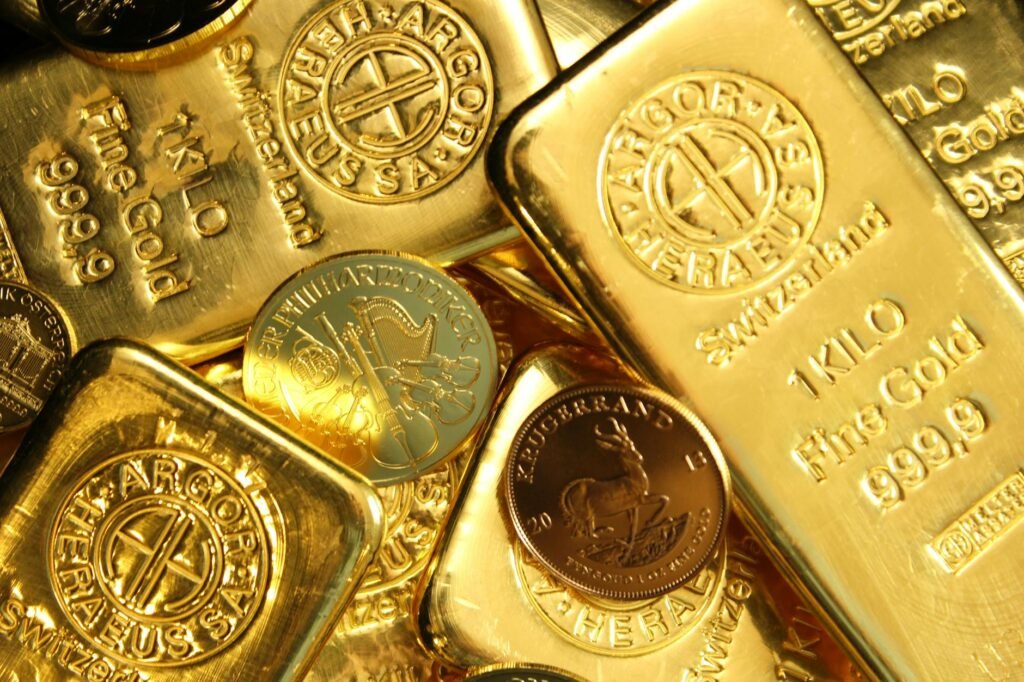

Welcome to 2026. While the global economy continues to navigate a complex landscape, one persistent challenge remains at the forefront for investors: inflation. After a period of elevated price increases in the early 2020s, the battle against inflation is far from over. Supply chain reconfigurations, evolving geopolitical dynamics, and shifts in monetary policy all contribute to an environment where preserving purchasing power is paramount. In these uncertain times, one ancient asset consistently shines as a beacon of stability and a formidable hedge against rising prices: gold.
At Gainsium, we believe in empowering our readers with knowledge to make informed financial decisions. This article will delve into why gold is not just a historical curiosity but a strategically vital asset for your portfolio in 2026, offering unparalleled protection against inflation.
The Enduring Allure of Gold as an Inflation Hedge
To understand why gold is such an effective hedge against inflation, we must first grasp the core mechanism of inflation itself. Inflation is the rate at which the general level of prices for goods and services is rising, and consequently, the purchasing power of currency is falling. When central banks expand the money supply or when demand outstrips supply, fiat currencies (like the US dollar, Euro, or Yen) tend to lose value.
Gold, however, operates differently. It is a tangible, universally recognized store of value with a finite supply. Unlike fiat money, which can be printed at will by governments, gold’s supply increases at a relatively stable, slow pace through mining. This scarcity is a fundamental pillar of its value. When the purchasing power of fiat currencies erodes due to inflation, investors flock to assets that retain their intrinsic value, and gold historically fits this bill perfectly.
Historical Context: Gold’s Proven Track Record
History offers compelling evidence of gold’s role as an inflation hedge. During the inflationary decade of the 1970s, for instance, the price of gold surged by over 300% as the US dollar’s purchasing power plummeted. Similarly, in the wake of the 2008 Global Financial Crisis and the subsequent era of quantitative easing, gold prices reached new all-time highs, reflecting concerns over currency debasement. More recently, during the significant inflationary spike experienced in the early 2020s, gold provided a critical buffer for many portfolios, demonstrating its resilience even as other asset classes struggled. Gold thrives when confidence in fiat currencies wanes, making it an indispensable asset during inflationary periods.
Gold’s Historical Resilience and 2026 Outlook
As we navigate 2026, several fundamental factors and technical indicators point towards gold continuing its strong performance as an inflation hedge and a core portfolio asset.
Fundamental Tailwinds for Gold in 2026
- Persistent Global Inflation: While central banks worldwide have worked tirelessly to bring inflation under control, remnants of supply chain vulnerabilities, ongoing geopolitical tensions (e.g., regional conflicts, trade disputes), and robust wage growth continue to exert upward pressure on prices in 2026. This environment makes assets with intrinsic value, like gold, particularly attractive to investors seeking refuge from purchasing power erosion.
- A Softer Dollar Environment: The U.S. Dollar Index (DXY), which measures the dollar’s value against a basket of major currencies, is projected to face headwinds in 2026. A combination of other major economies seeing stronger growth, potential shifts in global reserve allocations, and a peaking interest rate cycle in the US could lead to a depreciating dollar. Historically, a weaker dollar makes gold cheaper for international buyers, driving up demand and consequently, its price.
- Unprecedented Central Bank Demand: Central banks globally have been net buyers of gold for over a decade, with record purchases seen in the early 2020s. This strategic trend is expected to continue into 2026 as nations seek to diversify away from traditional reserve assets and strengthen their balance sheets against global uncertainties. This consistent institutional demand provides a robust fundamental floor for gold prices, signaling its importance on a macroeconomic scale.
- Geopolitical Volatility: The global landscape in 2026 remains unpredictable, with regional conflicts, cybersecurity threats, and economic nationalism creating a climate of pervasive uncertainty. In such turbulent times, gold shines as the ultimate safe-haven asset, as investors instinctively flee riskier assets in search of stability and capital preservation.
2026 Technical Analysis and Key Price Levels
As of early 2026, gold has maintained its bullish momentum, frequently testing new all-time highs. Key resistance levels to watch include $2,580-$2,650 per ounce. A sustained break above this range, fueled by persistent inflation concerns and central bank buying, could signal a strong move towards $2,800 or even psychological levels like $3,000 per ounce. On the downside, strong support is anticipated around the $2,350-$2,400 per ounce range, reinforced by significant accumulation seen in late 2025. Technical indicators, such as moving averages and relative strength index (RSI), confirm continued positive sentiment, albeit with potential for short-term corrections. Traders and long-term investors alike should monitor the $2,500 psychological level carefully as it often serves as a pivot point for broader market sentiment.
Actionable Strategies: Integrating Gold into Your 2026 Portfolio
For investors looking to leverage gold’s inflation-hedging capabilities in 2026, here are some practical, actionable steps:
- Diversify Wisely: Gold should be a component of a well-diversified portfolio, not its entirety. Financial advisors often recommend allocating 5-15% of a portfolio to gold, depending on individual risk tolerance and overall market outlook. This allocation provides significant protection without overexposing your assets to a single commodity.
- Choose Your Investment Vehicle:
- Physical Gold (Bullion/Coins): Offers direct ownership and security, though it requires secure storage.
- Gold ETFs (Exchange Traded Funds): Provide convenient exposure to gold price movements without the complexities of physical storage (e.g., SPDR Gold Shares (GLD), iShares Gold Trust (IAU)). These are highly liquid.
- Gold Mining Stocks: Companies involved in gold extraction can offer leveraged exposure to gold prices, but also carry company-specific operational and management risks.
- Gold Futures/Options: For more sophisticated investors, these derivatives offer high leverage but also come with significantly higher risk.
- Adopt a Long-Term Perspective: Gold is a strategic asset for capital preservation and long-term wealth protection, especially against inflation. Its value tends to assert itself over extended periods, rather than through short-term trading.
- Consider Dollar-Cost Averaging: Investing a fixed amount into gold regularly, regardless of its price, can help smooth out volatility and reduce the risk of timing the market incorrectly.
Always remember that while gold is an excellent hedge against inflation, it should be part of a diversified portfolio tailored to your personal risk tolerance and financial goals. Consult with a financial advisor to determine the best strategy for your individual circumstances.
The Gainsium Edge: Why Gold Matters Now More Than Ever
At Gainsium, we understand that navigating financial markets in 2026 requires foresight, knowledge, and a robust strategy. The ongoing threat of inflation, coupled with global uncertainties, underscores the critical importance of defensive assets. Gold’s proven track record, combined with compelling fundamental and technical factors, positions it as the premier hedge against inflation for the foreseeable future.
By understanding gold’s role, historical performance, and current market drivers, you can make more informed decisions to protect and grow your wealth. Don’t let inflation erode your hard-earned assets. Consider gold as a cornerstone of your resilient portfolio in 2026 and beyond.