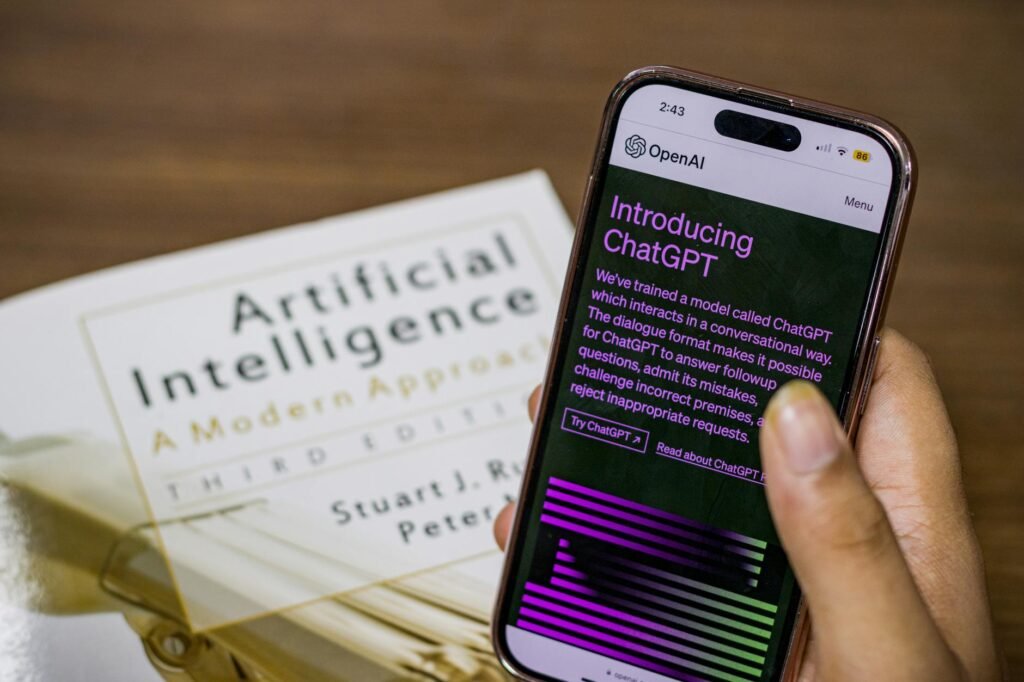

Welcome to 2026, where the financial landscape is more dynamic, data-rich, and driven by technology than ever before. For investors navigating this complex environment, the advent of Artificial Intelligence, particularly advanced Large Language Models like ChatGPT, has transformed from a futuristic concept into an indispensable tool. No longer confined to the realms of high-frequency trading firms, AI is now democratizing sophisticated market research and analysis, empowering individual and institutional investors alike to make sharper, more informed decisions. If you’re looking to gain a significant edge in today’s fast-paced markets, understanding how to harness the power of AI isn’t just an advantage—it’s a necessity.
The AI Revolution in Investing: Beyond 2025
The past few years have witnessed an unprecedented acceleration in AI adoption across the financial sector. By 2026, AI is no longer a novelty but an integrated component of most modern investment strategies. We’ve moved beyond basic algorithms; today’s AI, particularly advanced LLMs (like current iterations of GPT, Gemini, and Claude), can process, synthesize, and interpret vast quantities of unstructured data – from news articles and social media feeds to earnings call transcripts and regulatory filings – at speeds and scales impossible for humans. The trend is clear: investment firms are reporting significant increases in efficiency and decision accuracy through AI integration, with market forecasts predicting that by the end of 2026, over 40% of all market research will involve some form of generative AI assistance.
This widespread integration means that investors who master AI tools can gain access to real-time insights, identify nascent trends, and conduct due diligence with unparalleled depth. The challenge, however, lies in knowing how to effectively prompt these intelligent systems and interpret their output to translate data into actionable investment strategies.
Leveraging ChatGPT for Enhanced Market Research
Democratizing Data Analysis: ChatGPT’s Role
One of ChatGPT’s most profound impacts is its ability to democratize access to sophisticated data analysis. Historically, deep market research required expensive subscriptions to specialized terminals and teams of analysts. Now, with a well-crafted prompt, an investor can ask ChatGPT (or similar LLMs) to:
- Summarize complex reports: Input annual reports, white papers, or lengthy analyst notes and ask for key takeaways, risks, and opportunities.
- Identify market trends: Prompt for prevailing themes in specific sectors (e.g., “What are the top 3 emerging trends in renewable energy for 2026?”) or broader economic shifts.
- Conduct competitor analysis: Request a comparative analysis between companies, highlighting strengths, weaknesses, and market positioning.
- Explain complex financial concepts: Get simplified explanations of intricate financial instruments, economic theories, or regulatory changes.
By 2026, many LLMs are equipped with enhanced browsing capabilities and integrations, allowing them to pull real-time data directly from the web, making their analysis even more current and relevant.
Real-Time Insights & Sentiment Analysis
Beyond static data, AI tools are excelling at real-time sentiment analysis. Integrated platforms (often leveraging LLMs like ChatGPT at their core) can monitor millions of news articles, social media posts, and online discussions instantaneously. This allows investors to:
- Gauge public perception: Understand how a company, product, or sector is being perceived by the market and the general public.
- Spot breaking news impact: Quickly assess the potential market reaction to geopolitical events, corporate announcements, or economic data releases.
- Identify emerging narratives: Detect shifts in market narratives or early signs of FUD (Fear, Uncertainty, Doubt) or FOMO (Fear of Missing Out) that could precede significant price movements.
The ability to process and interpret these subtle, real-time signals provides a crucial advantage, allowing investors to react proactively rather than retrospectively.
AI-Powered Stock Analysis and Due Diligence
Fundamental Analysis with AI Assistance
For fundamental analysis, AI acts as a powerful assistant, sifting through mountains of financial data. While AI cannot replace human judgment entirely, it can significantly accelerate the process of:
- Parsing Financial Statements: Ask ChatGPT to extract key metrics (e.g., P/E ratio, debt-to-equity, revenue growth) from a company’s 10-K or 10-Q filing, compare them to industry averages, or identify trends over several quarters.
- Analyzing Earnings Call Transcripts: AI can summarize earnings calls, highlight management’s outlook, identify recurring themes, and even detect changes in tone that might indicate underlying issues.
- Assessing Risk Factors: Prompt AI to scour regulatory filings for specific risk factors, litigation mentions, or competitive threats that might not be immediately obvious.
This capability allows investors to conduct deeper due diligence in a fraction of the time, focusing their human expertise on interpretation and strategic planning rather than data collation.
Technical Analysis & Pattern Recognition
While ChatGPT itself doesn’t generate charts or conduct live technical analysis in the way a dedicated trading platform would, it’s invaluable for explaining technical indicators, patterns, and their implications. Moreover, specialized AI-driven platforms, often leveraging LLM technology for natural language interaction, are excelling in:
- Identifying Chart Patterns: Automatically spotting bullish or bearish patterns (e.g., head and shoulders, double bottoms) across thousands of assets.
- Predictive Modeling: Using machine learning to predict potential price movements based on historical data and current market conditions.
- Strategy Backtesting: Allowing investors to test the efficacy of their trading strategies against historical data, optimizing parameters for better risk-adjusted returns.
By 2026, these integrated AI tools are becoming increasingly user-friendly, allowing even non-expert traders to leverage sophisticated quantitative analysis previously reserved for institutional investors.
Strategic Investment Decisions with AI at Your Side
Portfolio Optimization and Risk Assessment
AI’s analytical prowess extends to portfolio management. Investors can use AI tools to:
- Model Scenarios: Simulate the impact of various economic conditions (e.g., interest rate hikes, recession) on their portfolio performance.
- Optimize Asset Allocation: Receive personalized recommendations for asset allocation based on their risk tolerance, investment goals, and current market outlook.
- Identify Concentration Risk: AI can quickly flag excessive exposure to a single sector, geography, or asset class, suggesting diversification strategies.
This proactive risk management helps safeguard investments and ensures portfolios remain aligned with long-term objectives.
Identifying Emerging Trends & Opportunities
One of the most exciting applications of AI is its ability to spot trends before they become widely recognized. By analyzing vast amounts of unstructured data—from patent filings and academic research to consumer spending data and regulatory shifts—AI can identify:
- Disruptive Technologies: Pinpoint companies at the forefront of AI, biotechnology, quantum computing, or sustainable energy.
- Changing Consumer Behaviors: Detect shifts in purchasing habits or lifestyle preferences that could boost certain industries.
- Geopolitical Impacts: Analyze the potential investment implications of international policy changes or regional developments.
This foresight allows investors to position themselves early in high-growth areas, potentially capturing significant alpha.
Best Practices for Using AI in Investing in 2026
While AI is a powerful ally, it’s crucial to use it responsibly and intelligently. Here are some actionable tips for investors in 2026:
- Always Verify & Cross-Reference: AI can “hallucinate” or provide inaccurate information. Never make investment decisions solely based on AI output. Always cross-reference with reliable financial data sources.
- Master Prompt Engineering: The quality of AI output heavily depends on the quality of your input. Be specific, provide context, and iterate on your prompts to get the best results.
- Combine AI with Human Judgment: AI is a tool to augment your analysis, not replace your critical thinking. Use its insights to form hypotheses, then apply your expertise and experience.
- Understand AI’s Limitations: AI reflects its training data, which can contain biases or be outdated. It also lacks true understanding and cannot predict black swan events.
- Integrate Multiple Tools: Don’t rely on a single AI platform. Use ChatGPT for general research, but integrate with specialized financial data providers, charting software, and news aggregators for a comprehensive view.
- Stay Updated on AI Advancements: The AI landscape is evolving rapidly. Keep abreast of new models, features, and ethical guidelines to maximize your advantage.
Conclusion
The year 2026 marks a pivotal moment in the intersection of AI and investing. Tools like ChatGPT have undeniably transformed market research, making sophisticated analysis accessible to a broader audience than ever before. From synthesizing complex reports and identifying real-time sentiment to aiding in fundamental due diligence and portfolio optimization, AI offers an unparalleled competitive edge. By embracing these powerful technologies responsibly, integrating them into your workflow, and always combining their insights with your own informed judgment, investors can unlock new levels of efficiency, gain deeper insights, and ultimately make more robust, profitable investment decisions in the dynamic markets of today and tomorrow. The future of investing is intelligent, and it’s time to ensure your strategy is too.