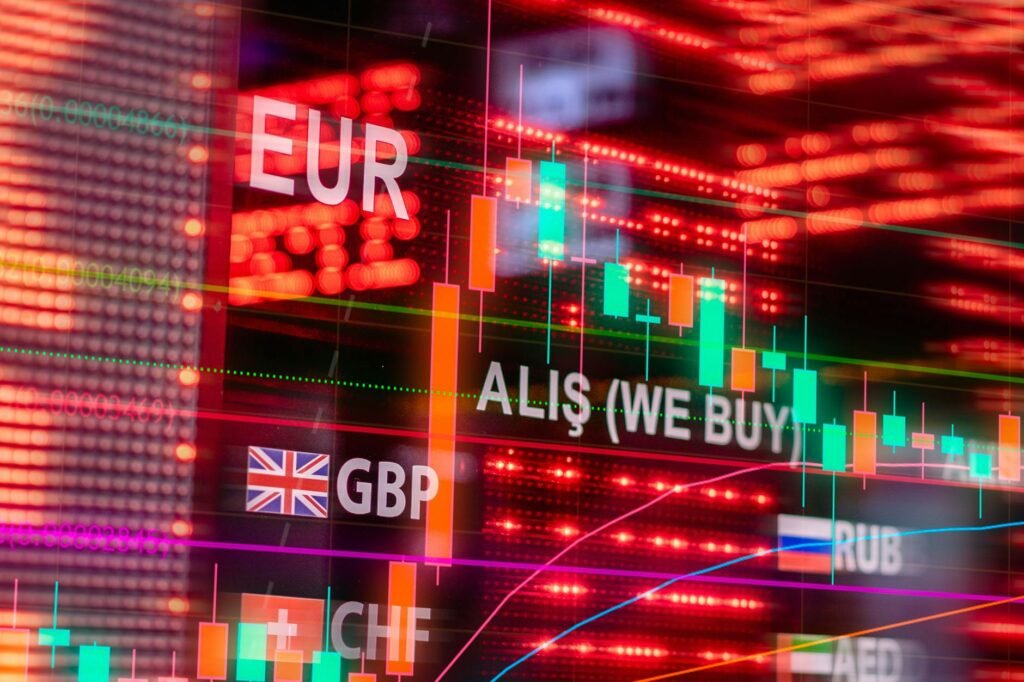

Introduction: Why Forex in 2026?
Welcome to the global financial arena of 2026. The foreign exchange (Forex) market remains the largest and most liquid financial market in the world, now turning over an estimated $8.5 trillion daily. This year, the landscape is more dynamic than ever. With the rapid expansion of AI-driven trading tools, the rise of Central Bank Digital Currencies (CBDCs), and shifting macroeconomic policies across global superpowers, there has never been a more exciting—or accessible—time for beginners to start their Forex trading journey. At Gainsium, we believe that building sustainable wealth requires deep understanding, and this guide is your blueprint to navigating the currency markets successfully this year.
Understanding the Core: Currency Pairs Explained
At its heart, Forex trading is the simultaneous buying of one currency and selling of another. Currencies are always traded in currency pairs, represented by two three-letter codes. For example, in the EUR/USD pair, the Euro (EUR) is the base currency, and the US Dollar (USD) is the quote currency.
The Three Categories of Pairs
As a beginner in 2026, you should focus your attention on how these pairs are categorized:
- Major Pairs: These involve the US Dollar paired with other highly traded currencies (e.g., EUR/USD, GBP/USD, USD/JPY). They offer the highest liquidity and the lowest spreads, making them ideal for beginners.
- Minor Pairs (Crosses): These do not include the USD but pair other major currencies (e.g., EUR/GBP, AUD/JPY).
- Exotic Pairs: These pair a major currency with an emerging economy’s currency (e.g., USD/TRY or USD/MXN). They are highly volatile and carry wider spreads, which beginners should generally avoid.
The Mechanics: Leverage and Margin
One of the most attractive—yet dangerous—features of Forex trading is the ability to trade on leverage. Leverage acts as a financial accelerator, allowing you to control large positions with a relatively small amount of capital.
How Margin Works
To open a leveraged position, your broker requires a deposit known as margin. For example, if your broker offers 1:30 leverage, you only need $1,000 of margin to control a position worth $30,000. In 2026, global regulators continue to enforce strict leverage caps for retail traders (often capped between 1:30 and 1:50 in major jurisdictions like the EU, UK, and US) to protect retail investors from rapid capital loss.
While leverage can magnify your profits, it equally magnifies your losses. If a trade moves against you and your account balance falls below the required maintenance margin, you will trigger a margin call, which can result in your broker automatically closing your positions to prevent further losses.
Technical Analysis and AI Integration in 2026
To make profitable trades, you must analyze market movements. In 2026, the traditional practice of technical analysis—studying historical price charts to predict future movements—has been supercharged by consumer-grade AI assistants embedded directly into modern trading platforms.
Key Technical Indicators to Master
- Support and Resistance: Support acts as a price floor where buying interest prevents the currency from falling further, while resistance acts as a price ceiling where selling pressure halts upward momentum.
- Moving Averages (MA): Tools like the 50-day and 200-day Exponential Moving Averages help smooth out price action and reveal the underlying trend.
- Relative Strength Index (RSI): A momentum oscillator that measures the speed and change of price movements, indicating whether a currency pair is overbought (above 70) or oversold (below 30).
In today’s trading landscape, smart beginners use AI-driven charting engines to identify these patterns instantly. However, the golden rule of 2026 remains: never let an algorithm make decisions you do not personally understand. Use technology as a validator, not a substitute for your own analysis.
The Golden Rules of Risk Management
The difference between a successful wealth-builder and a failed speculator lies entirely in risk management. Without structured risk control, even the best trading strategy will eventually wipe out your account.
Essential Risk-Control Tools
- Stop-Loss Orders: A mandatory order that automatically closes your trade at a predetermined price level if the market moves against you. Never trade without one.
- The 1% Rule: Never risk more than 1% of your total account balance on a single trade. If you have a $5,000 account, your maximum risk per trade should be $50.
- Risk-to-Reward Ratio: Aim for a minimum ratio of 1:2. This means that if you risk $50 on a trade, your profit target should be at least $100. This math ensures you can be wrong 50% of the time and still remain highly profitable.
Step-by-Step Blueprint to Your First Forex Trade
Ready to take action? Follow this structured path to launch your trading journey safely this year:
- Choose a Tier-1 Regulated Broker: Look for brokers regulated by top-tier authorities such as the FCA (UK), ASIC (Australia), or NFA (US). Avoid offshore, unregulated entities.
- Open a Risk-Free Demo Account: Practice trading with virtual money for at least 2-3 months to familiarize yourself with execution speed, software mechanics, and your own psychological responses.
- Develop a Trading Plan: Define your entry signals, exit strategies, and daily loss limits. Stick to this plan with absolute discipline.
- Start Small: When transitioning to live funds, start with a micro-account. Only trade money you can afford to lose while you adjust to the emotional weight of real-world risk.
Conclusion: Your Path to Financial Freedom
Forex trading in 2026 offers unparalleled opportunities for those willing to treat it as a professional business rather than a casino. By mastering currency dynamics, leveraging advanced analytical tools responsibly, and practicing uncompromising risk management, you can carve out a highly profitable stream of income. Remember, consistency is the ultimate currency of the market. Take your time, focus on continuous learning, and let Gainsium guide you step-by-step toward masterclass trading performance.