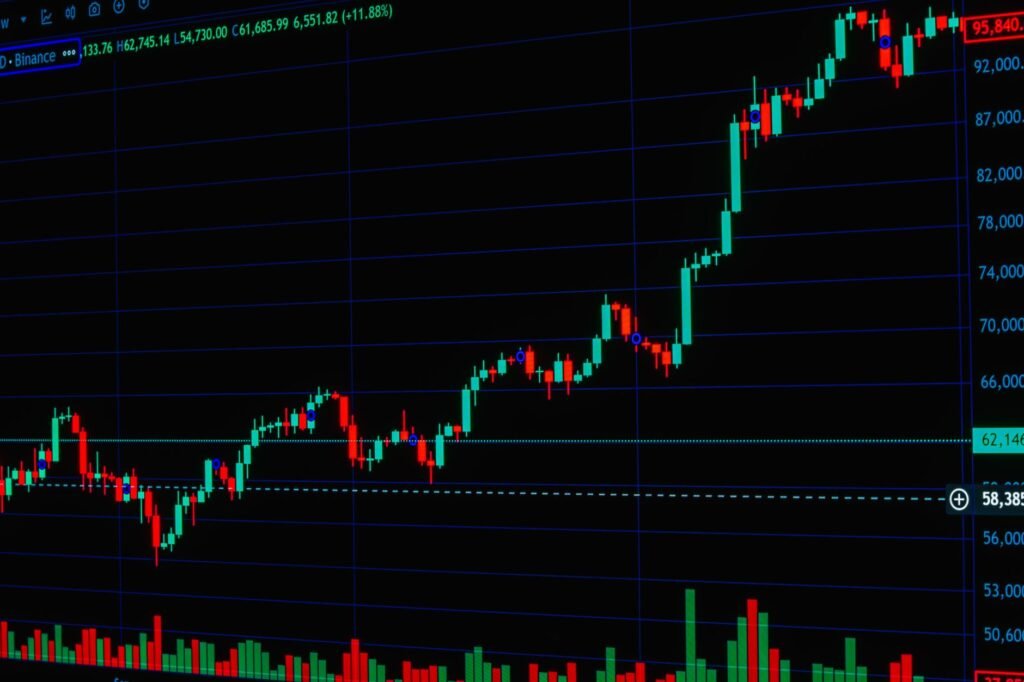

In 2026, artificial intelligence (AI) powered news analytics profoundly impacts high-frequency trading (HFT) by enabling algorithms to process vast streams of real-time information with unprecedented speed and precision. This technological leap allows HFT firms to extract critical market signals from news and social media feeds, translate them into actionable strategies, and execute trades in milliseconds, fundamentally reshaping how these strategies are informed and executed in today’s dynamic markets.
The Evolution of Market Information and AI
The financial markets have always been driven by information. Historically, traders relied on news wires, analyst reports, and expert commentary, painstakingly sifting through data to gain an edge. In the era of high-frequency trading, this manual process is obsolete. HFT strategies thrive on speed, leveraging powerful algorithms to execute a high volume of orders at extremely low latencies, often exploiting tiny price discrepancies that exist for fractions of a second. As of 2026, the competitive landscape for HFT has intensified further, with even tighter spreads and an increasing reliance on technological superiority.
The Need for Speed
For HFT, even a microsecond advantage can translate into significant profits. Traditional news consumption methods are far too slow. The sheer volume of information generated globally each second—from major news outlets and financial newswires to social media platforms, regulatory filings, company earnings call transcripts, and specialized blogs—is beyond human capacity to process in real-time. This deluge of data creates both a challenge and an opportunity, where the ability to rapidly extract value is paramount.
From Human to Algorithmic Analysis
The transition from human-centric to algorithmic news analysis began decades ago with rudimentary keyword-based systems. Today, advanced AI, particularly in natural language processing (NLP) and machine learning (ML), has transformed this process. These sophisticated systems can ingest, understand, and interpret unstructured text data at a scale and speed previously unimaginable, providing the critical informational backbone for contemporary HFT operations.
AI’s Role in Real-Time News and Social Media Analysis
AI’s core contribution to HFT lies in its capacity to dissect vast, unstructured text data from countless sources and extract actionable insights instantly. This capability is powered by advanced analytical techniques that go far beyond simple keyword matching.
Advanced Natural Language Processing (NLP)
Modern NLP models are at the forefront of this analysis. They can:
- Sentiment Analysis: Identify the emotional tone of news articles, tweets, and reports, categorizing them as positive, negative, or neutral. For instance, a sudden surge in negative sentiment regarding a specific company could indicate potential downward price pressure.
- Entity Recognition: Accurately identify and link specific entities such as companies, individuals, products, and geographical locations, even when mentioned implicitly or in complex sentence structures. This ensures that news is correctly attributed to the relevant market participants.
- Event Detection: Recognize market-moving events as they unfold, such as mergers and acquisitions announcements, product recalls, regulatory approvals, geopolitical shifts, or earnings surprises. AI can often detect these events from early signals across various sources before they become widely reported.
- Contextual Understanding: Unlike simpler systems, current NLP can discern the nuance and context of language, understanding sarcasm, double negatives, and the implications of certain statements. This prevents misinterpretations that could lead to erroneous trading decisions.
Machine Learning for Pattern Recognition
Beyond understanding language, machine learning models are crucial for correlating these textual insights with historical market reactions. These models are trained on vast datasets linking past news events, their sentiment, and subsequent market movements. Through this training, they learn to predict short-term price movements, shifts in volatility, or changes in liquidity based on incoming news signals. Crucially, these models are designed to be adaptive, continuously learning and adjusting their predictive capabilities as new information flows and market dynamics evolve.
Integrating Diverse Data Feeds
In 2026, AI excels at integrating and cross-referencing information from a multitude of disparate sources. For example, an AI system might combine a newswire report about a company’s production issue, social media chatter about supply chain disruptions, and even satellite imagery showing reduced activity at a factory, to form a comprehensive, actionable picture. This multi-modal data integration allows for a more robust and less error-prone understanding of market events, while simultaneously tackling the challenge of filtering out noise and identifying credible signals amidst a sea of potentially misleading information.
AI-Driven Execution in HFT
The true impact of AI in HFT crystallizes at the point where analytical insights are translated into concrete trading actions. AI not only informs but directly drives the execution phase, offering a competitive edge that is increasingly indispensable.
Ultra-Low Latency Signal Generation
AI’s ability to process and interpret news in milliseconds is paramount. As soon as a relevant news item breaks, AI algorithms can identify its market implications and generate ultra-low latency trading signals. These signals are then fed directly into HFT algorithms, enabling them to:
- Capitalize on Arbitrage: Rapidly identify and execute arbitrage opportunities that arise due to pricing inefficiencies across different exchanges or assets, often triggered by breaking news that impacts one market faster than another.
- Execute Directional Bets: Place precise, short-term directional trades based on the predicted immediate impact of news on asset prices.
- Adjust Liquidity Provision: Dynamically adjust bid/ask spreads or order book depth in response to news-driven changes in expected market volatility or liquidity.
The speed at which these insights are generated and acted upon is a defining characteristic of advanced HFT in 2026.
Automated Strategy Adjustment and Risk Management
Perhaps one of the most sophisticated aspects of AI in HFT is its capacity for automated strategy adjustment. Algorithms can dynamically alter their trading parameters—such as trade size, direction, and aggressiveness—in real-time based on shifts in news sentiment or unexpected market events. For example, an algorithm might reduce its exposure to a particular stock if AI detects a sudden flurry of negative news, even before the full impact is clear.
Furthermore, AI plays a critical role in risk management. By continuously monitoring news and market data, AI systems can detect unusual market activity or sudden, significant shifts in sentiment that could signal an impending
Disclaimer: This article is provided for general informational and educational purposes only and does not constitute financial, investment, trading, or legal advice. Gainsium is not a registered investment advisor. Markets are volatile and past performance does not guarantee future results. Readers should conduct their own research and consult a licensed financial advisor before making any investment decisions.