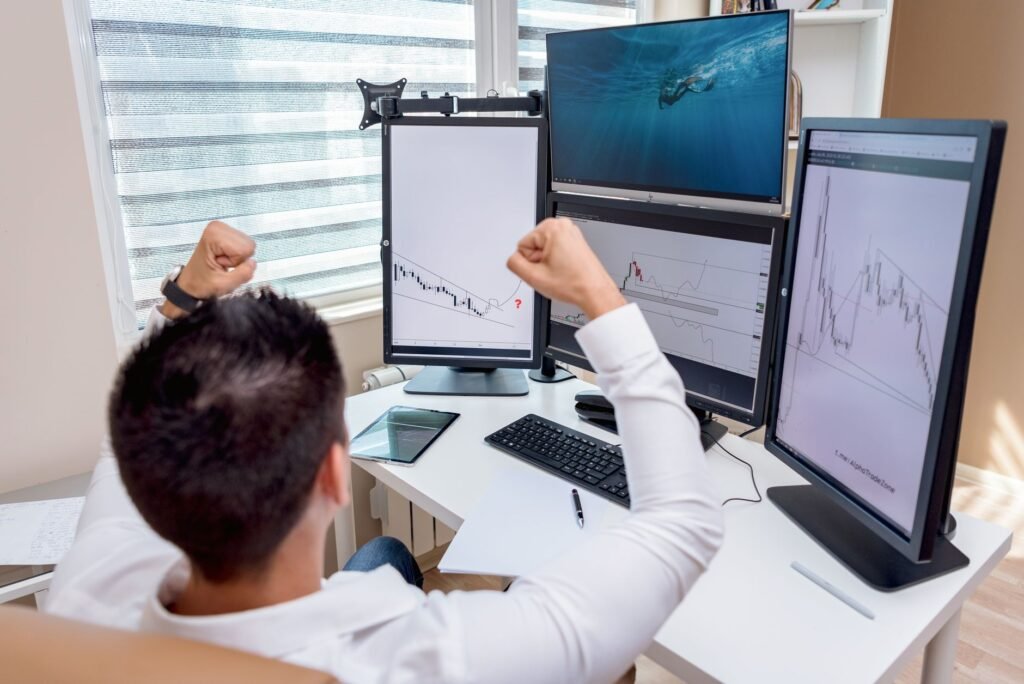

For individuals looking to capitalize on market movements within a single trading day, both scalping and day trading present compelling, albeit distinct, strategies. Understanding the fundamental differences between these two short-term approaches, particularly concerning their time horizons, risk profiles, and commitment levels, is crucial for aspiring traders seeking to align a strategy with their temperament and resources. This article will compare and contrast scalping and day trading to help you determine which short-term method might be more appropriate for your financial journey in 2026’s dynamic market.
Understanding Scalping: The Blink-and-You-Miss-It Strategy
Scalping is an ultra-short-term trading strategy focused on profiting from minor price changes. Scalpers aim to execute a high volume of trades throughout the day, often holding positions for mere seconds to a few minutes, seeking to accumulate small profits that add up over time. In 2026, the prevalence of high-frequency trading and algorithmic strategies continues to shape market microstructure, demanding even greater precision and speed from human scalpers.
Key Characteristics of Scalping
-
Time Horizon: Positions are typically held for very short durations, ranging from seconds to a few minutes. The goal is to capture tiny fluctuations in price action.
-
Profit Targets: Individual trades target very small profit margins, often just a few pips or ticks. Success hinges on the sheer volume of winning trades.
-
Risk Profile: While individual trade risk is minimized through extremely tight stop-losses, the high frequency of trades means exposure to market noise and transaction costs can accumulate rapidly. Rapid decision-making and precise execution are paramount.
-
Required Commitment: Scalping demands intense focus, rapid reaction times, and significant screen time. Traders often need to monitor multiple charts and order books simultaneously. The psychological toll can be considerable due to the constant need for vigilance and quick decisions.
-
Leverage: Scalpers often utilize significant leverage to amplify small price movements into meaningful returns, increasing both potential profits and losses.
-
Tools & Technology: Access to direct market access (DMA), low-latency data feeds, and advanced charting platforms with Level 2 data are often essential for identifying fleeting opportunities.
The ideal market for scalping is one with high liquidity and volatility, allowing for frequent entry and exit points without significant slippage. Futures, highly liquid forex pairs, and popular equities with tight spreads are common instruments.
Understanding Day Trading: The Intra-Day Approach
Day trading involves opening and closing trades within a single trading day, without carrying positions overnight. Unlike scalping’s micro-movements, day traders typically seek to capture larger price swings that unfold over minutes to several hours. The current market environment in 2026, characterized by ongoing economic shifts and the influence of macroeconomic indicators, often creates identifiable intra-day trends that day traders can attempt to exploit.
Key Characteristics of Day Trading
-
Time Horizon: Positions are held for minutes to several hours, but always closed before the market’s end. This allows traders to avoid overnight risk from unexpected news or events.
-
Profit Targets: Day traders aim for more substantial price movements per trade compared to scalpers, often several points or pips, but typically execute fewer trades per day.
-
Risk Profile: Risk management involves setting stop-losses and managing position sizes for each trade. While intra-day volatility is a factor, the pressure is generally less immediate than scalping due to longer holding periods.
-
Required Commitment: Day trading requires focused attention during market hours, but generally allows for more strategic analysis and less constant, high-pressure execution than scalping. It demands a strong understanding of technical and sometimes fundamental analysis relevant to intra-day price drivers.
-
Leverage: Similar to scalping, leverage can be used to enhance returns, though perhaps with slightly less intensity than the typical scalper.
-
Tools & Technology: Comprehensive charting software, access to news feeds, and robust order execution platforms are standard. While speed is important, it is often less critical than for scalpers.
Day traders often employ a variety of strategies, including trend following, counter-trend trading, and news-based trading. They might focus on specific sectors or assets demonstrating intra-day momentum.
Key Differences: Scalping vs. Day Trading
While both fall under the umbrella of short-term trading, the distinctions between scalping and day trading are significant:
-
Time Frame: Scalping focuses on seconds to minutes, aiming for extremely small, frequent gains. Day trading involves minutes to hours, targeting larger moves over fewer trades.
-
Frequency of Trades: Scalpers make potentially hundreds of trades daily, while day traders might make a handful to a few dozen.
-
Profit per Trade: Scalpers accept tiny profits per trade, relying on volume. Day traders seek more substantial profits per individual trade.
-
Risk Exposure: Scalpers have very brief exposure per trade but constant exposure across many trades. Day traders have longer individual trade exposure but generally fewer simultaneous open positions.
-
Psychological Demands: Scalping is often considered more mentally taxing due to its intense, rapid-fire nature. Day trading still requires discipline and emotional control but offers slightly more breathing room for analysis and decision-making.
-
Capital Requirements & Leverage: While both often use leverage, scalping’s reliance on extremely small price captures sometimes necessitates higher effective leverage or a larger capital base to make the small profits meaningful after transaction costs.
-
Market Analysis: Scalpers often rely on pure price action, order flow, and Level 2 data. Day traders incorporate a broader range of technical indicators, chart patterns, and often monitor economic news for intra-day catalysts.
Choosing Your Path in 2026
Deciding between scalping and day trading largely depends on individual characteristics, resources, and risk appetite.
-
Consider Scalping if:
-
You thrive under extreme pressure and can make lightning-fast decisions.
-
You have exceptional discipline to adhere to tight stop-losses.
-
You have the time and dedication for constant market monitoring.
-
You have access to advanced trading platforms and low-latency connections.
-
You have a strong understanding of order flow and market microstructure.
-
-
Consider Day Trading if:
-
You prefer to analyze market trends and patterns over slightly longer periods.
-
You have patience and can wait for higher-probability setups to emerge.
-
You can dedicate several hours a day to active trading and analysis, but perhaps not every waking moment.
-
You are comfortable with a moderate number of trades throughout the day.
-
You have a solid grasp of technical analysis and risk management principles.
-
Regardless of the chosen strategy, success in short-term trading in 2026’s competitive landscape demands continuous learning, robust risk management, and rigorous backtesting. The proliferation of accessible market data and advanced trading tools has leveled the playing field for retail traders, but it has also increased the sophistication of market participants. Starting with a demo account to practice and refine a strategy without risking real capital is a commonly recommended first step for any aspiring short-term trader.
Conclusion
Both scalping and day trading offer avenues to potentially profit from short-term market fluctuations, but they cater to different temperaments and skill sets. Scalping is an aggressive, high-frequency approach focused on minuscule price changes, demanding extreme focus and rapid execution. Day trading, while still intra-day, operates on a slightly longer time frame, allowing for more considered analysis and fewer, larger profit targets. Ultimately, the ‘best’ strategy is the one that aligns with your personality, available time, capital, and risk tolerance. Education, practice, and unwavering discipline in risk management are cornerstones for navigating the dynamic world of short-term trading.
Disclaimer: This article is provided for general informational and educational purposes only and does not constitute financial, investment, trading, or legal advice. Gainsium is not a registered investment advisor. Markets are volatile and past performance does not guarantee future results. Readers should conduct their own research and consult a licensed financial advisor before making any investment decisions.