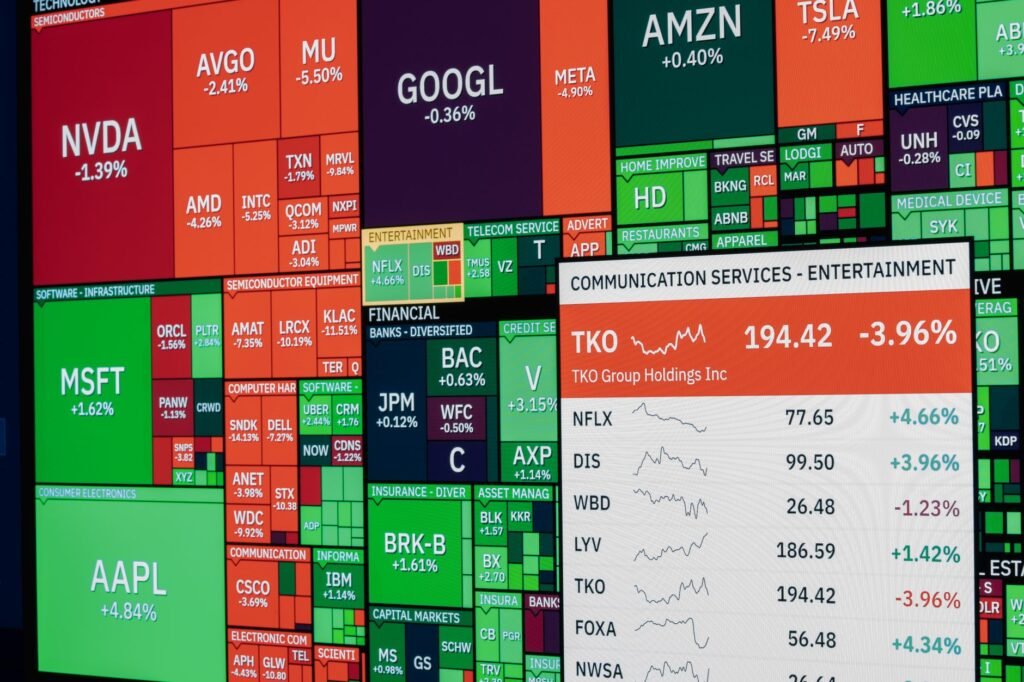

Understanding and implementing sector rotation strategies can be a crucial approach for investors aiming to position their portfolios for potential growth. In 2026, navigating the dynamic economic landscape requires a strategic mindset, and sector rotation offers a framework for shifting investments between different market sectors based on prevailing economic cycles and trends.
This article will guide readers through the principles of sector rotation, explore key indicators to monitor in the current environment, and outline practical steps for integrating this strategy into a portfolio. Remember, Gainsium is an educational platform and does not offer personalized financial advice; this content is for general informational purposes only.
Understanding Sector Rotation and Economic Cycles
What is Sector Rotation?
Sector rotation is an investment strategy that involves moving capital from one industry sector to another in an attempt to outperform the broader market. The underlying premise is that different economic sectors perform better or worse at various stages of the economic cycle. By identifying these stages, investors seek to allocate their assets to sectors that are poised for strength while reducing exposure to those expected to underperform.
This strategy relies on the principle that market leadership changes over time. What works well in an expansion might struggle in a contraction, and vice-versa. Successful sector rotation requires a deep understanding of economic indicators, market trends, and a disciplined approach to analysis and execution.
The Four Stages of the Economic Cycle
Historically, the economic cycle is often categorized into four distinct stages, each favoring particular sectors:
- Early Expansion: Often characterized by low interest rates, increasing consumer demand, and recovering corporate profits. Sectors that typically perform well include technology, consumer discretionary, and industrials. These are often growth-oriented sectors sensitive to economic upturns.
- Late Expansion (Peak): As the economy matures, inflation may begin to rise, and interest rates might increase. Growth slows but remains positive. Sectors like energy, materials, and some parts of financials can perform well as commodity prices rise and lending activity remains strong.
- Contraction (Recession): Marked by slowing economic activity, declining corporate profits, and often falling interest rates. Investors often seek safety in defensive sectors such as consumer staples, healthcare, and utilities, which tend to be less sensitive to economic downturns due to consistent demand for their products and services.
- Early Recovery (Trough): The economy begins to stabilize and show signs of improvement. Interest rates may still be low, and investor confidence starts to return. Sectors like industrials and some parts of financials can start to show strength again as business investment picks up.
Identifying Key Economic Indicators and Trends in 2026
In 2026, investors continue to navigate a complex global economic environment influenced by several persistent trends. Monitoring key economic indicators and understanding their implications for various sectors is essential for effective sector rotation.
Inflation and Interest Rates
Central bank policies, largely driven by inflation outlooks, remain a critical factor. In 2026, economies may still be recalibrating from earlier inflationary pressures, with central banks balancing the need to control prices against fostering economic growth. Sectors sensitive to interest rates, like financial services (which can benefit from higher lending margins) and real estate (which can be pressured by higher borrowing costs), warrant close attention. Similarly, sectors with high debt loads might face increased financing costs.
Technological Innovation
The acceleration of technological innovation, particularly in areas like artificial intelligence (AI), advanced computing, and renewable energy technologies, continues to reshape industries. Sectors involved in these innovations—such as specific segments of technology, communication services, and industrials focused on green tech—could experience significant growth. Investors might consider how these innovations create new market opportunities and disrupt traditional business models.
Geopolitical Factors and Supply Chains
Global trade dynamics and geopolitical stability continue to influence supply chains and commodity prices. Disruptions can impact manufacturing, energy costs, and the availability of critical materials. Sectors heavily reliant on global supply chains or commodity inputs, such as materials, industrials, and consumer discretionary, require careful monitoring for potential vulnerabilities or advantages arising from these factors.
Consumer Behavior and Demographics
Shifting consumer preferences and demographic changes also play a role. For instance, an aging global population might increase demand for healthcare services, while evolving digital consumption habits could benefit e-commerce and digital media companies. Understanding these long-term trends can inform allocations to sectors like healthcare and specific areas within consumer discretionary and communication services.
Practical Steps for Implementing Sector Rotation
1. Research and Analysis
A solid foundation of research is paramount. This involves:
- Macroeconomic Analysis: Staying informed about global and domestic economic data, including GDP growth, inflation rates, employment figures, and interest rate policies.
- Sector-Specific Analysis: Evaluating the fundamentals of different sectors, including their growth prospects, competitive landscape, regulatory environment, and how they typically perform at various stages of the economic cycle.
- Identifying Catalysts: Looking for specific events or trends that could act as catalysts for a sector’s outperformance, such as new government policies, technological breakthroughs, or significant shifts in consumer demand.
2. Portfolio Allocation and Diversification
Once potential sectors are identified, the next step involves adjusting portfolio allocations. This does not necessarily mean an all-or-nothing approach; rather, it often involves a strategic overweighting or underweighting of certain sectors relative to a benchmark or a neutral allocation.
Diversification remains crucial. Even when focusing on sector rotation, maintaining a diversified portfolio across various asset classes and within selected sectors can help mitigate risks. Investors might consider using exchange-traded funds (ETFs) that track specific sectors as a convenient way to gain diversified exposure.
3. Monitoring and Adjustment
Sector rotation is an active strategy, not a set-it-and-forget-it approach. Continuous monitoring of economic indicators, market performance, and sector-specific news is essential. Economic cycles and market trends can shift, sometimes rapidly, necessitating adjustments to portfolio allocations. Establishing clear criteria for when to rotate out of a sector and into another is key to maintaining discipline.
Considerations and Risks
While sector rotation can be a powerful strategy, it comes with inherent considerations and risks:
- Timing Risk: Accurately predicting the exact turning points of economic cycles and sector performance is challenging. Mistiming can lead to missed gains or increased losses.
- Increased Transaction Costs: More frequent trading can result in higher brokerage fees and potentially higher capital gains taxes, which can erode returns.
- Requires Active Management: This strategy demands ongoing research, analysis, and adjustments, making it less suitable for passive investors.
- Market Volatility: Periods of high market volatility can make sector rotation particularly difficult, as sector performance can become less predictable.
Ultimately, implementing sector rotation strategies in 2026 involves a combination of economic understanding, diligent research, and a disciplined approach to portfolio management. While it offers the potential for enhanced returns by aligning investments with prevailing market conditions, it also requires an awareness of its complexities and risks.
Disclaimer: This article is provided for general informational and educational purposes only and does not constitute financial, investment, trading, or legal advice. Gainsium is not a registered investment advisor. Markets are volatile and past performance does not guarantee future results. Readers should conduct their own research and consult a licensed financial advisor before making any investment decisions.