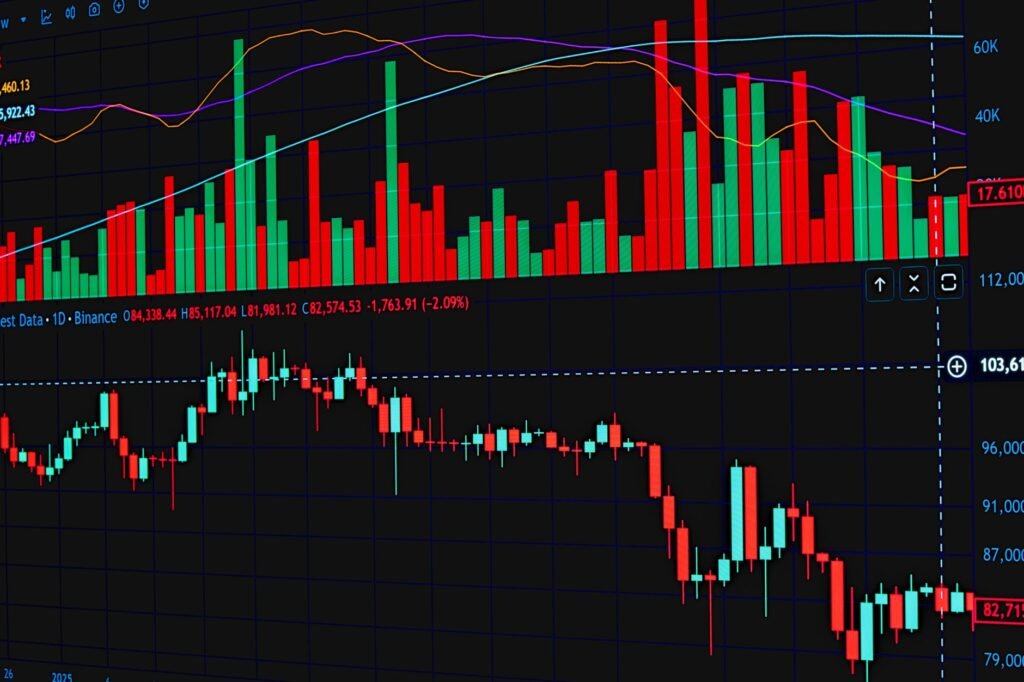

In 2026, artificial intelligence (AI) has become an indispensable tool in financial markets, particularly for predictive analytics. This article explores how advanced AI models are deployed to forecast market movements, identify potential investment opportunities, and manage risk through sophisticated data analysis and pattern recognition.
The Evolution of AI in Finance by 2026
The journey of AI in finance has rapidly accelerated, moving from basic algorithmic trading systems in earlier decades to highly complex, self-learning models prevalent today. In 2026, the financial industry leverages AI not just for speed of execution but for its unparalleled ability to process and interpret vast, disparate datasets.
From Algorithmic Trading to Machine Learning Mastery
While algorithmic trading has been a fixture for years, its capabilities have been profoundly enhanced by advancements in machine learning (ML) and deep learning (DL). Early algorithms primarily executed predefined rules. Today, AI models are designed to learn from historical and real-time data, adapt to changing market conditions, and even generate novel strategies. This shift represents a move from rule-based automation to intelligence-driven insight.
The Role of Hyper-Scale Data
By 2026, the volume and velocity of financial data are staggering. AI systems are uniquely positioned to ingest and analyze structured data (stock prices, economic indicators) alongside unstructured data (news articles, social media sentiment, geopolitical events, satellite imagery, supply chain telemetry). This ability to synthesize diverse information sources provides a holistic view of the market, allowing for more nuanced predictions than traditional methods could achieve.
Key Applications of AI Predictive Analytics in 2026
AI’s role in predictive analytics spans multiple critical areas within financial markets, offering decision support for various market participants.
Market Trend Forecasting
One of the primary uses of AI is to forecast future market trends. AI models analyze historical price data, trading volumes, and macroeconomic indicators to identify patterns and predict potential direction. These models consider factors like interest rate changes, inflation data, and sector-specific news, often uncovering correlations that human analysts might miss. For instance, some quantitative funds utilize AI to model the likely impact of central bank statements on bond yields or currency movements.
Risk Management and Anomaly Detection
AI excels at identifying anomalies that might indicate fraudulent activity, operational failures, or nascent market instability. By continuously monitoring transaction flows, market volatility, and compliance parameters, AI systems can flag unusual patterns in real-time. This proactive risk identification helps institutions prevent significant losses and maintain market integrity. For instance, sudden, unexplained spikes in trading volume in a typically illiquid asset might trigger an AI alert for further investigation.
Portfolio Optimization
AI-driven portfolio management goes beyond traditional asset allocation models. These systems consider an investor’s risk tolerance, financial goals, and market outlook, then use predictive analytics to construct and rebalance portfolios. They can model thousands of potential scenarios, optimizing for factors like expected return, downside risk, and correlation between assets, even incorporating environmental, social, and governance (ESG) metrics that have become increasingly vital in 2026.
Algorithmic Strategy Generation
Beyond executing trades, advanced AI models, particularly those leveraging reinforcement learning, can independently develop and refine trading strategies. These systems learn through trial and error in simulated market environments, discovering profitable patterns and optimal entry/exit points. While human oversight remains crucial, AI can provide a dynamic edge by continuously adapting strategies to evolving market dynamics.
The Mechanics: How AI Models Work
Understanding the inner workings of AI for predictive analytics involves several distinct stages.
Data Collection and Preprocessing
The foundation of any AI model is high-quality data. In 2026, sophisticated data pipelines collect vast amounts of financial, economic, and alternative data. This raw data then undergoes rigorous preprocessing, including cleaning, normalization, and feature engineering, to prepare it for model training. This step is critical as
Disclaimer: This article is provided for general informational and educational purposes only and does not constitute financial, investment, trading, or legal advice. Gainsium is not a registered investment advisor. Markets are volatile and past performance does not guarantee future results. Readers should conduct their own research and consult a licensed financial advisor before making any investment decisions.