
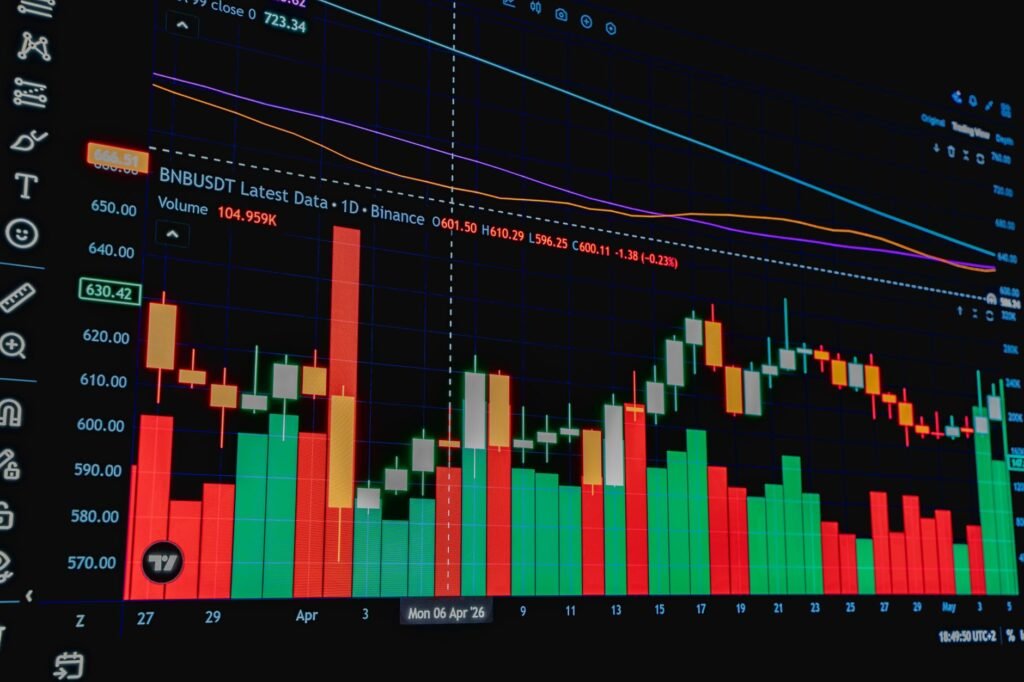

For beginner traders navigating the complexities of financial markets, understanding how to use trading volume to confirm price trends is a crucial skill. Trading volume provides invaluable insights into the strength and sustainability of a price movement, offering a deeper understanding beyond just where the price is headed. This guide aims to demystify the relationship between price and volume, equipping new traders with practical methods to incorporate this powerful indicator into their analysis.
What is Trading Volume and Why Does it Matter?
Defining Trading Volume
Trading volume represents the total number of shares, contracts, or units of a security or asset that have been traded over a specific period. Whether observing stocks, cryptocurrencies, commodities, or forex, volume essentially measures activity. High volume indicates strong interest and participation, while low volume suggests less interest. Each trade involves both a buyer and a seller, and the volume count aggregates all such completed transactions.
Understanding volume is akin to gauging the conviction behind a crowd’s movement. A stock price might rise, but if only a few people are buying, that rise might be fragile. If many people are buying, it suggests stronger underlying support for the upward move. In 2026, with the continued prevalence of algorithmic trading and active retail participation across diverse global markets, analyzing volume remains a fundamental aspect of technical analysis, providing a critical lens through which to view market sentiment.
The Relationship Between Price and Volume
The core principle of volume analysis is that volume should generally confirm price action. Strong price movements—whether up or down—are typically more reliable when accompanied by high trading volume. Conversely, price movements on low volume are often viewed with skepticism, as they may lack the broad market conviction needed for sustainability.
Imagine a scenario where a company announces positive earnings. If its stock price surges on significantly higher-than-average volume, it suggests that many investors are buying into the news, validating the price increase. If the price goes up but volume remains stagnant or even decreases, it might indicate that only a few large players are moving the price, making the rally potentially short-lived or susceptible to sudden reversals.
Interpreting Volume to Confirm Price Trends
Confirming an Uptrend
In a healthy uptrend, price rallies are generally accompanied by increasing volume. This signifies strong buying pressure and broad participation, indicating that more market participants are entering the market at higher prices. Conversely, during periods of price consolidation or minor pullbacks within the uptrend, volume tends to decrease, suggesting that sellers are less aggressive or that the temporary dip is a natural pause rather than a reversal.
- Rising Price, Rising Volume: Strong confirmation of an uptrend.
- Falling Price (Pullback), Falling Volume: Suggests the pullback is temporary and the uptrend may resume.
Confirming a Downtrend
Similarly, in a robust downtrend, price declines are often confirmed by increasing volume. This shows aggressive selling pressure and widespread liquidation by market participants. When the price experiences bounces or brief rallies within a downtrend, volume typically decreases, indicating a lack of strong buying interest and suggesting these rallies are likely short-lived before the downtrend continues.
- Falling Price, Rising Volume: Strong confirmation of a downtrend.
- Rising Price (Bounce), Falling Volume: Suggests the bounce is temporary and the downtrend may resume.
Identifying Trend Reversals
Volume often provides early clues about potential trend reversals. A common scenario involves an established trend showing signs of exhaustion:
- Uptrend Reversal (Top): As an uptrend matures, a stock or asset might make new highs but with decreasing volume. This divergence suggests that fewer buyers are willing to push the price higher, indicating a weakening of the bullish momentum. A subsequent sharp price drop on high volume can then confirm the reversal.
- Downtrend Reversal (Bottom): In a protracted downtrend, the price might make new lows, but if volume begins to shrink, it could signal that selling pressure is diminishing. A strong upward price move on significantly increased volume can then signal a potential bottom and the start of a new uptrend. This pattern is often referred to as an
Disclaimer: This article is provided for general informational and educational purposes only and does not constitute financial, investment, trading, or legal advice. Gainsium is not a registered investment advisor. Markets are volatile and past performance does not guarantee future results. Readers should conduct their own research and consult a licensed financial advisor before making any investment decisions.