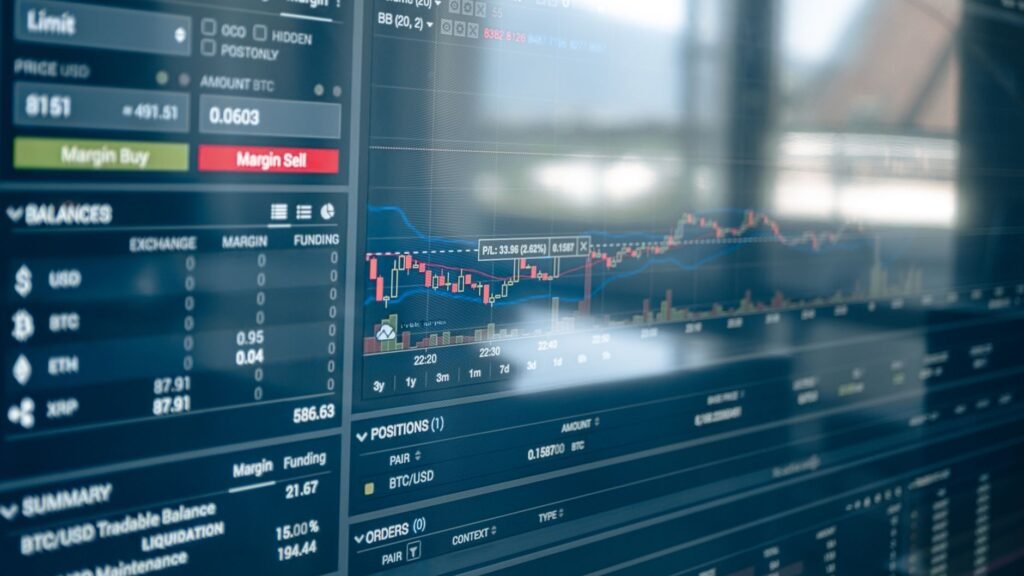

In the dynamic landscape of 2026 financial markets, effective risk management is not merely a recommendation; it is the bedrock upon which sustained trading success is built. This article outlines five fundamental risk management rules that are critical for traders to implement this year to protect capital and sustain profitability amid evolving market conditions.
The financial markets in 2026 continue to present a complex interplay of opportunities and challenges. Persistent inflation concerns in some major economies, alongside varying interest rate policies, keep volatility elevated. The increasing integration of artificial intelligence (AI) into trading platforms and analytics means markets can react with unprecedented speed to information, while the ongoing evolution of regulatory frameworks, particularly around digital assets, adds layers of complexity. For traders navigating these currents, a robust risk management framework is indispensable.
Rule 1: Define Your Risk Capital and Master Position Sizing
One of the most crucial steps for any trader is to clearly define their risk capital – the amount of money they can afford to lose without impacting their financial security. Trading with capital that is essential for living expenses can lead to emotionally driven decisions, which often undermine rational analysis.
Once risk capital is established, proper position sizing becomes paramount. This involves determining the appropriate size of each trade based on the amount of capital a trader is willing to risk on that specific trade. A common guideline suggests risking no more than 1% to 2% of total trading capital on any single trade. For instance, if a trading account holds $100,000, a 1% risk rule means no more than $1,000 should be at risk on any given position. This approach helps to prevent a few losing trades from significantly depleting the overall account. In 2026, with rapid market movements influenced by algorithmic trading and flash news events, adhering to strict position sizing rules is more important than ever to safeguard against outsized losses.
Rule 2: Implement Strict Stop-Loss Orders Consistently
A stop-loss order is an instruction to automatically close a trade when the price of an asset reaches a predetermined level, thereby limiting potential losses. This rule removes emotional bias from the decision-making process of exiting a losing trade. Without a pre-defined exit strategy, traders may hold onto losing positions in the hope of a reversal, often leading to much larger losses than initially anticipated.
Setting stop-loss levels should be a deliberate process, informed by technical analysis, volatility, and the trader’s risk tolerance. For example, a stop-loss could be placed just below a key support level for a long trade, or above a resistance level for a short trade. The increased adoption of AI-driven market analysis tools in 2026 provides traders with richer data to identify crucial price levels, but the discipline to actually implement and honor these stops remains a human responsibility. Never move a stop-loss further away from your entry point once a trade is live, as this fundamentally alters your initial risk calculation.
Rule 3: Diversify Across Assets, Sectors, and Strategies
Diversification is a cornerstone of risk management, aiming to spread risk across various investments to mitigate the impact of poor performance from any single asset or sector. While often associated with long-term investing, diversification is equally vital for active traders. This can involve trading different asset classes – such as equities, commodities, foreign exchange, or digital assets – rather than concentrating solely on one. Diversifying across sectors within equities can also be beneficial, especially given ongoing discussions about sector rotation driven by economic cycles and technological shifts in 2026.
Beyond assets, diversifying trading strategies is also a powerful risk management tool. Combining different approaches, such as trend following, mean reversion, or arbitrage, can help ensure that a portfolio is not overly reliant on one market condition. For instance, in a year where some analysts have suggested a continued rotation into value stocks or commodities due to sustained inflation concerns, having exposure beyond growth-focused tech stocks could be prudent. However, it’s crucial to understand each asset and strategy rather than diversifying for the sake of it, as over-diversification without understanding can lead to diluted returns and increased complexity.
Rule 4: Master Your Trading Psychology and Avoid Overtrading
The human element often poses the greatest risk in trading. Emotions like fear, greed, hope, and impatience can lead to irrational decisions, such as chasing trades, over-leveraging, or abandoning a well-researched strategy. Disciplined emotional control is a critical skill for managing risk effectively.
Overtrading, driven by a desire for constant action or to quickly recover losses, is a common pitfall. It often leads to increased transaction costs and a higher probability of making impulsive, poorly conceived trades. In 2026, with the constant influx of real-time data and social media chatter, maintaining a calm and objective perspective is even more challenging. Traders should develop a robust trading plan, including clear entry and exit criteria, and adhere to it strictly. Taking regular breaks, reviewing trades objectively, and maintaining a balanced lifestyle can significantly contribute to better psychological control and reduced overtrading, thereby lowering overall risk.
Rule 5: Continuously Adapt and Review Your Strategy
Financial markets are not static; they are in a perpetual state of evolution. Economic conditions, geopolitical events, technological advancements (like generative AI in market analysis), and regulatory changes constantly reshape market dynamics. What worked profitably last year might be less effective in 2026. Therefore, an essential risk management rule is the commitment to continuous learning, adaptation, and review of one’s trading strategy.
Regularly reviewing past trades to identify patterns, strengths, and weaknesses is crucial. Backtesting new strategies against historical data can provide insights into their potential efficacy, though past performance is not indicative of future results. Staying informed about macroeconomic trends, central bank policies (e.g., potential shifts in interest rate trajectories), and technological innovations impacting financial instruments or trading infrastructure is also vital. The regulatory environment for digital assets, for example, is still maturing, and awareness of proposed or enacted frameworks is important for traders in that space. Adaptability ensures that your risk management framework remains relevant and effective in protecting capital against new and emerging market risks.
Implementing these five essential risk management rules can significantly enhance a trader’s ability to navigate the complexities of the 2026 financial markets. While no strategy can guarantee profits or completely eliminate losses, a rigorous approach to risk management is the most reliable way to preserve capital and foster long-term sustainability in trading endeavors.
Disclaimer: This article is provided for general informational and educational purposes only and does not constitute financial, investment, trading, or legal advice. Gainsium is not a registered investment advisor. Markets are volatile and past performance does not guarantee future results. Readers should conduct their own research and consult a licensed financial advisor before making any investment decisions.