
In 2026, artificial intelligence (AI) has profoundly reshaped the landscape of technical analysis, offering traders unprecedented tools and predictive capabilities that extend far beyond traditional methods. This transformation is not merely an incremental improvement but a fundamental shift in how market patterns are identified, understood, and leveraged for potential trading opportunities. AI systems now empower traders to process vast datasets, recognize intricate patterns, and generate probabilistic insights at speeds and scales previously unimaginable, making technical analysis more sophisticated and potentially more effective.
The Evolution of Technical Analysis: From Charts to Algorithms
Technical analysis has a rich history, rooted in the belief that historical price and volume data can indicate future market direction. From the early days of manual chart plotting and candlestick patterns, the discipline evolved through the introduction of computer-aided indicators in the late 20th century. By the 2010s, algorithmic trading systems began to automate execution based on pre-defined technical rules. However, 2026 marks a new era, where AI and machine learning (ML) move beyond simple rule-based automation to intelligent, adaptive, and learning-based analysis. The sheer volume and velocity of market data in a globally interconnected financial system, including diverse asset classes like traditional equities, bonds, commodities, and rapidly expanding digital assets, have made human-only analysis increasingly challenging. AI provides the necessary computational power to navigate this complexity.
AI’s Core Contributions to Technical Analysis
The integration of AI into technical analysis has introduced several advanced methodologies, significantly enhancing traders’ analytical capabilities.
Enhanced Pattern Recognition
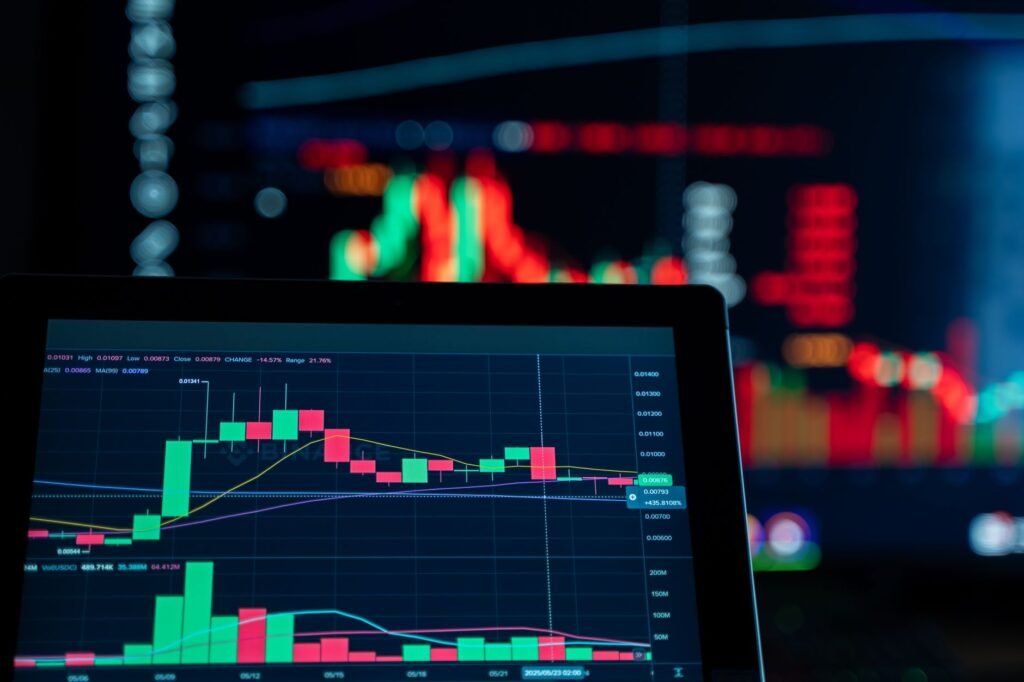
Traditional technical analysis relies heavily on identifying specific chart patterns—such as head and shoulders, double tops, or flag formations—and indicator divergences. However, these patterns can be subjective and difficult to consistently identify across different timeframes and asset classes. AI algorithms, particularly those leveraging deep learning, excel at recognizing complex, non-linear patterns that may be imperceptible to the human eye. These systems can analyze thousands of data points simultaneously, identifying subtle correlations and emergent patterns across multiple markets, asset classes, and timeframes. For instance, AI can detect sophisticated relationships between an asset’s price action, its trading volume, and external macroeconomic indicators, providing a multi-dimensional view of market dynamics that traditional tools cannot.
Predictive Modeling and Probabilistic Forecasting
While traditional technical analysis offers entry and exit signals, AI takes this a step further by integrating advanced predictive modeling. Machine learning models, such as neural networks and support vector machines, can be trained on extensive historical data to forecast future price movements with a higher degree of statistical probability. Instead of simply indicating a potential direction, these models can estimate the likelihood of various outcomes, often providing probability distributions for price ranges or momentum shifts. This shift from deterministic signals to probabilistic insights enables traders to make more nuanced decisions, understanding the inherent uncertainty of market movements and adjusting their risk exposure accordingly. For example, an AI might suggest an 80% probability of an upward trend continuation within a specific time horizon, rather than a simple ‘buy’ signal.
Sentiment Analysis Integration
Market sentiment, driven by news, social media, and broader economic narratives, significantly influences price action. In 2026, AI-powered natural language processing (NLP) has become a crucial component of technical analysis, allowing traders to quantify sentiment. These systems can scour millions of news articles, social media posts, earnings call transcripts, and economic reports in real-time. By analyzing the tone, frequency, and context of keywords, AI can gauge prevailing market sentiment towards specific assets or the broader economy. This sentiment data can then be integrated with traditional price-volume analysis, providing a holistic view. For instance, a bullish technical pattern might be reinforced or contradicted by underlying market sentiment, offering a more robust decision-making framework. The rapid dissemination of information in today’s digital age makes such real-time sentiment analysis an invaluable tool.
Automated Strategy Backtesting and Optimization
Developing and refining trading strategies traditionally involves extensive manual backtesting, which can be time-consuming and prone to human bias. AI revolutionizes this process by automating and optimizing strategy development at an unprecedented scale. Machine learning algorithms can backtest a myriad of strategy variations against historical data, identifying the most robust and profitable parameters under various market conditions. Furthermore, AI can continuously learn and adapt strategies in response to evolving market dynamics, ensuring that approaches remain relevant. This means a strategy developed today can be dynamically adjusted by AI to remain effective as market structures or volatility regimes shift. This capability greatly enhances the efficiency and potential effectiveness of strategy development.
Risk Management and Portfolio Allocation
Beyond identifying trading opportunities, AI plays a critical role in sophisticated risk management and dynamic portfolio allocation. AI models can analyze a trader’s portfolio, assess correlations between assets, and identify potential areas of concentrated risk that might not be obvious to human analysts. By dynamically adjusting position sizes, setting optimal stop-loss levels, and even suggesting hedges based on real-time market conditions and forecasted volatilities, AI helps manage portfolio risk more effectively. This allows for proactive rather than reactive risk mitigation, a significant advantage in volatile markets. For example, AI can identify if various “unrelated” assets in a portfolio suddenly exhibit strong positive correlation due to an external economic shock, prompting immediate adjustments to maintain desired diversification.
Challenges and Considerations for Traders in the AI Era
While AI offers significant advantages, its deployment in technical analysis comes with important considerations.
Data Quality and Bias
The effectiveness of any AI model hinges entirely on the quality and integrity of the data it is trained on. Biased, incomplete, or inaccurate historical data can lead to flawed insights and erroneous predictions. Traders must be vigilant about the data sources used by their AI tools, understanding that “garbage in, garbage out” remains a fundamental principle. Ensuring data cleanliness and representativeness across various market conditions is paramount.
Over-reliance and Black Box Issues
There is a risk of traders becoming overly reliant on AI-generated signals without fully understanding the underlying logic or limitations. Some advanced AI models, particularly deep learning networks, can operate as “black boxes,” making it difficult to fully interpret their decision-making processes. Traders should strive for a balance, using AI as an analytical augment, not a replacement for critical thinking. Understanding the ‘why’ behind an AI’s output is crucial for responsible trading.
Continuous Learning and Adaptation
Financial markets are dynamic and constantly evolving. An AI model trained on past data may degrade in performance if market structures or behaviors fundamentally change. Continuous learning and regular retraining of AI models are essential to ensure their relevance and accuracy in 2026’s rapidly shifting economic landscape. This requires ongoing maintenance and careful monitoring.
The Human Element Remains Critical
Despite the revolutionary capabilities of AI, the human element in trading remains indispensable. AI excels at quantitative analysis, pattern recognition, and processing vast amounts of data, but it lacks intuition, creativity, and the ability to understand nuanced geopolitical events, regulatory shifts, or unforeseen market sentiment shifts that cannot be quantified. Traders who successfully integrate AI into their workflow often act as strategic overseers, leveraging AI for data crunching and insight generation, while applying their own experience, judgment, and qualitative understanding to final decisions. The synergy between human intellect and artificial intelligence is where the greatest edge is found.
Conclusion
In 2026, AI has not replaced technical analysis; it has elevated it to an entirely new level of sophistication and potential. By automating pattern recognition, enhancing predictive capabilities, integrating sentiment analysis, optimizing strategies, and improving risk management, AI tools empower traders with deeper insights and more robust decision-making frameworks. As technology continues to advance, the symbiotic relationship between human traders and intelligent machines will likely define the future of market analysis, allowing for a more informed and adaptive approach to navigating the complexities of financial markets.
Disclaimer: This article is provided for general informational and educational purposes only and does not constitute financial, investment, trading, or legal advice. Gainsium is not a registered investment advisor. Markets are volatile and past performance does not guarantee future results. Readers should conduct their own research and consult a licensed financial advisor before making any investment decisions.