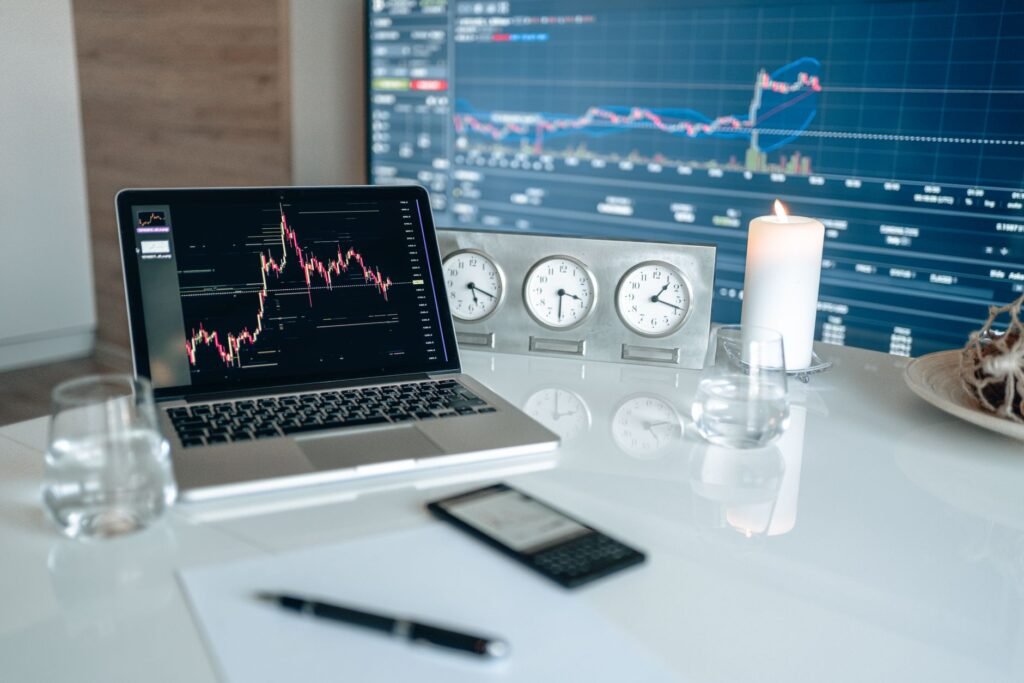

Welcome to the dynamic world of Forex trading, a global market that remains the largest and most liquid financial arena on Earth. As we navigate 2026, the foreign exchange market continues to evolve, offering unparalleled opportunities for those equipped with the right knowledge and tools. For beginners, understanding the core concepts and adapting to current trends is crucial for navigating its complexities and unlocking its potential. This comprehensive guide from Gainsium will equip you with the foundational understanding to start your Forex journey in 2026.
Understanding Forex Trading in 2026
Forex, or Foreign Exchange, is the process of exchanging one currency for another. It’s a decentralized global market where all the world’s currencies trade. With an average daily turnover estimated to be well over $7 trillion, its sheer scale provides immense liquidity and round-the-clock trading opportunities, five days a week. In 2026, the market is characterized by heightened digital integration, rapid information dissemination, and a continued interplay of macroeconomic factors with geopolitical shifts.
Currency Pairs: The Heart of Forex
When you trade Forex, you’re always buying one currency while simultaneously selling another. These are known as currency pairs. They are quoted with a base currency and a quote currency (e.g., EUR/USD). Understanding these pairs is fundamental:
- Major Pairs: Involve the US Dollar (USD) and another major world currency. Examples include EUR/USD, GBP/USD, USD/JPY, AUD/USD, USD/CAD, USD/CHF, NZD/USD. These are the most liquid and actively traded, often having tighter spreads.
- Minor Pairs (Cross-Currency Pairs): Do not involve the USD but feature two major currencies. Examples include EUR/GBP, EUR/JPY, GBP/JPY. These can offer distinct trading opportunities but might have slightly wider spreads due to less liquidity.
- Exotic Pairs: Consist of one major currency and a currency from a smaller or emerging economy (e.g., USD/MXN, EUR/TRY). These are typically less liquid and can be highly volatile, making them riskier for beginners.
2026 Insight: Geopolitical stability, central bank interest rate differentials (especially between the Fed, ECB, BoE, BoJ), and commodity price fluctuations (impacting CAD, AUD, NZD) are expected to be primary drivers of major and minor currency pair movements throughout 2026. Keep an eye on evolving trade policies and inflation reports globally.
Leverage and Margin: Tools and Risks in 2026
Leverage and margin are critical concepts in Forex trading, allowing traders to control larger positions with a relatively small amount of capital. While powerful, they also amplify both potential gains and losses.
Navigating Leverage Wisely
Leverage is essentially borrowed capital provided by your broker to increase your trading position’s size. For example, 1:100 leverage means for every $1 of your own capital, you can control $100 in the market. This means a small price movement in your favor can yield significant returns, but a small adverse movement can lead to substantial losses.
Practical Advice for 2026: The regulatory landscape continues to emphasize responsible leverage. While some brokers offer high leverage, Gainsium strongly recommends beginners start with very low leverage (e.g., 1:10 or 1:30). High leverage is a primary reason new traders fail. Always prioritize capital preservation.
Margin: Your Trading Collateral
Margin is the actual amount of money required in your trading account to open and maintain a leveraged position. It’s not a fee but a deposit held by your broker as collateral. If your trade moves against you and your account equity falls below the required margin level, you could face a margin call. This is a demand from your broker to deposit more funds to cover potential losses or to close out your positions automatically.
2026 Trend: With increased market volatility driven by persistent global economic uncertainties and rapid news cycles, margin calls are a more common threat. Always monitor your margin level and maintain sufficient free margin to withstand market fluctuations. Never risk more than you can afford to lose.
Decoding the Market: Technical Analysis for 2026 Beginners
Technical analysis (TA) involves studying past price action and volume data on charts to predict future price movements. It’s a cornerstone of Forex trading, and in 2026, enhanced charting tools and AI-powered indicators make it more accessible than ever for beginners.
Key Technical Indicators to Watch
These tools help identify potential entry and exit points, trend strength, and reversals:
- Moving Averages (MAs): Smooth out price data to identify trends. Common MAs are the 50-period and 200-period, often used for identifying long-term trends and potential support/resistance levels.
- Relative Strength Index (RSI): A momentum oscillator that measures the speed and change of price movements. It ranges from 0 to 100, with readings above 70 indicating overbought conditions and below 30 indicating oversold conditions.
- Moving Average Convergence Divergence (MACD): Another trend-following momentum indicator that shows the relationship between two moving averages of a security’s price. It’s often used to identify trend direction and potential reversals.
- Bollinger Bands: Volatility indicators that consist of a simple moving average and two standard deviation lines above and below it. They help identify periods of high or low volatility and potential price breakouts.
Chart Patterns and Support/Resistance
Technical analysts also look for recurring chart patterns that signal potential price action, such as:
- Support and Resistance Levels: Price levels where a currency pair has historically struggled to move above (resistance) or below (support). These are crucial for setting stop-loss and take-profit levels.
- Trendlines: Lines drawn to connect a series of highs or lows, indicating the direction and strength of a trend.
- Candlestick Patterns: Specific formations of candlesticks that can signal potential reversals or continuation of a trend (e.g., Doji, Hammer, Engulfing patterns).
2026 Perspective: While AI and algorithms increasingly influence market movements, human interpretation of technical analysis remains vital. AI-powered platforms can now automatically identify complex patterns and suggest optimal indicator settings, democratizing advanced TA for beginners. However, always use these tools as aids, not as replacements for your own analysis and critical thinking.
Key Trends and Considerations for 2026 Forex Traders
Staying informed about the broader economic and technological landscape is paramount for any Forex trader in 2026.
Global Economic Outlook
Expect continued divergence in central bank monetary policies. While some economies might be grappling with persistent inflationary pressures, others could be nearing interest rate cuts to stimulate growth. Pay close attention to:
- Inflation Data: Consumer Price Index (CPI), Producer Price Index (PPI) releases will heavily influence central bank decisions.
- Interest Rate Decisions: Announcements from the Federal Reserve (FOMC), European Central Bank (ECB), Bank of England (BoE), and Bank of Japan (BoJ) are market movers.
- Geopolitical Shifts: Regional conflicts, trade disputes, and major election outcomes will continue to inject volatility and uncertainty into specific currency pairs.
Technological Advancements
The rise of AI and machine learning is making Forex trading more efficient:
- Algorithmic Trading: More retail brokers are offering accessible tools for automated trading strategies.
- Enhanced Analytics: AI-driven sentiment analysis and predictive models are becoming standard features on advanced trading platforms.
- Mobile Trading: Robust, feature-rich mobile apps continue to empower traders to manage positions and analyze markets on the go.
Regulatory Environment
Regulators globally are constantly reviewing leverage limits and client protection measures. Stay updated on regulations in your jurisdiction to ensure you are trading with a compliant and reputable broker.
Building Your 2026 Forex Trading Strategy
Success in Forex trading isn’t about luck; it’s about discipline, education, and a well-defined strategy.
- Educate Yourself Continuously: The market is dynamic. Keep learning about new indicators, strategies, and global economic factors. Gainsium is your ultimate resource.
- Start with a Demo Account: Before risking real capital, practice extensively on a demo account. This allows you to test strategies, understand your platform, and get comfortable with market movements in a risk-free environment.
- Develop a Trading Plan: Define your goals, risk tolerance, preferred currency pairs, trading hours, and strategy for entry/exit points. Stick to your plan rigorously.
- Master Risk Management: This is arguably the most crucial aspect. Always use stop-loss orders to limit potential losses. Determine your position size based on a small percentage (e.g., 1-2%) of your total capital per trade.
- Stay Informed: Follow economic calendars, financial news, and expert analyses. Macroeconomic events and news releases are fundamental drivers of currency prices.
- Control Your Emotions: Fear and greed are powerful emotions that can derail even the best trading plans. Trade with logic, not emotion.
Conclusion
Forex trading in 2026 offers immense opportunities for those prepared to put in the work. By understanding currency pairs, judiciously managing leverage and margin, and applying sound technical analysis, beginners can lay a strong foundation. Couple this with a keen awareness of global economic trends, technological advancements, and a disciplined approach to risk management, and you’ll be well-positioned to navigate the complexities and capitalize on the potential of the world’s most exciting financial market. Start small, learn consistently, and trade wisely.