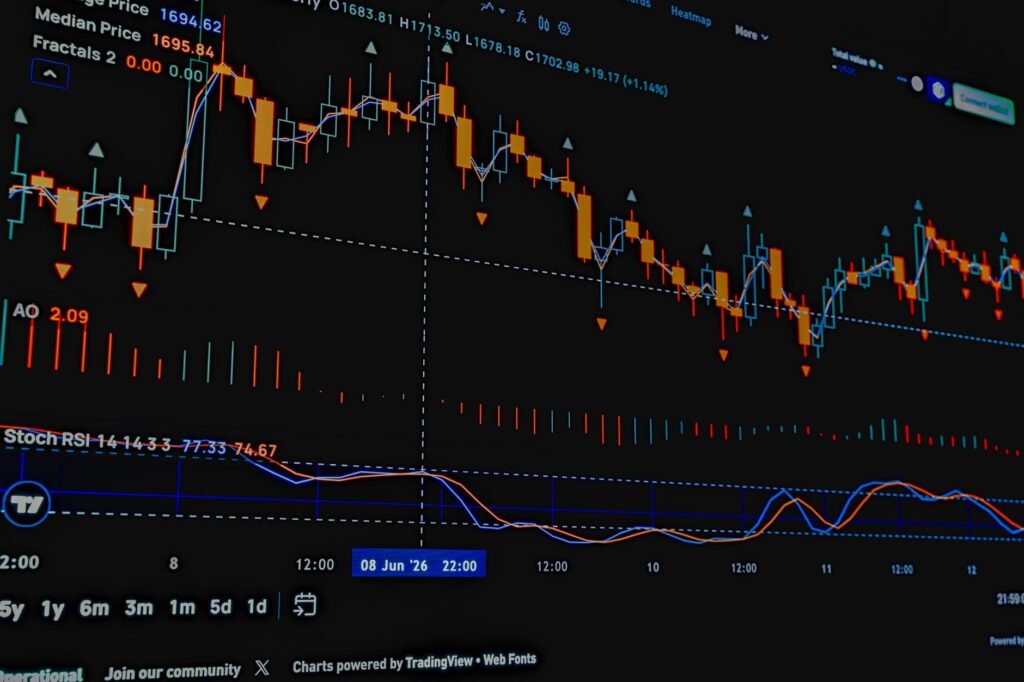

In 2026, artificial intelligence (AI) has moved beyond buzzword status to become an indispensable tool profoundly reshaping the landscape of portfolio management and optimization. This evolution is driven by AI’s unparalleled ability to process vast datasets, identify complex patterns, and execute sophisticated strategies that were once the exclusive domain of human analysts. From revolutionizing how portfolios are constructed and risks are assessed to enabling dynamic, real-time rebalancing, AI is redefining the benchmarks for efficiency and effectiveness in financial stewardship.
AI in Portfolio Construction
The foundation of any successful investment strategy is robust portfolio construction, and in 2026, AI has significantly advanced this critical process. Traditional asset allocation models, while valuable, often rely on historical data and static assumptions. AI, conversely, leverages machine learning algorithms to analyze a broader spectrum of information, including alternative data sources like satellite imagery, social media sentiment, and supply chain logistics, alongside conventional market data. This allows for a more nuanced and forward-looking approach to portfolio design.
Algorithmic Asset Allocation
AI-driven platforms can process billions of data points to identify optimal asset mixes that align with specific risk tolerances and financial objectives. These algorithms don’t just react to past performance; they aim to predict future market movements and correlations with greater accuracy. For instance, an AI might dynamically adjust exposure to different asset classes based on real-time economic indicators and geopolitical shifts, moving beyond fixed percentages to adaptive allocations. This enables the creation of highly personalized portfolios designed to potentially perform more resiliently across various market conditions.
Predictive Analytics for Market Trends
Beyond asset allocation, AI is transforming how market trends are identified and leveraged. Advanced predictive models can discern subtle signals in the noise, potentially forecasting shifts in sector performance, commodity prices, or currency valuations. While no model can guarantee future outcomes, AI provides investment managers with powerful probabilistic insights, aiding in strategic decision-making. These insights might highlight emerging technologies, changing consumer behaviors, or macroeconomic shifts, allowing for proactive adjustments rather than reactive responses in portfolio positioning.
Enhanced Risk Management
Managing risk is paramount in portfolio management, and AI offers a quantum leap in capabilities. The sheer volume and complexity of data that AI can analyze enable a more comprehensive understanding and mitigation of various risks, from market volatility to idiosyncratic security-specific dangers. In 2026, AI-powered risk engines are standard tools for sophisticated financial institutions and increasingly accessible to individual investors through advanced platforms.
Granular Risk Profiling
AI algorithms can create exceptionally granular risk profiles, not only for an entire portfolio but also for individual assets within it. They analyze factors like credit risk, liquidity risk, operational risk, and even reputational risk, incorporating unstructured data from news reports and corporate filings. This allows for a far more detailed assessment of potential downside scenarios. For example, an AI might identify heightened concentration risk in a sector experiencing regulatory headwinds, prompting a re-evaluation of exposure before significant losses occur.
Stress Testing and Scenario Analysis
Modern portfolio management utilizes AI to conduct sophisticated stress tests and scenario analyses that far exceed traditional methods. AI can simulate thousands, even millions, of hypothetical market conditions—ranging from severe economic downturns to sector-specific crises or geopolitical shocks. By understanding how a portfolio might perform under these extreme but plausible scenarios, investment managers can build more robust portfolios and implement proactive hedging strategies. This proactive approach helps investors prepare for and potentially mitigate the impact of unforeseen events, bolstering long-term portfolio stability.
Dynamic Rebalancing and Optimization
One of the most significant impacts of AI in 2026 is its role in automating and optimizing portfolio rebalancing. Traditionally, rebalancing was often a periodic, rules-based process. With AI, it becomes a dynamic, continuous function that can respond to market fluctuations and evolving investor objectives with unprecedented agility.
Adaptive Rebalancing Strategies
AI systems monitor portfolios in real-time, identifying when asset allocations drift from their target weights due to market movements. Rather than waiting for a quarterly review, AI can trigger micro-adjustments as needed, minimizing tracking error and keeping risk exposure aligned with an investor’s profile. This adaptive rebalancing can also incorporate tax efficiency, aiming to execute trades in a way that minimizes capital gains taxes, a strategy known as tax-loss harvesting. The system might automatically sell underperforming assets at a loss to offset gains elsewhere, optimizing net returns.
Behavioral Finance Integration
Intriguingly, AI is also being used to integrate insights from behavioral finance into optimization strategies. By observing broad market patterns and the collective actions of investors, AI can help identify potential behavioral biases, such as herd mentality or overreaction to news, that might create mispricings. While AI does not give personalized psychological advice, it can help portfolio managers construct portfolios that are less susceptible to market irrationality or identify opportunities arising from these biases, potentially enhancing returns for long-term investors.
The Human Element in an AI-Driven World
While AI’s capabilities are transformative, it is crucial to recognize that it augments, rather than replaces, the human element in portfolio management. In 2026, the most effective strategies often involve a symbiotic relationship between advanced AI tools and experienced financial professionals.
The Role of Financial Advisors
Financial advisors leverage AI as a powerful assistant. AI can handle the computational heavy lifting, data analysis, and execution of routine tasks, freeing advisors to focus on higher-value activities. This includes understanding clients’ complex financial goals, life changes, and emotional responses to market volatility, which AI cannot fully replicate. Advisors interpret AI-generated insights, provide strategic oversight, and offer the crucial human judgment and empathy that are indispensable for long-term client relationships. Their expertise in contextualizing AI’s output, especially during periods of market uncertainty, remains vital.
Ethical Considerations and Governance
As AI’s role expands, discussions around ethical considerations and governance have intensified in 2026. Concerns about algorithmic bias, data privacy, and the transparency of AI decision-making are at the forefront. Regulators globally are increasingly scrutinizing AI models used in finance to ensure fairness, accountability, and explainability. Investment firms utilizing AI are implementing robust internal governance frameworks to oversee AI model development, deployment, and monitoring, ensuring that these powerful tools are used responsibly and in the best interests of investors. Understanding that AI is a tool, not an infallible oracle, is key to its responsible integration into financial practices.
Disclaimer: This article is provided for general informational and educational purposes only and does not constitute financial, investment, trading, or legal advice. Gainsium is not a registered investment advisor. Markets are volatile and past performance does not guarantee future results. Readers should conduct their own research and consult a licensed financial advisor before making any investment decisions.