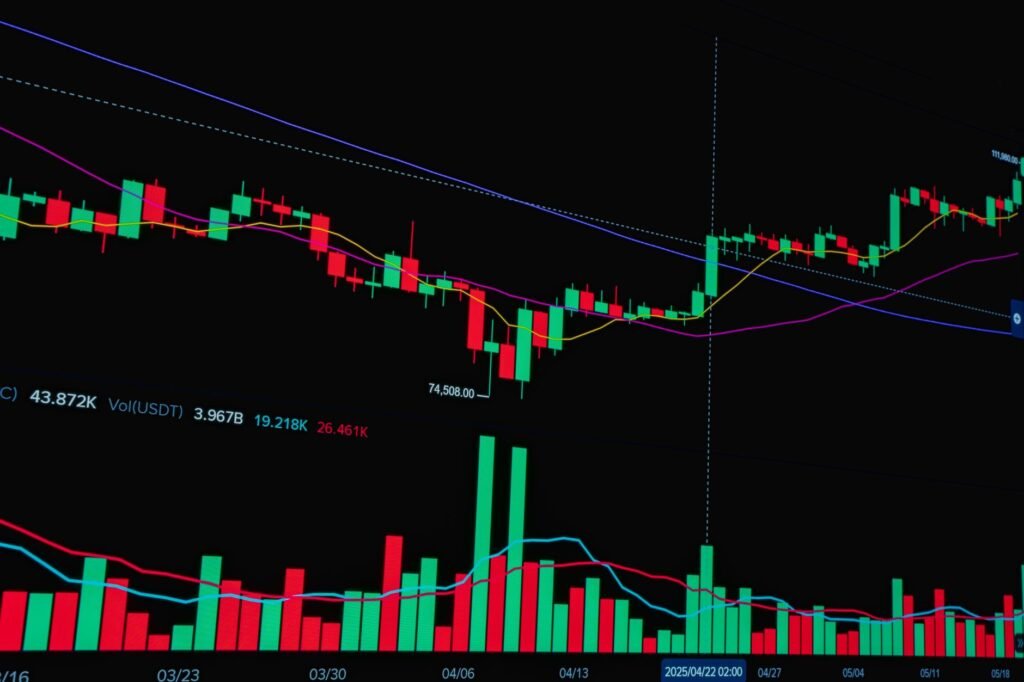

In 2026, the financial markets continue their rapid evolution, driven by an unprecedented volume of information and the ever-present quest for an informational edge. Traders are increasingly turning to advanced technologies to navigate this complex landscape. Artificial intelligence (AI) has emerged as a particularly transformative force, fundamentally improving how market sentiment analysis is conducted. This article explores how AI tools are leveraged to process vast quantities of news, social media, and other data sources, enabling traders to gauge market sentiment with greater precision and inform their trading decisions.
The Evolving Landscape of Market Sentiment in 2026
The Data Explosion
The digital age has brought forth an explosion of unstructured data. Every second, millions of news articles are published, social media posts are shared, and financial forums buzz with discussions. For a trader in 2026, manually sifting through this deluge to discern collective investor mood is not only impractical but virtually impossible. Traditional sentiment analysis, often relying on keyword searches, frequently misses nuance, context, and the subtle shifts that can precede significant market movements.
The Need for Speed and Accuracy
In today’s fast-paced markets, the difference between profit and loss can hinge on the speed and accuracy with which information is processed. Global events, corporate announcements, and economic data releases can trigger immediate reactions. Identifying nascent sentiment shifts, whether bullish optimism or bearish anxiety, requires tools capable of real-time analysis across diverse and often conflicting information streams. This is where AI’s capabilities become indispensable.
How AI Powers Advanced Sentiment Analysis
Natural Language Processing (NLP) at the Forefront
The cornerstone of AI-driven sentiment analysis is Natural Language Processing (NLP). Unlike simple keyword matching, NLP algorithms can understand the context, tone, and emotional undertones of text. In 2026, sophisticated NLP models can:
- Identify Sarcasm and Irony: Distinguish genuine sentiment from cynical or humorous remarks.
- Discern Nuance: Understand subtle positive or negative connotations that might not be explicitly stated.
- Contextualize: Analyze how a particular word or phrase contributes to the overall sentiment of a sentence or paragraph, rather than just its standalone meaning.
- Topic Modeling: Identify the specific topics being discussed and associate sentiment with particular assets, sectors, or economic themes.
These advanced capabilities allow AI to extract far more accurate and granular sentiment insights from news headlines, analyst reports, and social media feeds than previous methods.
Machine Learning for Pattern Recognition
Beyond simply understanding text, AI employs machine learning (ML) models to identify complex patterns. ML algorithms are trained on vast historical datasets, learning to correlate specific sentiment shifts with subsequent market movements. While not guaranteeing future outcomes, these models can:
- Predictive Insights: Identify probabilistic relationships between sentiment indicators and asset price behavior. For example, a sustained rise in positive sentiment towards a specific industry might historically precede increased investment in that sector.
- Anomaly Detection: Flag unusual or sudden shifts in sentiment that deviate from historical norms, potentially signaling emerging risks or opportunities.
By learning from past market reactions to sentiment, AI helps traders understand potential probabilities, adding a data-driven layer to decision-making.
Multimodal Sentiment Analysis
The cutting edge of AI in 2026 extends beyond text. Multimodal sentiment analysis involves integrating data from various formats. This can include:
- Image and Video Analysis: Processing visual cues in financial news videos or social media content.
- Audio Transcripts: Analyzing the tone and emotion in earnings call transcripts or investor conference recordings.
By combining insights from diverse media, AI creates a more comprehensive and robust picture of overall market sentiment.
AI’s Impact on Trading Decisions
Identifying Early Signals
One of the most significant benefits for traders is AI’s capacity to detect subtle shifts in sentiment before they become widely apparent. AI can process information much faster than any human team, identifying nascent trends in online discussions or obscure news sources that might influence market direction. This allows some traders to potentially anticipate market movements rather than merely reacting to them.
Risk Management Enhancement
AI-driven sentiment analysis also plays a crucial role in risk management. By continuously monitoring sentiment across various assets and sectors, AI can alert traders to growing negativity or uncertainty that could signal impending volatility or a potential downturn. Conversely, a pervasive positive sentiment might indicate a higher risk of market exuberance that could lead to corrections. This early warning system can help traders adjust their positions or strategies proactively.
Automated Trading Strategies
For some quantitative trading firms and sophisticated individual traders, AI-driven sentiment scores are integrated directly into automated trading algorithms. These systems can execute trades based on predefined sentiment thresholds or changes, allowing for rapid, data-driven responses to market conditions. It is important to note that such strategies require extensive backtesting and careful calibration, and their performance depends heavily on the quality and robustness of the underlying AI models.
Filtering Noise from Signal
The sheer volume of financial information often includes considerable
Disclaimer: This article is provided for general informational and educational purposes only and does not constitute financial, investment, trading, or legal advice. Gainsium is not a registered investment advisor. Markets are volatile and past performance does not guarantee future results. Readers should conduct their own research and consult a licensed financial advisor before making any investment decisions.