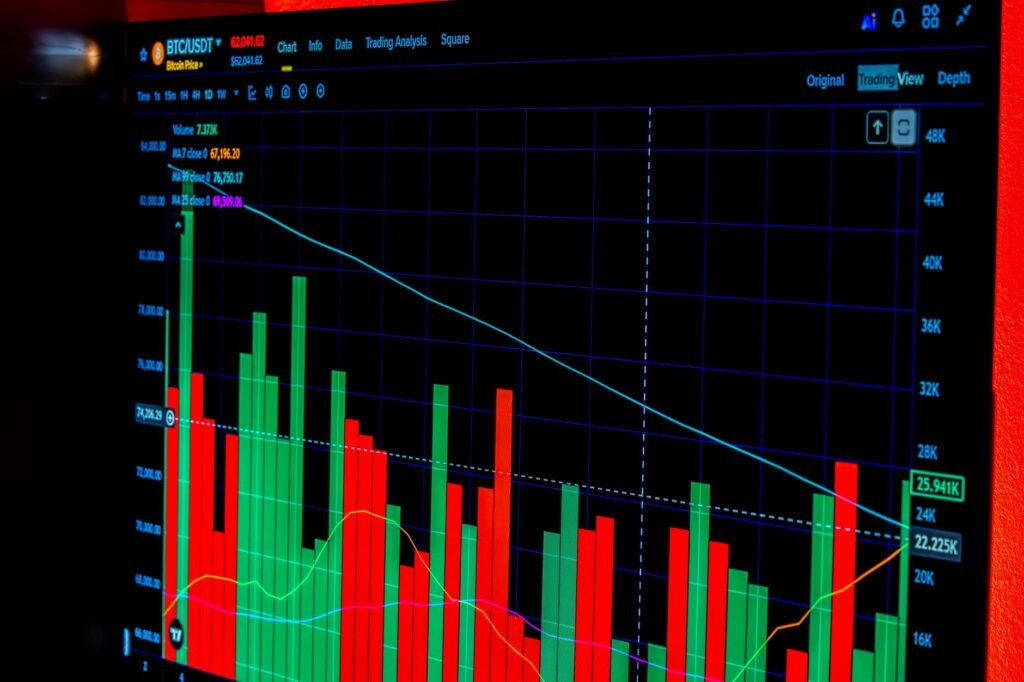

In 2026, artificial intelligence (AI) has fundamentally reshaped the landscape of algorithmic trading, particularly in the critical domain of order execution. This article explores how AI and machine learning algorithms are specifically applied to optimize the execution of trades, with a focus on mitigating challenges such as slippage and market impact in today’s sophisticated financial markets. Algorithmic trading, once reliant on predefined rule sets, now leverages the predictive power and adaptive capabilities of AI to navigate market complexities with unprecedented precision, aiming to achieve best execution for institutional and sophisticated retail traders alike.
The Evolution of Algorithmic Trading
Algorithmic trading has been a cornerstone of modern financial markets for decades, evolving from simple rule-based systems to highly complex, data-driven strategies. Initially, algorithms were designed to automate straightforward tasks, such as executing orders based on pre-set conditions or breaking large orders into smaller chunks to manage market impact. Early strategies included Volume-Weighted Average Price (VWAP) and Time-Weighted Average Price (TWAP) algorithms, which aimed to execute an order over a specific period or in proportion to the market’s trading volume.
However, as financial markets became increasingly fragmented, fast-paced, and influenced by high-frequency trading (HFT) firms, these traditional algorithms faced limitations. They often struggled to adapt to sudden market shifts, unexpected volatility spikes, or rapidly changing liquidity conditions. The need for more dynamic, intelligent execution strategies became apparent. This paved the way for the integration of AI and machine learning, offering a significant leap beyond static rule sets to adaptive, learning systems.
AI and Machine Learning in Order Execution
The core advantage of AI and machine learning (ML) in order execution lies in their ability to process vast quantities of data, identify non-linear patterns, and make real-time, adaptive decisions that traditional algorithms cannot. These systems can learn from historical market data, observe current market dynamics, and predict future movements with a degree of accuracy that helps optimize execution strategies.
Data-Driven Decision Making
AI-driven execution algorithms thrive on data. They ingest and analyze a multitude of data points, including:
- Real-time market data: This includes order book depth, bid-ask spreads, trading volumes, and historical price movements across various exchanges and dark pools.
- Fundamental data: Macroeconomic indicators, company news, earnings reports, and analyst ratings can influence market sentiment and asset prices.
- Alternative data: Satellite imagery, social media sentiment, news analytics (via Natural Language Processing), and supply chain data offer unique insights that AI can incorporate.
- Historical trade data: Analyzing past execution performance helps the algorithms refine their strategies, learning from both successful and suboptimal outcomes.
By continuously learning from this rich data landscape, AI systems can develop a nuanced understanding of market microstructure, allowing for more informed and timely execution decisions.
Predictive Analytics for Optimal Timing
A key application of AI in order execution is its prowess in predictive analytics. Machine learning models can forecast short-term price movements, volatility levels, and liquidity conditions with greater precision than traditional statistical methods. For instance, an AI might predict that a particular stock will experience a temporary dip in price due to an impending large sell order, creating an optimal window for a buy order.
These predictions allow execution algorithms to:
- Anticipate liquidity: Identifying when and where sufficient liquidity will be available to execute an order without significant price impact.
- Forecast volatility: Adjusting order placement strategies to minimize risk during periods of high volatility or to capitalize on favorable price fluctuations during low volatility.
- Optimize slicing: Dynamically breaking down large orders into smaller, more manageable ‘slices’ for execution, adjusting slice size and timing based on real-time market conditions.
Key AI Techniques for Optimized Execution
Several advanced AI and machine learning techniques are central to optimizing order execution in 2026.
Reinforcement Learning (RL)
Reinforcement Learning is particularly well-suited for order execution. RL agents learn to make a sequence of decisions in a dynamic environment to maximize a cumulative reward. In trading, the ‘environment’ is the market, and the ‘reward’ could be minimizing execution costs, reducing slippage, or achieving a target price. RL algorithms can experiment with different execution strategies in simulated market environments and learn which actions lead to the best outcomes under various market conditions. This allows them to adapt in real time, determining the optimal quantity to trade and the best venue at any given moment.
Deep Learning and Neural Networks
Deep learning models, especially deep neural networks, excel at identifying complex, non-linear patterns in vast datasets. They are used to process and understand unstructured data, such as news articles and social media feeds, through Natural Language Processing (NLP). By analyzing the sentiment and context of textual information, deep learning models can gauge market sentiment, which in turn informs execution strategies. For instance, a sudden surge of negative sentiment around a particular company could signal a potential short-term price decline, prompting the execution algorithm to accelerate sell orders or pause buy orders.
Natural Language Processing (NLP)
NLP is a specialized area of AI that allows computers to understand, interpret, and generate human language. In order execution, NLP algorithms continuously scan financial news, regulatory filings, social media, and other textual sources. They can identify significant events, assess their potential market impact, and integrate these insights into the execution strategy. For example, an NLP model might detect an unexpected merger announcement that could immediately affect a stock’s price, enabling the algorithm to react much faster than a human trader or a traditional rule-based system.
Minimizing Slippage and Market Impact
The primary goals of AI-driven order execution are to minimize slippage and market impact, both of which can significantly erode trading profits.
Slippage Reduction
Slippage occurs when the executed price of an order differs from the expected price at the time the order was placed. This is common in volatile markets or when trading illiquid assets. AI algorithms reduce slippage by:
- Micro-price prediction: AI models can predict very short-term price movements at a microsecond level, allowing orders to be placed precisely when the probability of receiving a favorable price is highest.
- Dynamic order placement: Instead of static limit orders, AI can dynamically adjust limit prices and order sizes in response to immediate market changes, ‘sniping’ liquidity at favorable levels.
- Optimal venue selection: Utilizing smart order routing, AI directs orders to the venue (exchange, ECN, dark pool) that offers the best available price and liquidity at that exact moment, significantly reducing the likelihood of adverse price movements during execution.
Market Impact Mitigation
Market impact refers to the adverse price movement caused by a large order itself. A large buy order, for example, can push the price up before it is fully executed, resulting in a higher average entry price. AI mitigates market impact by:
- Intelligent order slicing: AI algorithms dynamically determine the optimal size and timing of each small slice of a larger order, aiming to blend seamlessly with natural market flow rather than standing out. This is often achieved through sophisticated RL agents learning optimal trajectories.
- Adaptive execution strategies: AI constantly monitors the market’s response to its own trades. If an order slice is causing too much impact, the algorithm can immediately adjust its strategy – pausing execution, reducing slice size, or switching to different venues.
- Utilizing dark pools and non-displayed liquidity: AI can intelligently route portions of an order to dark pools where liquidity is not displayed, allowing for execution without revealing the full order size to the broader market and thus reducing potential impact.
The Future Landscape of AI-Driven Trading in 2026
In 2026, the sophistication of AI in order execution continues to advance. We observe a trend toward increasingly autonomous systems that require minimal human intervention, focusing on continuous learning and adaptation. Explainable AI (XAI) is also gaining traction, as traders and regulators seek to understand the rationale behind AI’s complex decisions. While AI offers immense advantages, it also introduces new challenges related to model risk, data privacy, and the need for robust regulatory frameworks to ensure market fairness and stability.
As AI tools become more powerful, they enable market participants to execute trades with unprecedented efficiency and precision, constantly optimizing for speed, cost, and impact. The ongoing evolution of AI and machine learning will undoubtedly continue to shape the strategies employed in navigating the complexities of modern financial markets, pushing the boundaries of what is possible in order execution.
Disclaimer: This article is provided for general informational and educational purposes only and does not constitute financial, investment, trading, or legal advice. Gainsium is not a registered investment advisor. Markets are volatile and past performance does not guarantee future results. Readers should conduct their own research and consult a licensed financial advisor before making any investment decisions.