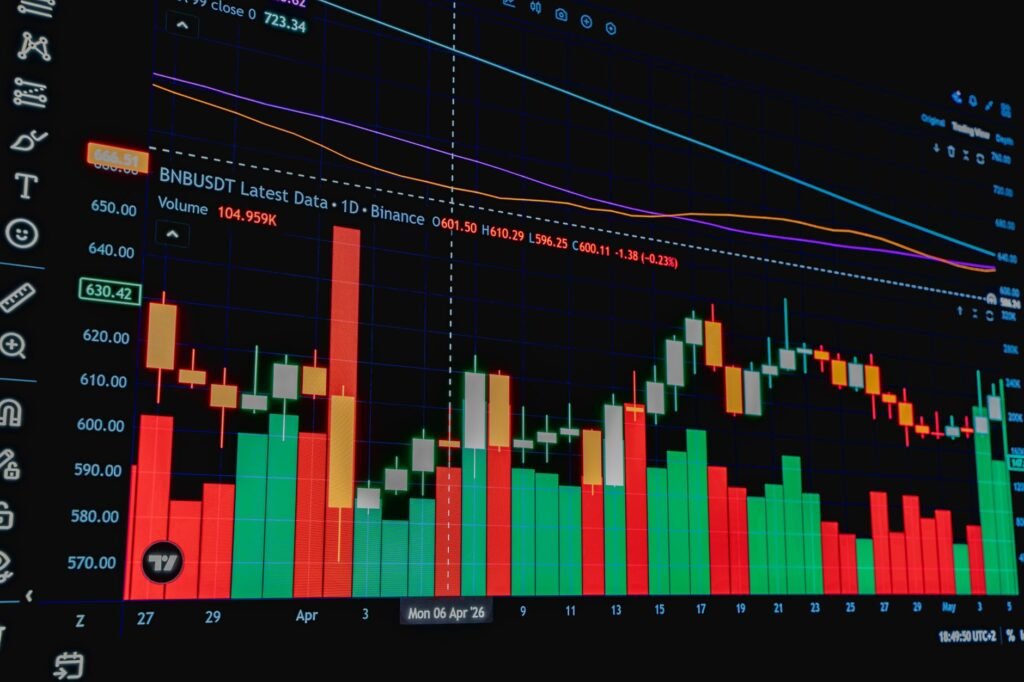

When considering strategies for portfolio growth, traders often encounter various approaches, each with its own methodology and risk profile. Two prominent strategies that frequently come into discussion are swing trading and position trading. This article will compare these two distinct methodologies, outlining their key differences, risk considerations, and suitability for investors aiming for long-term portfolio growth.
Understanding Swing Trading
Swing trading is a short-to-medium term trading strategy that aims to profit from price swings in an asset over a period of a few days to several weeks. Traders utilizing this approach typically look to capture gains from significant price movements, or ‘swings,’ within a larger trend.
Objectives and Market Focus
The primary objective of a swing trader is to identify assets that are likely to experience a short-term price movement in a particular direction and then enter a trade to capitalize on that move. This often involves trading during periods of higher volatility. Swing traders do not hold positions overnight or over weekends if they anticipate significant price gaps. Their focus is on capturing a segment of a larger trend or a counter-trend bounce, rather than the entire long-term movement.
Tools and Techniques
Swing traders heavily rely on technical analysis. They use various charting patterns, indicators such as Moving Averages, Relative Strength Index (RSI), and MACD (Moving Average Convergence Divergence), and support and resistance levels to identify potential entry and exit points. Fundamental analysis might be used to screen for suitable assets, but the day-to-day decision-making is predominantly technical. Given the rapid pace of market news and algorithmic trading prevalence in 2026, swing traders need robust systems to react swiftly to evolving conditions.
Understanding Position Trading
Position trading, in contrast to swing trading, is a long-term strategy where traders hold positions for weeks, months, or even years. The goal is to profit from significant, long-term trends in an asset’s price, largely ignoring minor short-term fluctuations or ‘market noise.’
Objectives and Market Focus
Position traders seek to identify assets with strong underlying fundamentals and favorable macroeconomic conditions that are expected to drive a sustained price movement. They are less concerned with daily price changes and more focused on the overarching narrative and structural shifts in the market. For instance, in 2026, a position trader might focus on sectors like artificial intelligence, renewable energy infrastructure, or emerging market growth, anticipating multi-year expansion.
Tools and Techniques
While technical analysis can be used to identify favorable entry points, position trading relies more heavily on fundamental analysis. This includes evaluating a company’s financial health, industry outlook, competitive landscape, and broader economic indicators like inflation rates, interest rate trajectories, and GDP growth. Patience is a key attribute, as positions are held through various market cycles, including periods of consolidation or minor pullbacks.
Key Differences: A Comparative Overview
The distinction between swing and position trading boils down to several critical factors:
-
Time Horizon: Swing traders hold for days to weeks; position traders hold for weeks, months, or years.
-
Trade Frequency: Swing trading involves more frequent trades and constant monitoring; position trading involves fewer trades and less frequent monitoring.
-
Market Focus: Swing traders focus on short-term price movements and technical patterns; position traders focus on long-term trends and fundamental drivers.
-
Analysis: Swing trading is predominantly technical; position trading is predominantly fundamental.
-
Capital Usage: Swing traders may use leverage more actively to amplify shorter-term gains; position traders typically prefer less leverage to weather longer market cycles.
Risk Profiles and Management
Both strategies carry inherent risks, but their nature differs significantly.
Swing Trading Risk Considerations
Swing trading is generally considered to have a higher risk profile due to its shorter time horizon and reliance on capturing quick movements. Risks include:
-
Gap Risk: Prices can ‘gap’ up or down significantly overnight or over a weekend, leading to substantial losses if the market moves against the position.
-
Volatility: While volatility presents opportunities, it also increases the chance of rapid adverse price movements.
-
Over-trading: The temptation to trade frequently can lead to higher transaction costs and potential for emotional decision-making.
-
Liquidity: Smaller-cap stocks with lower liquidity can be challenging for entering and exiting positions quickly without impacting prices.
Risk management for swing traders often involves strict stop-loss orders, careful position sizing, and a disciplined approach to trade execution.
Position Trading Risk Considerations
Position trading, while seemingly less active, has its own set of risks:
-
Long-Term Macro Risks: Significant shifts in economic policies, technological disruptions, or geopolitical events can undermine long-term fundamental theses. For example, unexpected shifts in global supply chains or energy policies, which have been significant factors in recent years leading into 2026, could dramatically alter long-term outlooks.
-
Opportunity Cost: Capital tied up in a long-term position might underperform compared to other opportunities.
-
Emotional Endurance: Enduring significant drawdowns during market corrections or bear markets can be psychologically challenging, requiring conviction in the long-term thesis.
Risk management for position traders emphasizes thorough fundamental research, diversification across industries, and periodic re-evaluation of the long-term investment thesis.
Suitability for Long-Term Growth
When the goal is long-term portfolio growth, position trading generally aligns more naturally. Its focus on macroeconomic trends and fundamental value allows for compounding returns over extended periods, often minimizing the impact of short-term market noise. A well-researched position trade can benefit from sustained economic expansion and company-specific growth, which are the cornerstones of long-term wealth creation.
Swing trading, while capable of generating substantial short-term gains, requires continuous active management and a high degree of skill. While profits can accumulate over time, the strategy itself is not inherently structured around the long-term holding of assets for compounding. Its contributions to long-term growth would come from consistent, successful execution of numerous shorter-term trades, which can be demanding and challenging to sustain.
In the current market environment of 2026, characterized by ongoing debates around interest rate paths, persistent geopolitical uncertainties, and rapid technological advancements (particularly in AI and biotech), both strategies face dynamic landscapes. Position traders would weigh the long-term implications of these trends, while swing traders would look for the volatility generated by these themes to create shorter-term opportunities.
Choosing the Right Strategy for You
The choice between swing trading and position trading depends heavily on individual factors, including:
-
Time Commitment: Swing trading demands more active engagement; position trading requires less daily oversight.
-
Risk Tolerance: Traders comfortable with frequent, smaller risks might prefer swing trading; those who prefer to ride out longer-term volatility might lean towards position trading.
-
Personality and Discipline: The ability to make quick decisions under pressure is crucial for swing trading, while patience and conviction are vital for position trading.
-
Capital Availability: While both can be started with varying capital, the leverage often associated with swing trading might appeal to those seeking higher returns on smaller capital (though with commensurately higher risk).
For investors primarily focused on long-term portfolio growth, understanding the power of compounding and the underlying fundamentals that drive sustained asset appreciation often leads to a preference for a position trading mindset, or even a pure long-term investment approach. Swing trading can be a complementary strategy for those with the time and expertise to manage it, but it typically serves as a more aggressive, tactical component rather than the primary engine for generational wealth building.
Disclaimer: This article is provided for general informational and educational purposes only and does not constitute financial, investment, trading, or legal advice. Gainsium is not a registered investment advisor. Markets are volatile and past performance does not guarantee future results. Readers should conduct their own research and consult a licensed financial advisor before making any investment decisions.