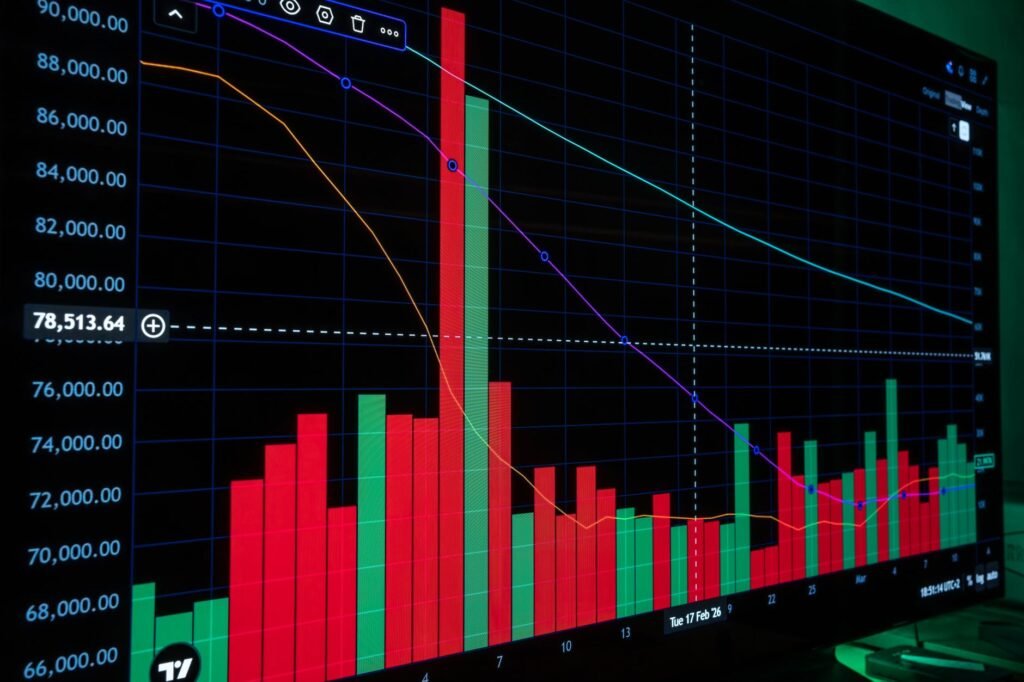

Navigating the complexities of financial markets requires adaptable strategies, especially in periods of significant volatility. For 2026, understanding how to implement sector rotation strategies can be a valuable approach for investors seeking to align their portfolios with prevailing economic conditions and potentially capitalize on shifting market leadership. This guide explores practical steps for identifying and acting on opportunities within a dynamic market landscape.
Understanding Sector Rotation and Volatility in 2026
Sector rotation is an investment strategy that involves shifting investment capital from one industry sector to another in an attempt to outperform the broader market. The underlying premise is that different sectors perform better or worse at various stages of the economic cycle or in response to specific market catalysts. In 2026, market volatility is influenced by a confluence of factors, including the lingering effects of global inflation, evolving central bank monetary policies, geopolitical shifts, and rapid technological advancements.
These dynamics create an environment where market leadership can change rapidly. For example, sectors that thrived in periods of low interest rates might face headwinds as policy rates stabilize or adjust, while more defensive sectors or those benefiting from renewed economic expansion could see tailwinds. Recognizing these shifts is central to effective sector rotation.
The Business Cycle and Sector Performance
Historically, different sectors have demonstrated tendencies to outperform during specific phases of the business cycle:
- Early Cycle: Often characterized by recovering economic growth, sectors like industrials, materials, and consumer discretionary have historically shown strength as demand picks up.
- Mid-Cycle: As growth matures, technology and financials frequently come into focus, benefiting from innovation and expanding credit.
- Late Cycle: During periods of slowing growth or rising inflation concerns, defensive sectors such as consumer staples, utilities, and healthcare tend to offer relative stability.
- Recession: In economic downturns, investors typically seek safety, often favoring defensive sectors, gold, or other uncorrelated assets.
It is important to remember that these are historical tendencies, and actual performance can vary based on the unique characteristics of a given market environment, such as the specific blend of technological disruption and geopolitical tensions observed in 2026.
Identifying Key Market Drivers for Sector Performance in 2026
Successful sector rotation hinges on a thorough analysis of macroeconomic and microeconomic factors that are likely to influence sector-specific performance.
Economic Indicators
Monitoring a range of economic indicators is crucial. For 2026, key metrics include:
- GDP Growth: Stronger economic expansion can boost cyclical sectors; slower growth might favor defensive ones.
- Inflation Rates: Persistent inflationary pressures or disinflationary trends can impact profit margins differently across sectors. Energy and materials might benefit from rising commodity prices, while consumer discretionary could face headwinds from reduced purchasing power.
- Interest Rates: Central bank policies, particularly changes in interest rates, significantly affect sectors like financials (benefiting from higher net interest margins) and technology (which can be sensitive to the cost of capital).
- Employment Data: Low unemployment often signals strong consumer spending, generally positive for consumer-oriented sectors, while rising unemployment can signal economic weakness.
- Consumer Sentiment: Measures of consumer confidence and spending intentions can provide insights into the outlook for retail, travel, and other discretionary sectors.
Technological Advancements
The pace of technological innovation, particularly in areas like artificial intelligence (AI), automation, biotechnology, and sustainable energy solutions, continues to be a dominant market driver in 2026. Sectors at the forefront of these trends (e.g., semiconductor, software, renewable energy infrastructure) may experience significant growth, while those resistant to adaptation could face disruption. Understanding which industries are poised to benefit or be challenged by these advancements is a critical component of sector analysis.
Geopolitical and Regulatory Landscape
Global trade relations, supply chain resilience, and evolving regulatory frameworks play a significant role. Geopolitical tensions can impact energy prices, defense spending, and the flow of goods, affecting sectors like energy, industrials, and logistics. New regulations concerning environmental standards, data privacy, or industry-specific oversight (e.g., healthcare, finance) can create opportunities or impose costs on various sectors, requiring careful consideration for investors.
Practical Steps for Implementing Sector Rotation
Implementing a sector rotation strategy requires a methodical approach. The following steps can guide investors in navigating volatile markets:
- Monitor the Macroeconomic Environment: Continuously observe global economic data, central bank policy statements, and significant geopolitical developments. Understand the broader economic narrative and how it might evolve throughout 2026.
- Identify Current Business Cycle Phase: Based on the macroeconomic analysis, assess where the economy appears to be in its current cycle. Is it expanding, contracting, or in transition? This assessment helps to anticipate which types of sectors may be favored.
- Analyze Sector Strengths and Weaknesses: Delve into specific sector performance. Evaluate factors such as earnings growth, revenue trends, profit margins, and valuation metrics for individual sectors. Compare their relative strength and weakness against the broader market and other sectors. Tools like relative strength indicators can be useful here.
- Select Potential Sectors: Based on your analysis of economic indicators, technological trends, and sector-specific fundamentals, identify sectors that appear poised for potential outperformance in the anticipated market environment, or those that offer defensive characteristics if a downturn is expected.
- Choose Investment Vehicles: Once target sectors are identified, consider appropriate investment vehicles. Sector-specific Exchange Traded Funds (ETFs) or mutual funds often provide diversified exposure to a chosen sector. Individual stocks within a sector can offer concentrated exposure but also carry higher individual company risk.
- Implement and Monitor: Execute the rotation by adjusting portfolio allocations. It is crucial to continuously monitor both market conditions and the performance of your chosen sectors. Be prepared to adjust your allocations as new information emerges or as market conditions shift. Sector rotation is an active strategy, not a set-it-and-forget-it approach.
Considerations and Risk Management
While sector rotation offers potential benefits, it also comes with inherent challenges and risks that investors should acknowledge.
Diversification Beyond Sectors
Even when focusing on sector rotation, maintaining diversification across different asset classes (e.g., equities, fixed income, real estate) and geographic regions can help manage overall portfolio risk. Concentrating solely on one or two sectors, even if they appear promising, can lead to significant drawdowns if conditions change unexpectedly.
Market Timing Challenges
Successfully timing market shifts and sector rotations is notoriously difficult. Investors may miss significant gains or incur losses if their timing is off. Some investors consider using a more gradual, systematic approach to adjusting sector allocations, rather than attempting to catch every peak and trough.
Costs and Tax Implications
Frequent trading associated with an active sector rotation strategy can incur higher transaction costs (brokerage fees) and potential tax implications (e.g., short-term capital gains, which are typically taxed at higher rates than long-term gains). These costs can erode returns, so it is important to factor them into any strategy.
Long-Term Perspective
Sector rotation is generally a tactical strategy. While it can be employed to seek enhanced returns during specific market phases, it should ideally complement, rather than replace, a well-defined long-term investment plan that aligns with an individual’s financial goals and risk tolerance. A robust long-term plan often emphasizes consistent investing and broad diversification.
Disclaimer: This article is provided for general informational and educational purposes only and does not constitute financial, investment, trading, or legal advice. Gainsium is not a registered investment advisor. Markets are volatile and past performance does not guarantee future results. Readers should conduct their own research and consult a licensed financial advisor before making any investment decisions.