
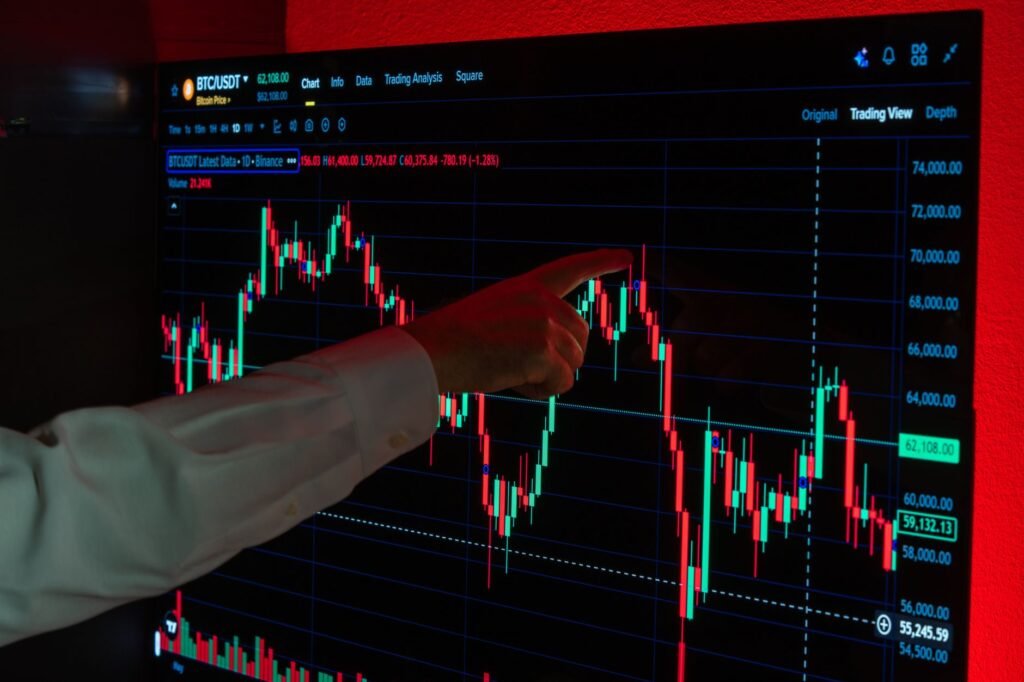

In the rapidly evolving financial landscape of 2026, market participants often ponder the optimal approach to navigating opportunities and risks. The fundamental question for many remains: should one lean towards the precision and speed of algorithmic trading, or the intuition and adaptability of traditional manual trading methods? This article delves into the benefits, drawbacks, and suitable applications of each approach within the current market environment, offering insights for those seeking to understand their place in today’s digital trading world.
Understanding Algorithmic Trading in 2026
Algorithmic trading, often simply called algo trading, involves using computer programs to execute trades based on predefined sets of instructions. These algorithms can analyze market data, identify trends, and place orders at speeds and volumes impossible for humans to match. By 2026, the sophistication of these algorithms has significantly advanced, incorporating machine learning (ML) and artificial intelligence (AI) to adapt to changing market conditions with greater autonomy.
Benefits of Algorithmic Trading
- Speed and Efficiency: Algos can execute trades in microseconds, leveraging fleeting price discrepancies or reacting to news faster than any human. This is crucial in markets where milliseconds can determine profitability.
- Reduced Emotional Bias: Trading decisions are purely quantitative, based on programmed rules, eliminating the psychological pitfalls of fear, greed, and overconfidence that can plague human traders.
- Backtesting and Optimization: Algorithms can be rigorously tested against historical data to evaluate their potential profitability and robustness before deployment. This allows for systematic refinement of strategies.
- Scalability: A single algorithm can monitor numerous markets and execute a vast number of trades simultaneously, making it highly efficient for managing large portfolios or complex strategies.
- Consistency: Algos execute strategies with unwavering discipline, adhering strictly to their rules regardless of market volatility or noise.
Drawbacks of Algorithmic Trading
- Technical Complexity and Cost: Developing, testing, and maintaining sophisticated algorithms requires significant technical expertise, computational power, and often expensive infrastructure.
- Over-optimization Risk: Strategies can sometimes be over-optimized for historical data, leading to poor performance in live markets that deviate from past patterns.
-
Disclaimer: This article is provided for general informational and educational purposes only and does not constitute financial, investment, trading, or legal advice. Gainsium is not a registered investment advisor. Markets are volatile and past performance does not guarantee future results. Readers should conduct their own research and consult a licensed financial advisor before making any investment decisions.