
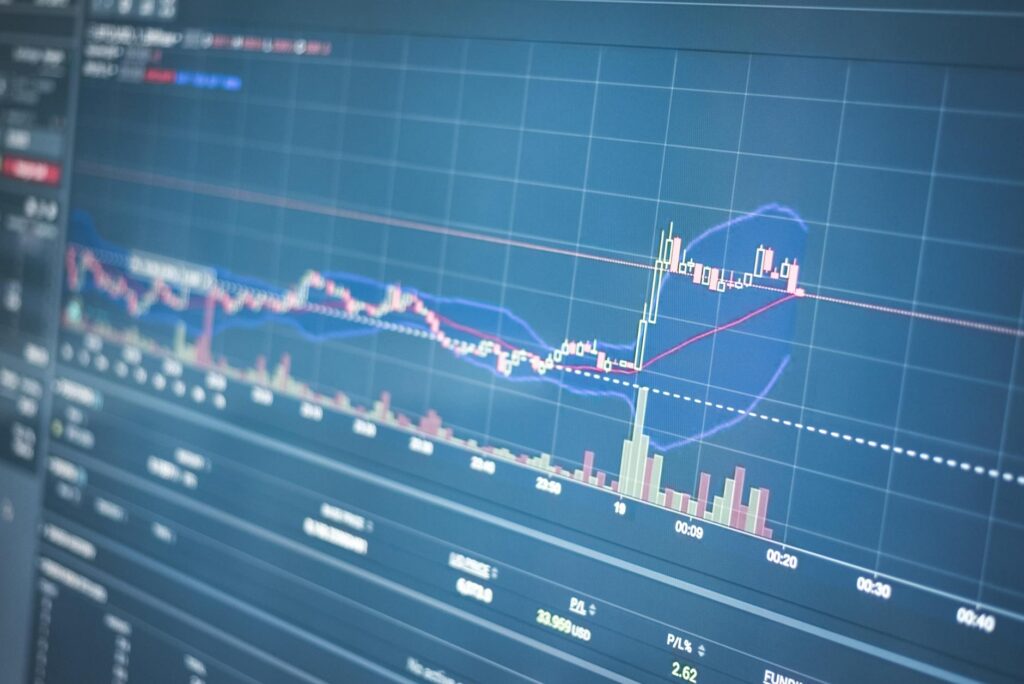

Navigating the 2026 Financial Landscape
As we navigate through 2026, the global financial landscape has evolved significantly. With artificial intelligence deeply integrated into supply chains, the stabilization of global interest rates, and a renewed focus on energy transition, the stock market offers unique opportunities for the disciplined investor. Whether you are looking to hedge against inflation or capitalize on the next wave of technological disruption, building a robust portfolio requires a blend of time-tested principles and modern analytical techniques.
At Gainsium, we believe that wealth building is not a sprint, but a marathon. In 2026, the market rewards those who look beyond the daily noise of social media speculation and focus on the bedrock of financial health: sound fundamentals and strategic diversification.
Mastering Fundamental Analysis in the AI Era
Fundamental analysis remains the gold standard for long-term investing. In 2026, however, the tools at your disposal have changed. Beyond traditional metrics like P/E ratios and balance sheet liquidity, investors must now account for intangible assets like data sovereignty, AI implementation efficiency, and environmental, social, and governance (ESG) compliance.
Key Metrics for 2026
- Free Cash Flow (FCF) Yield: In an era where debt costs are higher than the previous decade, companies that generate strong cash flow are the safest bets for sustained growth.
- Return on Invested Capital (ROIC): Focus on companies that demonstrate high efficiency in deploying capital into AI infrastructure.
- Debt-to-EBITDA: With fluctuating economic cycles, companies with low leverage are better positioned to weather sector-specific volatility.
Always conduct a ‘qualitative audit.’ Ask yourself: Is this company’s competitive moat being widened by its technological adoption, or is it being disrupted? The winners of 2026 are those who use automation to shrink their overhead while scaling their output.
The Role of Technical Analysis in Modern Portfolios
While fundamental analysis tells you what to buy, technical analysis tells you when. In 2026, algorithmic trading dominates the markets, leading to rapid price fluctuations. Understanding basic technical indicators can help you avoid buying at the peak of a short-term liquidity rally.
Essential Tools for Market Timing
Don’t get overwhelmed by complex charting tools. Stick to three core indicators to confirm your fundamental thesis:
- Moving Averages (50-day and 200-day): These remain the most reliable way to identify structural trends. If a stock is consistently trading above its 200-day moving average, it is in a confirmed long-term uptrend.
- Relative Strength Index (RSI): Use this to avoid overpaying. An RSI above 70 suggests a stock is ‘overbought,’ while an RSI below 30 may indicate an attractive entry point.
- Volume Confirmation: Never trust a breakout that happens on low volume. Genuine price movements in 2026 are backed by significant institutional buying pressure.
Diversification: Beyond the 60/40 Portfolio
The traditional 60/40 stock-to-bond split has undergone a transformation in 2026. With the emergence of tokenized real-world assets and private credit markets, a modern portfolio requires more nuance to mitigate systemic risk. True diversification is not just about owning different companies; it is about owning different drivers of return.
Strategies for Resilience
1. Geographic Exposure: With economic growth shifting toward emerging Southeast Asian markets, ensure your portfolio isn’t solely pegged to Western domestic growth. 2. Sector Allocation: Ensure you are balanced across cyclical sectors (industrials, energy) and non-cyclical sectors (healthcare, consumer staples). 3. The Core-Satellite Approach: Keep 80% of your capital in low-cost index funds (the core) and 20% in high-conviction individual stocks (the satellites). This allows for steady growth while maintaining the potential for market-beating returns.
Long-Term Wealth Building: Your Action Plan
Building wealth in 2026 requires the discipline to stay the course despite inevitable market corrections. The most successful investors are those who view market pullbacks as buying opportunities rather than signals to panic. By utilizing dollar-cost averaging (DCA), you remove the emotional stress of trying to ‘time’ the bottom of the market.
Actionable Steps for Your Portfolio:
- Automate your contributions: Treat your investment account like a mandatory monthly bill.
- Rebalance quarterly: Ensure that one ‘winner’ hasn’t skewed your risk profile too heavily.
- Stay tax-efficient: Utilize tax-advantaged accounts (like IRAs or equivalent structures) to shield your long-term compound growth from short-term tax liabilities.
Conclusion: Start Your Journey Today
Investing in 2026 is an exercise in balancing optimism with caution. By grounding your strategy in fundamental analysis, using technical indicators to find opportune entry points, and maintaining a robust, diversified portfolio, you set yourself on the path toward financial freedom. Remember, the market is a wealth transfer mechanism from the impatient to the patient. Stay focused, do your research, and let the power of compounding do the heavy lifting for your financial future.