
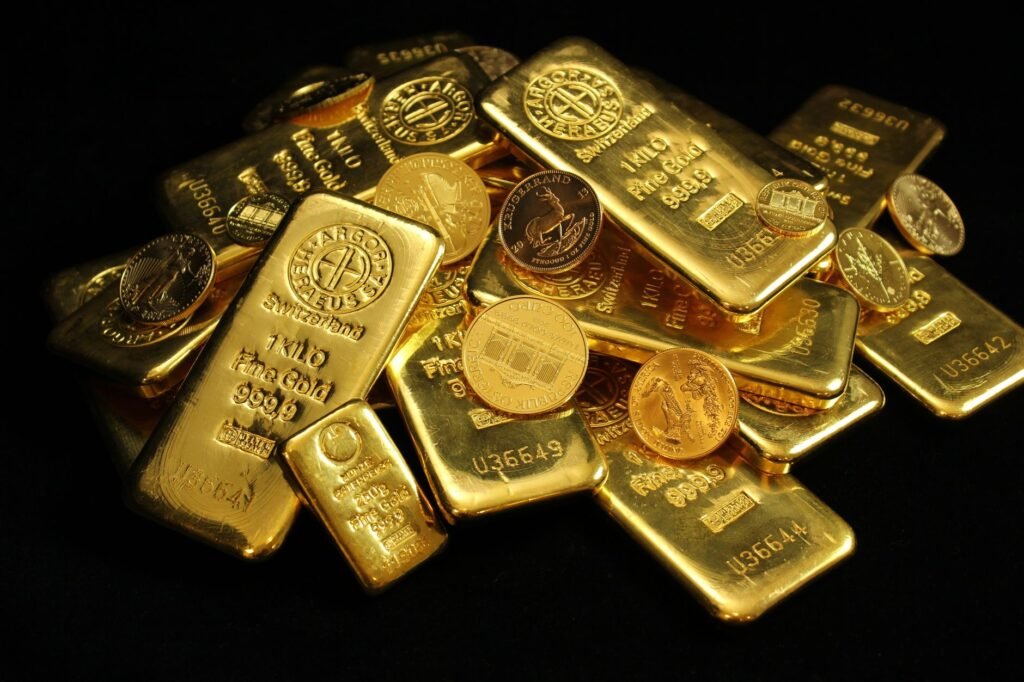

Understanding gold’s role in a financial portfolio often involves distinguishing between its function as a store of value and its potential as an inflation hedge. While these concepts are frequently discussed together, they represent distinct characteristics of gold that are important for investors to grasp. This article will clarify the fundamental differences, explain their significance, and explore how gold has historically performed in each capacity.
Gold as a Store of Value
At its core, gold’s appeal as a store of value stems from its ability to preserve wealth and purchasing power over extended periods. This characteristic is particularly relevant during times of economic instability, geopolitical turmoil, or when there are concerns about the long-term stability of fiat currencies. A true store of value is an asset that is expected to maintain its worth without significant depreciation, ideally even appreciating, through various economic cycles.
Historical Context of Gold as a Store of Value
For millennia, gold has been recognized as a symbol of wealth and a medium of exchange. Its intrinsic physical properties—scarcity, durability, divisibility, and portability—have cemented its status across diverse cultures and economies. Unlike paper money, gold cannot be printed arbitrarily by governments, giving it an inherent resistance to debasement through inflationary monetary policies. This independence from central bank policy and sovereign debt is a key factor in its appeal. Historically, during periods of severe currency devaluation or financial crises, gold has often been sought out as a tangible asset that retains value when confidence in conventional financial instruments wanes.
Gold as an Inflation Hedge
An inflation hedge, by contrast, is an asset specifically intended to protect an investor’s purchasing power from erosion caused by rising prices. When inflation accelerates, the cost of goods and services increases, meaning each unit of currency buys less. Assets that act as an inflation hedge are expected to either rise in value in line with or above the rate of inflation, thus preserving the real (inflation-adjusted) value of an investment.
How Gold Reacts to Inflation
Gold’s effectiveness as an inflation hedge is a subject of considerable discussion. Historically, there have been periods, particularly during the high inflation of the 1970s, when gold prices surged significantly. The metal can react positively to inflation when real interest rates (nominal interest rates minus inflation) are low or negative, as this reduces the opportunity cost of holding a non-yield-bearing asset like gold. When cash and bonds yield less than the inflation rate, gold may become more attractive. However, gold’s relationship with inflation is not always immediate or perfectly linear. Its movements can be influenced by a multitude of factors, including global demand, geopolitical events, and the strength of the U.S. dollar, sometimes leading to a more nuanced or delayed response to inflationary pressures.
Key Differences: Store of Value vs. Inflation Hedge
Time Horizon
One of the most significant distinctions lies in the typical time horizon. Gold’s role as a store of value is predominantly a long-term, even generational, consideration. It’s about preserving wealth across decades, safeguarding against systemic risks or the slow erosion of purchasing power through various economic regimes. As an inflation hedge, gold’s efficacy is often viewed through a more medium-term lens, specifically in response to observable or anticipated periods of elevated inflation.
Underlying Drivers
The catalysts that drive gold’s performance in each role also differ. Gold’s function as a store of value is often bolstered by factors such as:
- Geopolitical instability: Conflicts, political unrest, or major global crises.
- Systemic financial risk: Concerns about banking system stability or sovereign debt crises.
- Currency debasement fears: Aggressive quantitative easing or sustained high budget deficits that might devalue fiat currencies.
Conversely, gold’s performance as an inflation hedge is typically more sensitive to:
- Consumer Price Index (CPI) increases: Direct measures of inflation.
- Monetary policy shifts: Central bank interest rate decisions and liquidity injections.
- Real interest rates: The difference between nominal interest rates and inflation, which impacts the attractiveness of gold versus interest-bearing assets.
Correlation with Other Assets
As a store of value, gold often demonstrates a low or inverse correlation with traditional assets like stocks and bonds during periods of extreme market stress or economic uncertainty. This ‘safe haven’ characteristic means it may act as a ballast in a diversified portfolio when other assets are declining. As an inflation hedge, gold can sometimes move in tandem with other commodities that benefit from rising prices across the board, though its unique monetary history often sets it apart.
Gold’s Performance and Market Landscape in 2026
As of 2026, the global economic landscape continues to grapple with the aftermath of recent inflationary cycles and ongoing geopolitical complexities. While inflation rates have seen some moderation in various economies, concerns about their persistence and potential resurgence remain a prevalent theme in financial discourse. Central banks around the world are navigating a delicate balance between managing inflation and fostering economic growth, often through adjustments to interest rates and liquidity policies. This environment of heightened vigilance regarding inflation and economic stability has kept gold in focus for many investors.
Historically, gold has demonstrated a capacity to retain value during periods of economic uncertainty and elevated inflation. Its role as a perceived safe haven has been observed during various market downturns and currency devaluations throughout history. Recent trends have reportedly shown continued interest in gold from both institutional investors and central banks, with some nations reportedly increasing their gold reserves as part of a broader strategy to diversify national assets and reduce reliance on any single currency.
Looking forward, some market analysts have suggested that factors such as sustained geopolitical tensions, potential for further inflationary pressures, and continued central bank purchasing could contribute to ongoing demand for gold. However, it is also widely acknowledged that strong economic growth, alongside rising real interest rates or a significant strengthening of the U.S. dollar, could present headwinds to gold’s price appreciation. Forecasts from financial experts regarding gold’s future price movements vary considerably, reflecting the complex interplay of economic data, market sentiment, and global events, and it is important to remember that such projections are inherently uncertain and not guaranteed.
Considerations for Portfolio Diversification
For individuals exploring the potential role of gold in their financial strategy, understanding its distinct functions is paramount. Gold is frequently considered for portfolio diversification, given its historical tendency to perform differently from traditional assets during certain economic conditions. It’s important to recognize that gold does not typically generate income (like dividends from stocks or interest from bonds) and therefore presents an opportunity cost.
Investors typically have several avenues for gaining exposure to gold, including:
- Physical Gold: Such as coins or bars, offering direct ownership and eliminating counterparty risk.
- Gold Exchange-Traded Funds (ETFs): Providing a convenient way to invest in gold without the complexities of physical storage, though they involve fund fees and counterparty risk.
- Gold Mining Stocks: Investing in companies involved in gold extraction, which can offer leverage to gold prices but also carry operational and equity market risks.
The decision to incorporate gold, and in what form, into a financial plan should align with individual financial goals, risk tolerance, and investment horizon. Whether viewed primarily as a long-term store of value to safeguard wealth or as a potential hedge against specific inflationary periods, gold’s historical role warrants careful consideration within a well-diversified approach to managing personal finances.
Disclaimer: This article is provided for general informational and educational purposes only and does not constitute financial, investment, trading, or legal advice. Gainsium is not a registered investment advisor. Markets are volatile and past performance does not guarantee future results. Readers should conduct their own research and consult a licensed financial advisor before making any investment decisions.